EN
EN PT
PT

 EN
EN
 PT
PT

A tool for planning, teaching, and assessment
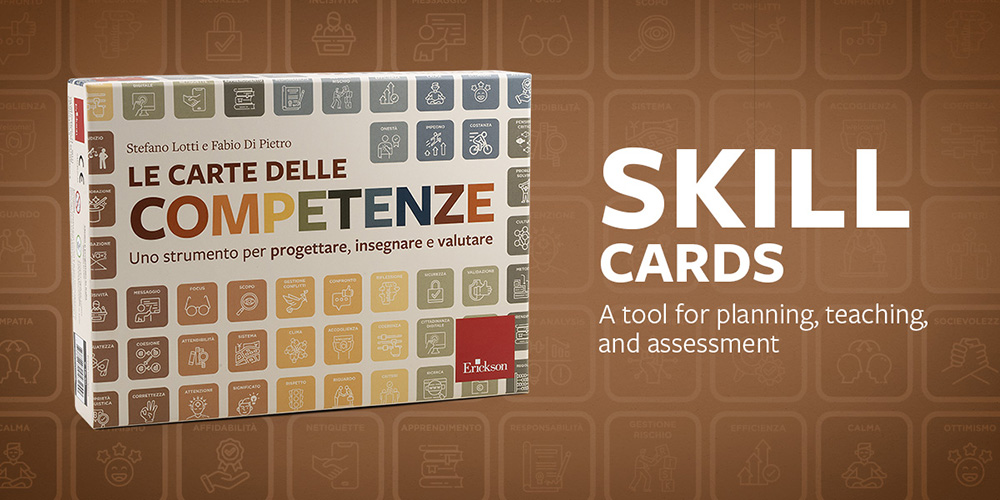
Skill cards is a versatile and engaging tool that supports teachers and students in concretely exploring competences through everyday teaching practice, turning each activity into an opportunity for observation, development, and assessment.
The cards can be used to design learning pathways, share a common language, highlight already developed competences, or create new activities based on specific learning goals. They also promote transparent, formative, and shared assessment with students, clarifying which competences are being developed and which still need improvement.
The box contents
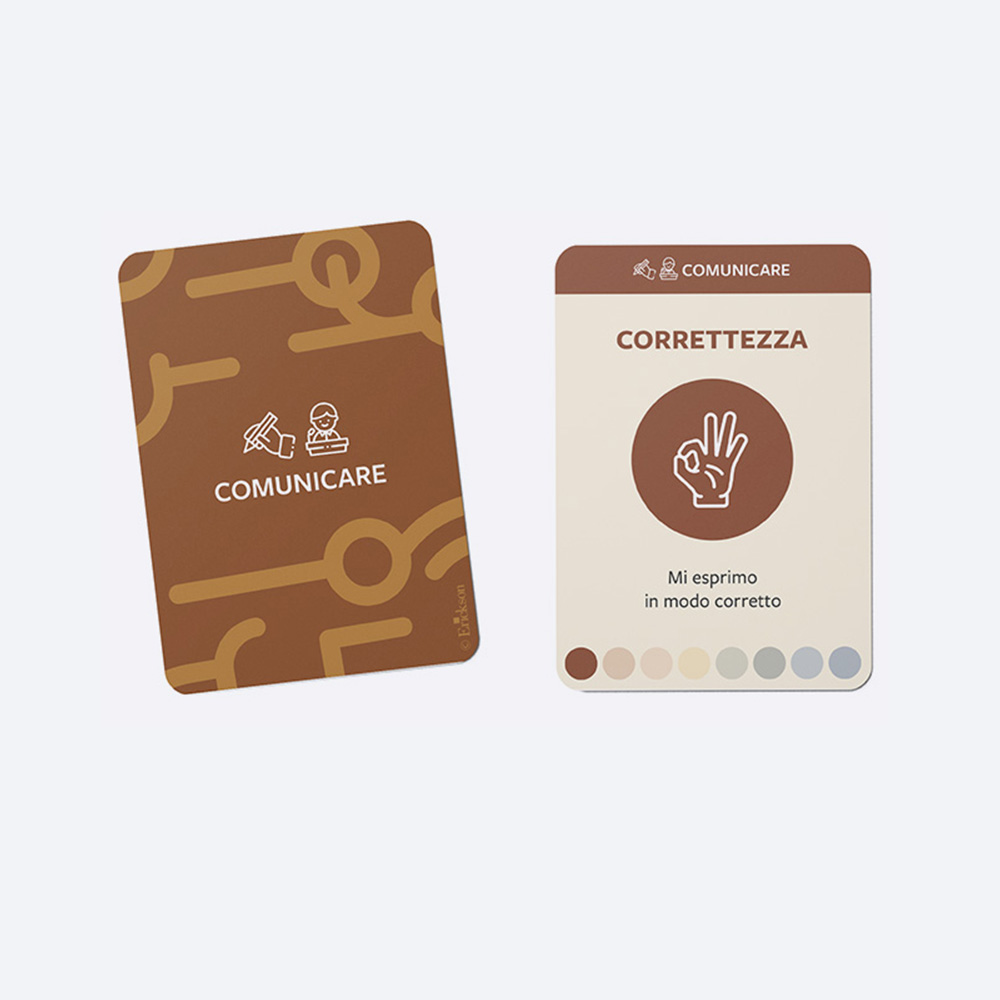
82 “Competence” cards, grouped into 8 macro-areas (Communicating, Understanding, Collaborating, Evaluating, Being Digital, Learning, Taking Initiative, Self-awareness), each described through a first-person action statement
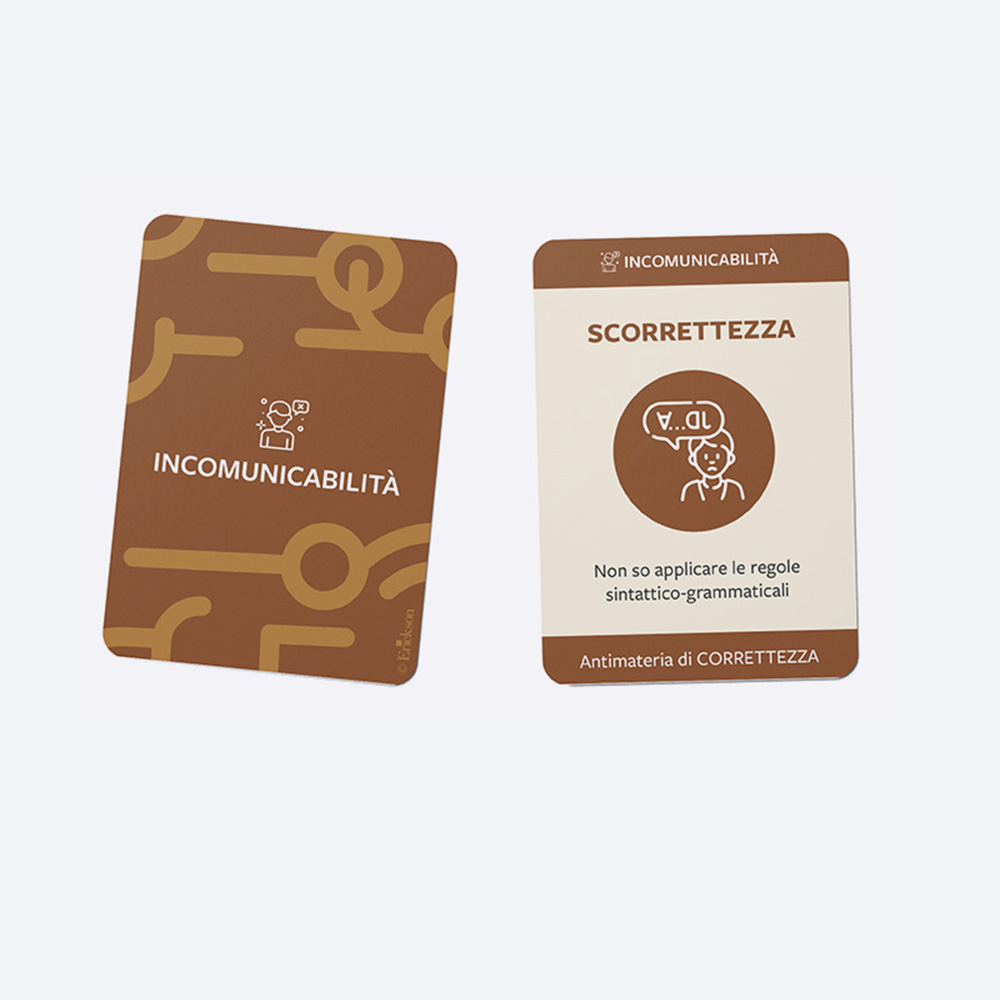
82 “Obstacle” cards (AntiMatter), which help identify the associated difficulties

The poster with the Competence Table and Obstacle Table
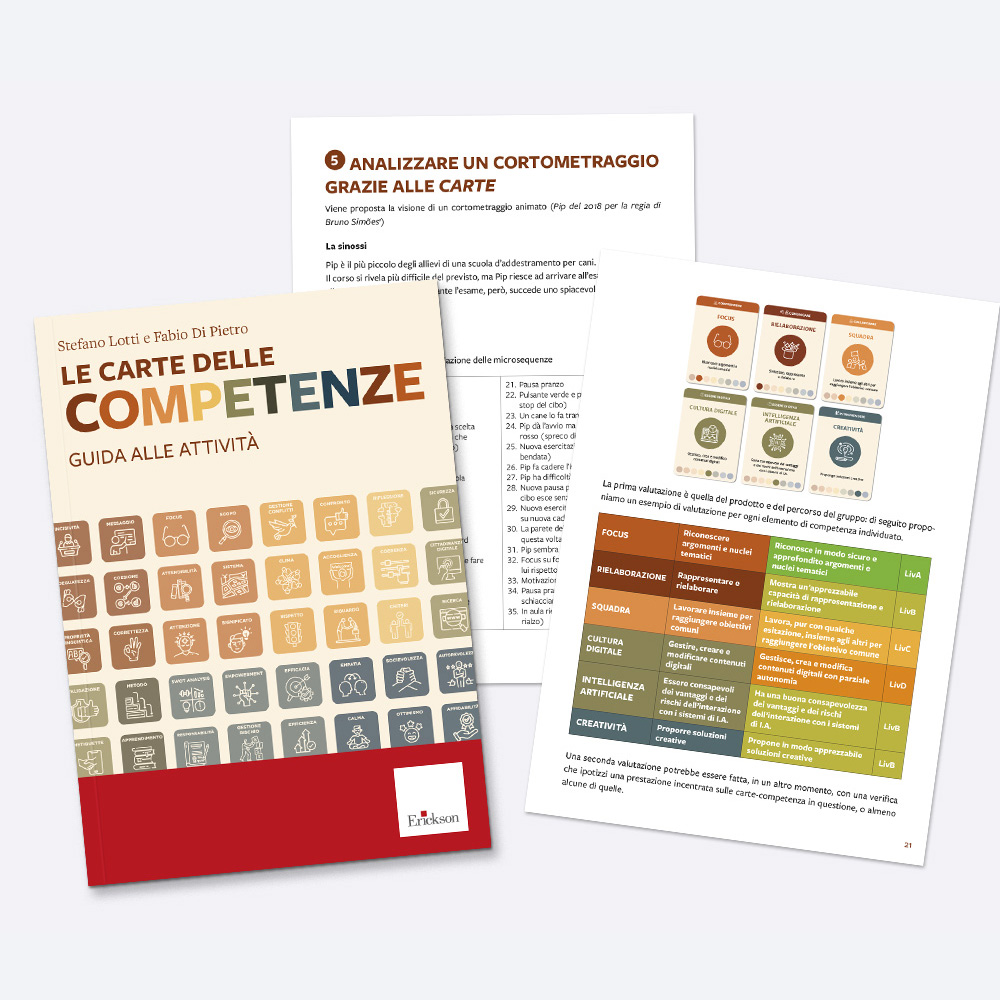
A guide with practical and teaching suggestions
HOW TO USE THE CONTENTS
The cards can be used in teaching planning for various activities:
The “Obstacle” cards represent recurring issues such as lack of attention, poor time management, disorganisation, difficulties in comprehension or low motivation. Their purpose is not to judge but to raise awareness: they help identify what is hindering the learning process, allowing targeted interventions. The teacher can use them as an observation tool, selecting from time to time the cards that best describe the difficulties that have emerged during a task or workshop; this makes it possible to guide feedback to students and to revise planning by choosing more suitable activities or methodologies. Each obstacle can become a starting point to activate specific competences and to reflect on how to deal with similar situations in the future. In this way, these cards become a tool that supports metacognition, improves communication between teachers and students, and promotes formative assessment focused on processes as well as outcomes.
HOW TO CREATE NEW CARDS
The cards can be a starting point for introducing other skill cards. For example, starting from COMMUNICATING, you can create a Skill card that focuses on managing social media.
The customisable cards can be downloaded and printed from the online resources.
Leaf through some selected pages from the instructions book that have been translated into English to facilitate your evaluation:
The Author
Stefano Lotti
Fabio Di Pietro