EN
EN PT
PT

 EN
EN
 PT
PT
Activities and games with letters and languages
Sofia Cramerotti, Alessio Morando
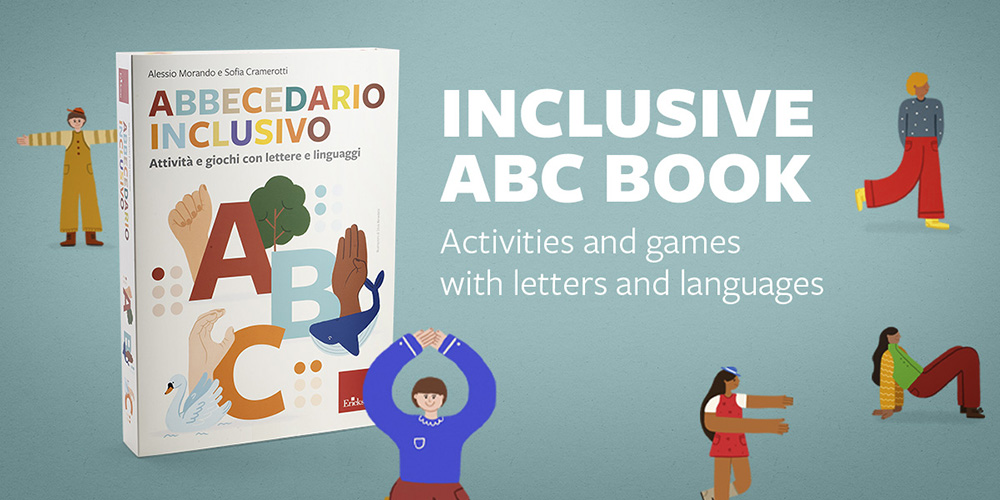
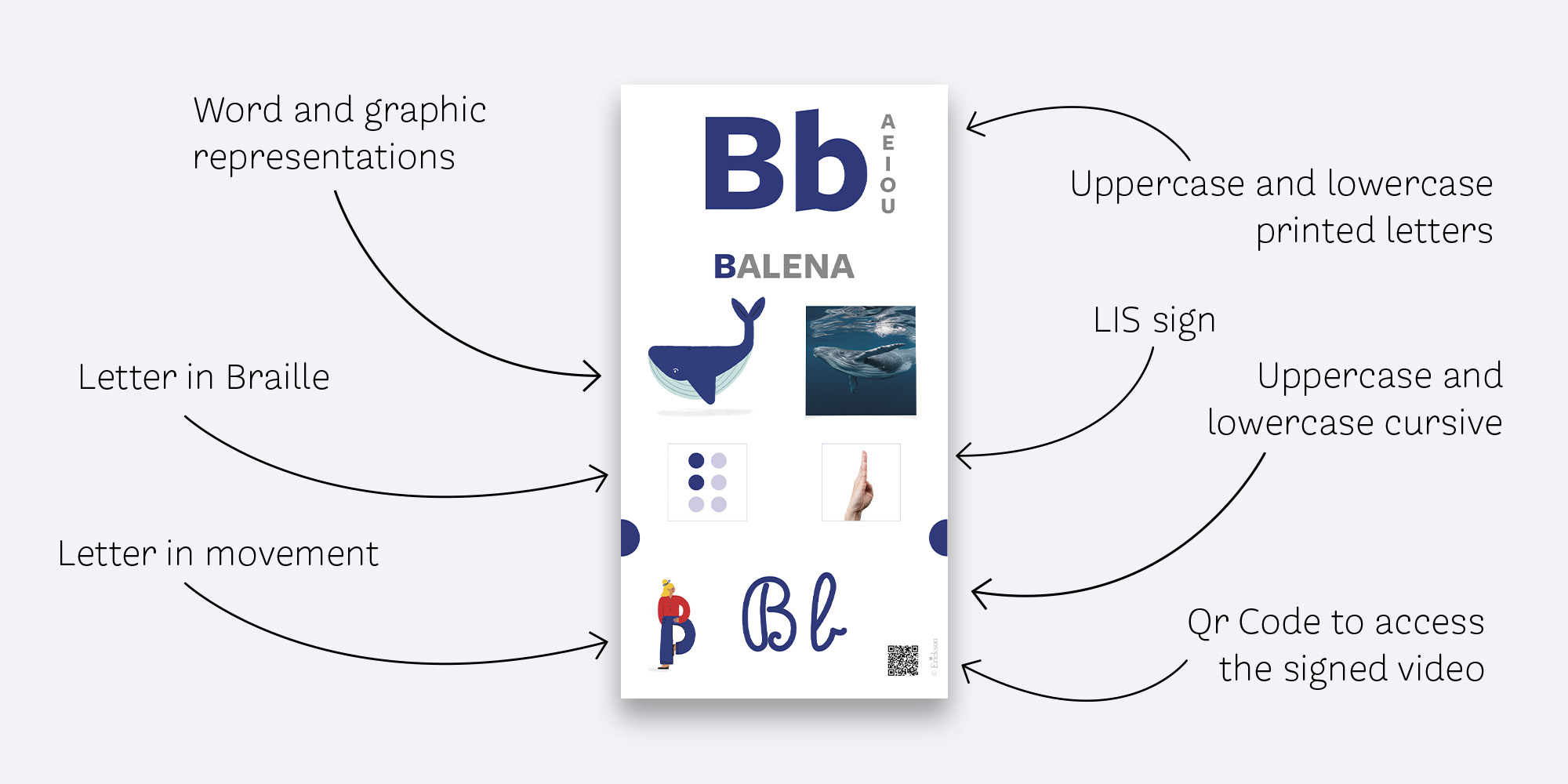
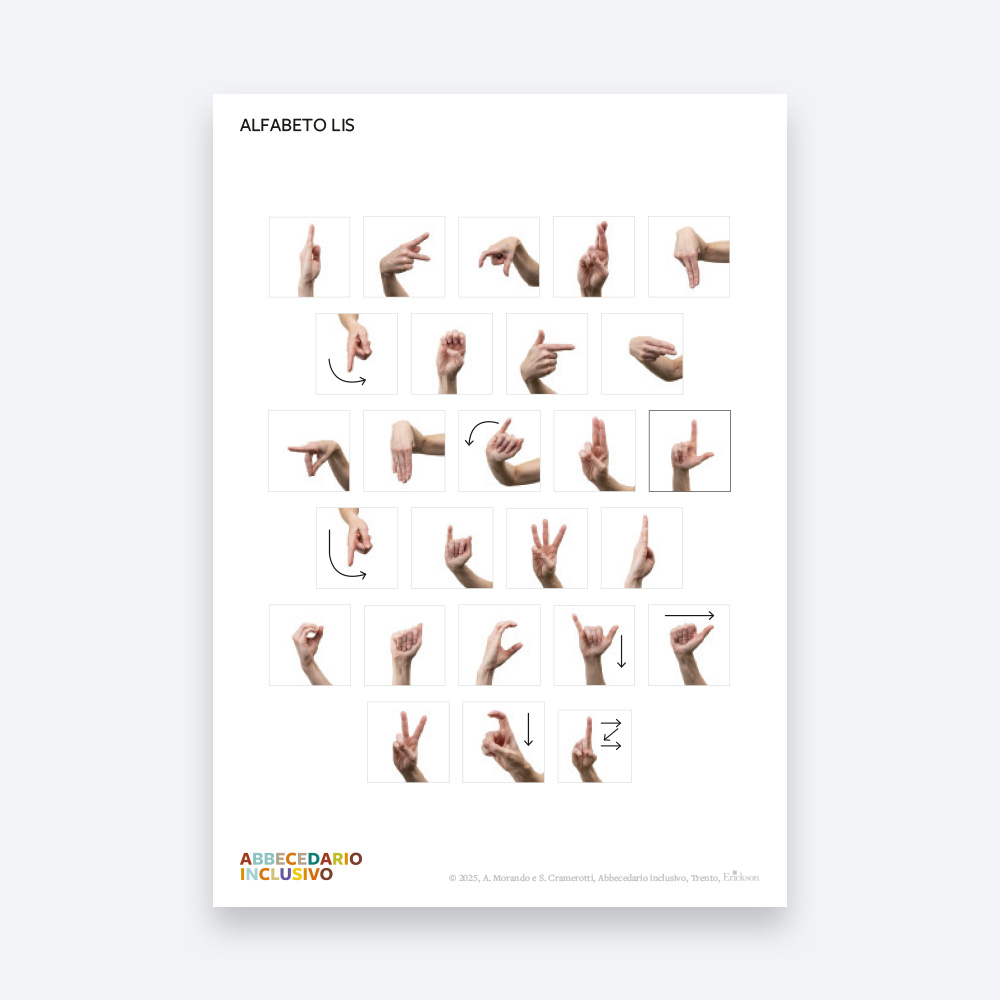
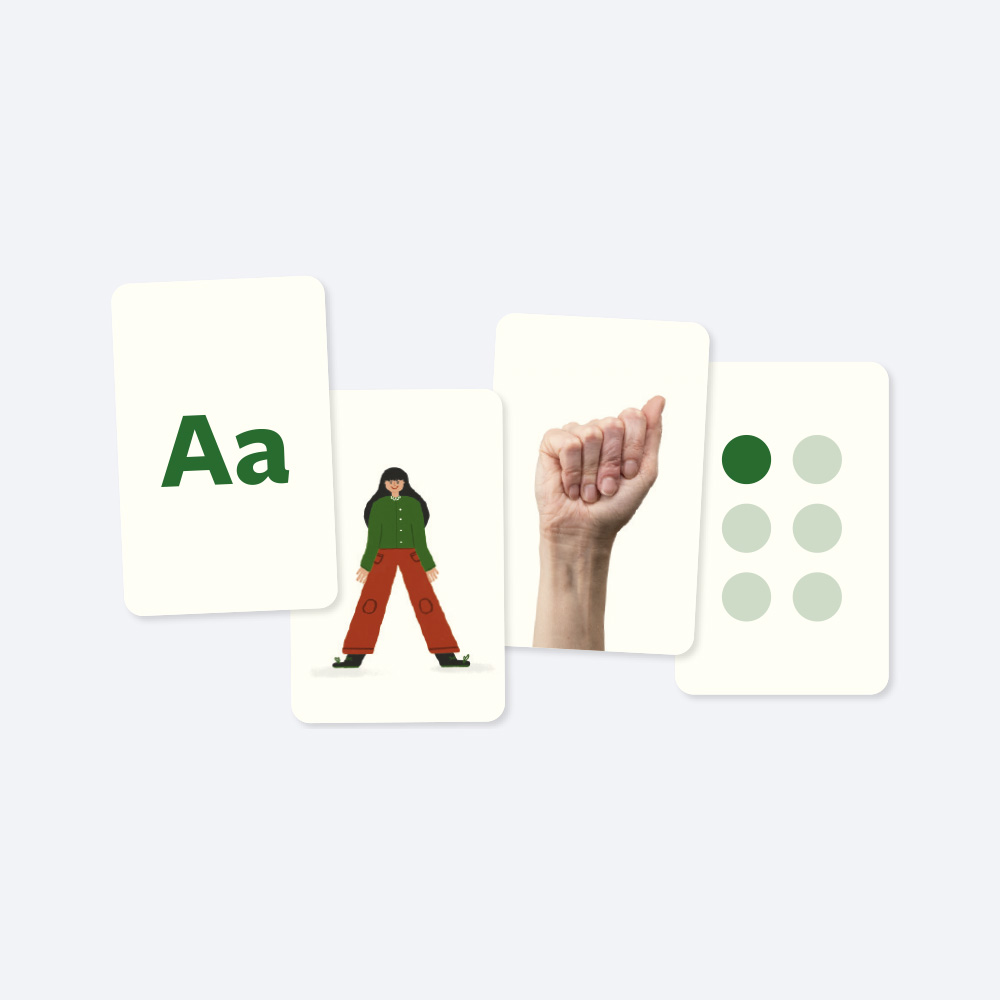
In line with the UDL (Universal Design for Learning) approach, that recognises different learning approaches as a natural and valuable aspect of human diversity, The Inclusive ABC Book introduces the alphabet through a range of different communication styles, and offers a practical pathway rich in activities, worksheets, and materials designed to promote a truly inclusive approach. Each letter of the alphabet is featured in uppercase, lowercase and cursive, linked to a word represented in written, graphic and photographic form, and completed by the corresponding letter in Braille and Italian Sign Language (LIS).
Using the alphabet in a creative way helps children not only build a solid linguistic foundation but also increase their engagement and motivation to learn.
THE BOX CONTENTS
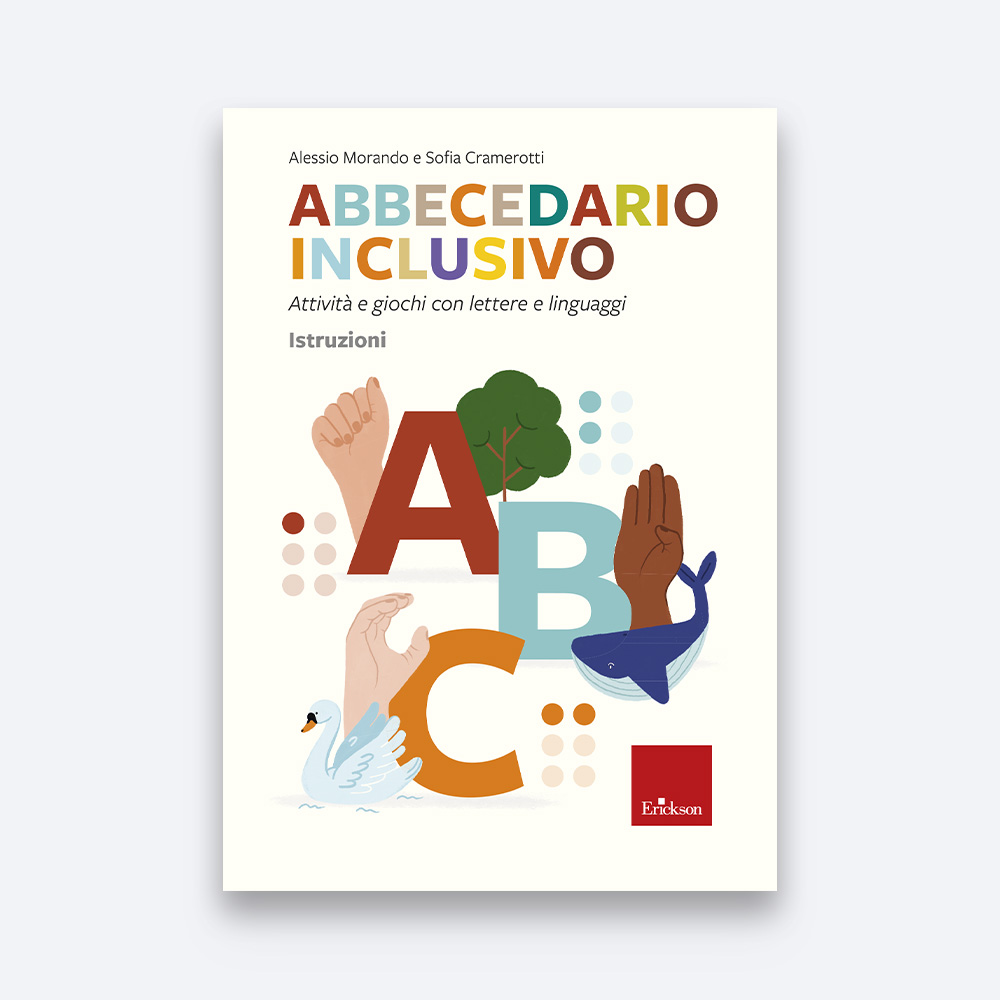
An instruction book with practical suggestions
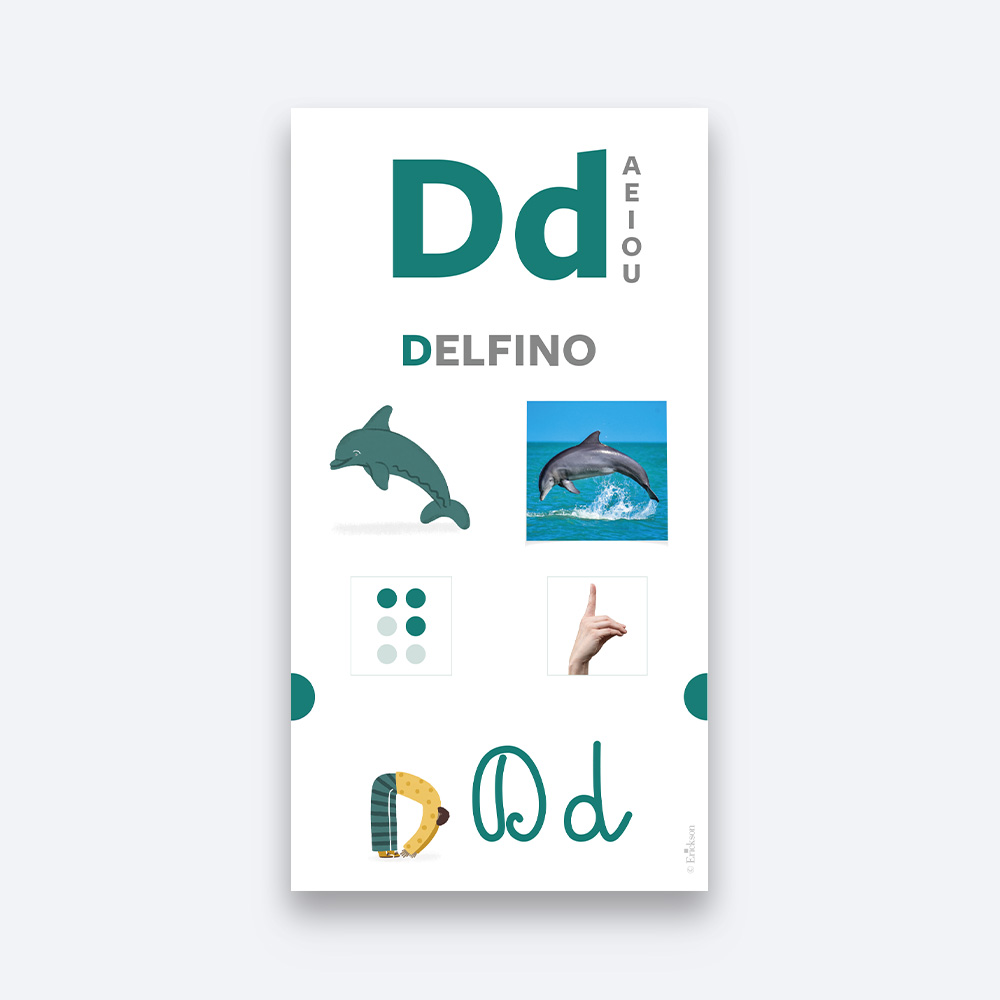
28 printed letter sheets
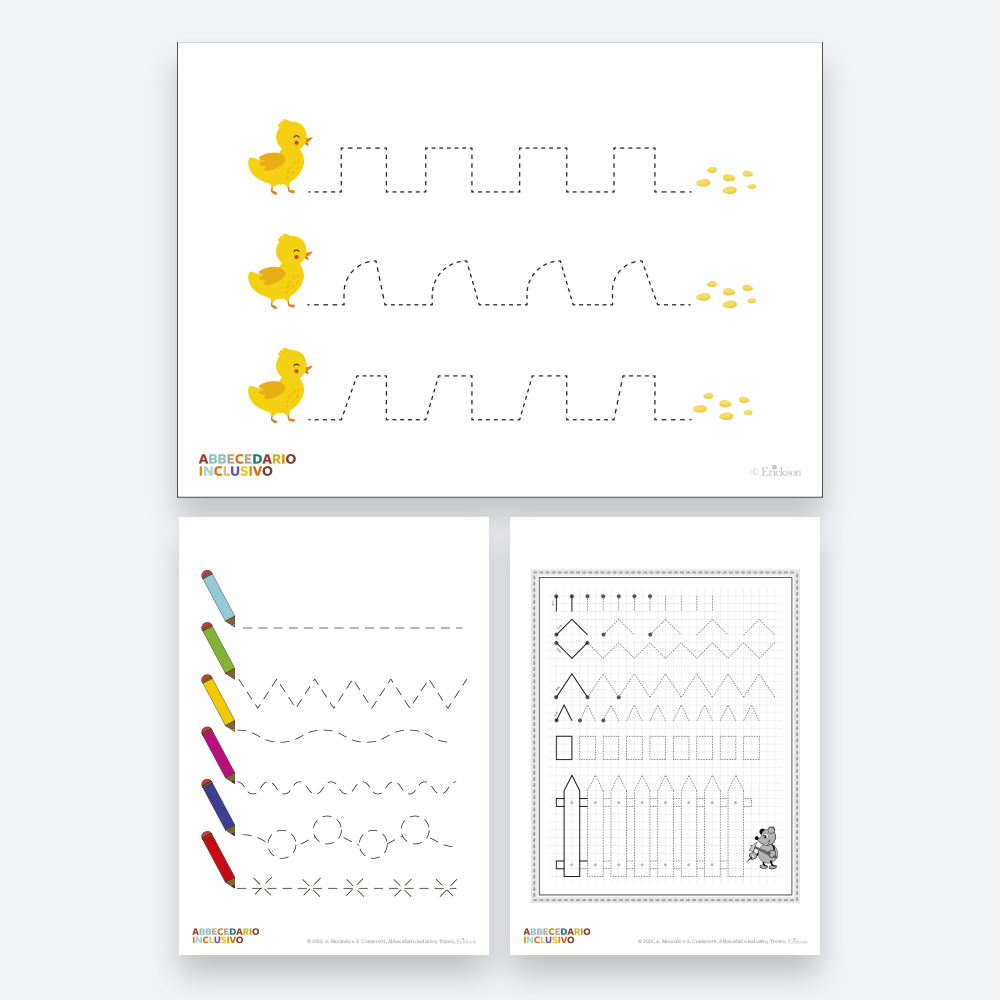
Over 150 online printable, full-colour activity sheets
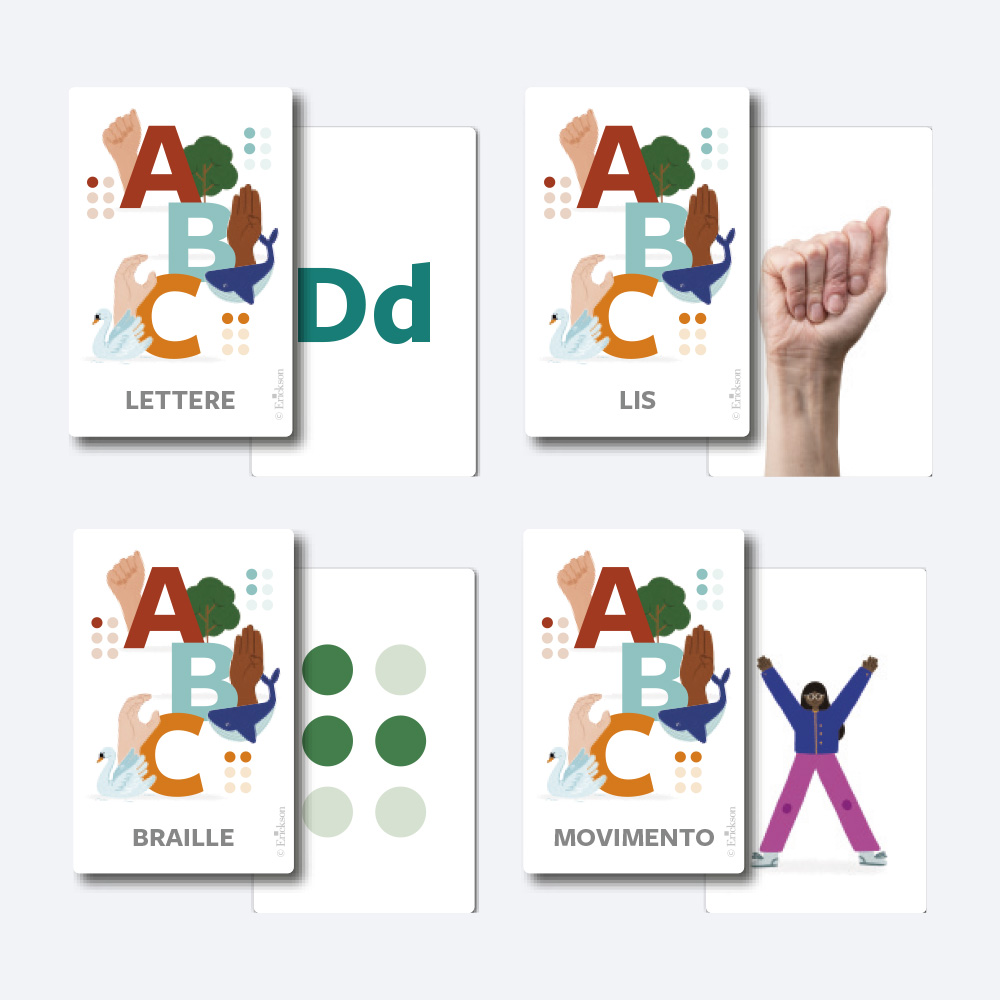
4 decks of 26 cards (letters, LIS signs, Braille letters, and letters in movement)
TEACHING OBJECTIVES
CARD FEATURES
ONLINE ACTIVITY SHEETS
Teachers have access to a range of printable, full-colour activity sheets from the online resources to provide to pupils.
Pre-writing and letter activities
These activities precede the learning of writing and support the acquisition of the skills needed to carry out the next step with ease.
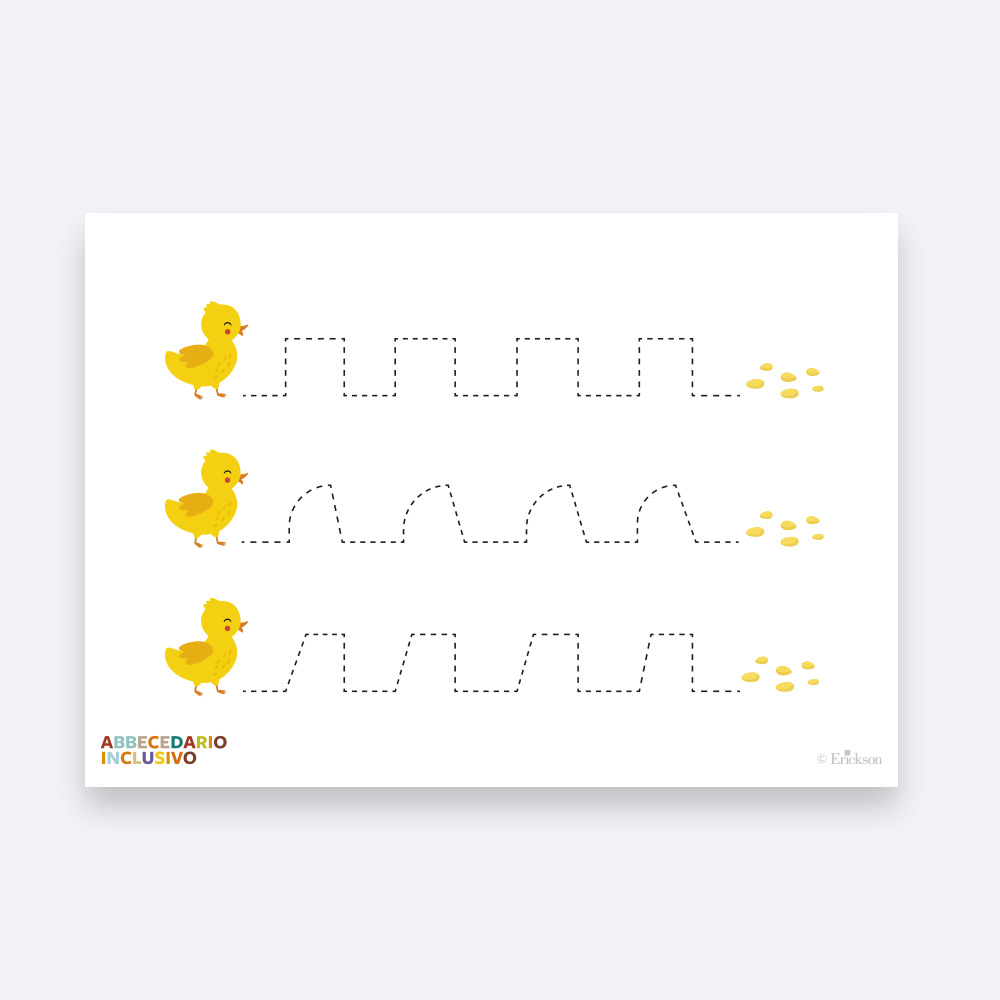
Preparatory paths for letter tracing
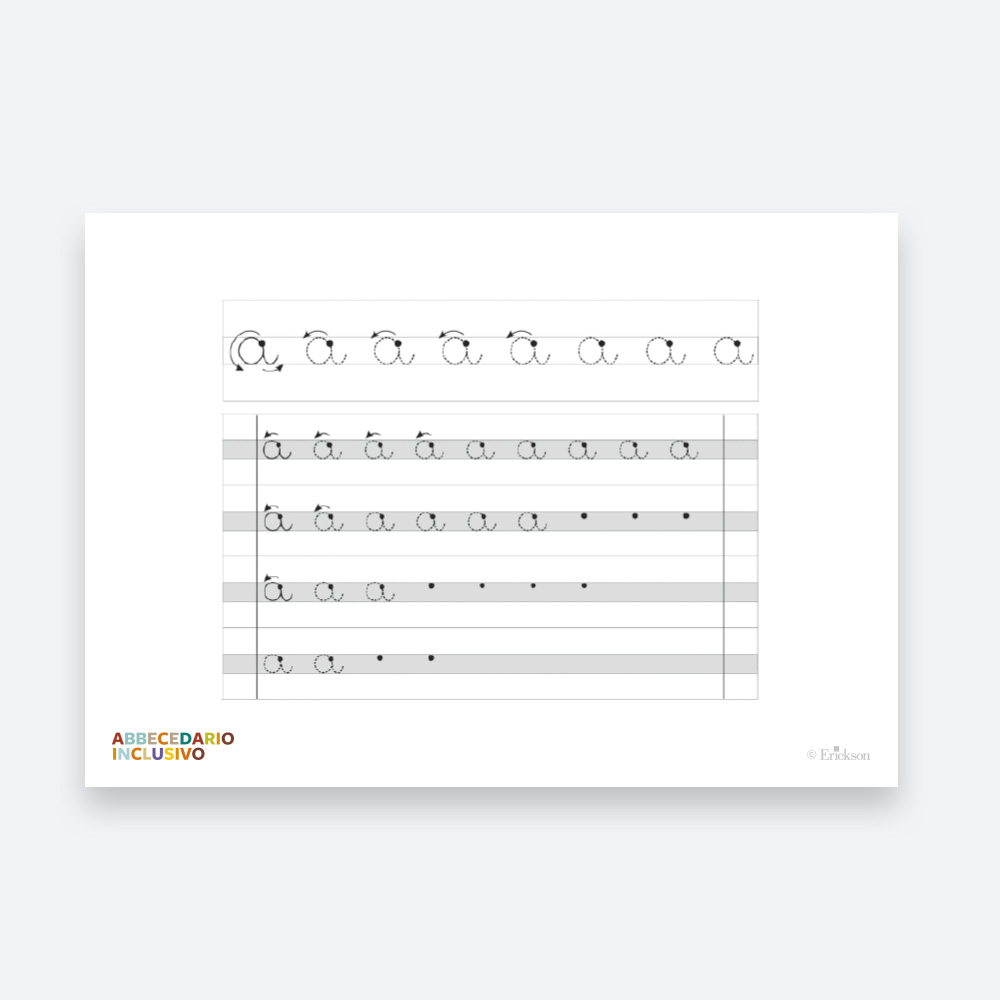
Letter tracing
Playing with letters
These activities focus on letter recognition from both a graphic and phonetic perspective, helping children develop awareness of the grapheme–phoneme correspondence and enabling them to convert written words into spoken language and vice versa.
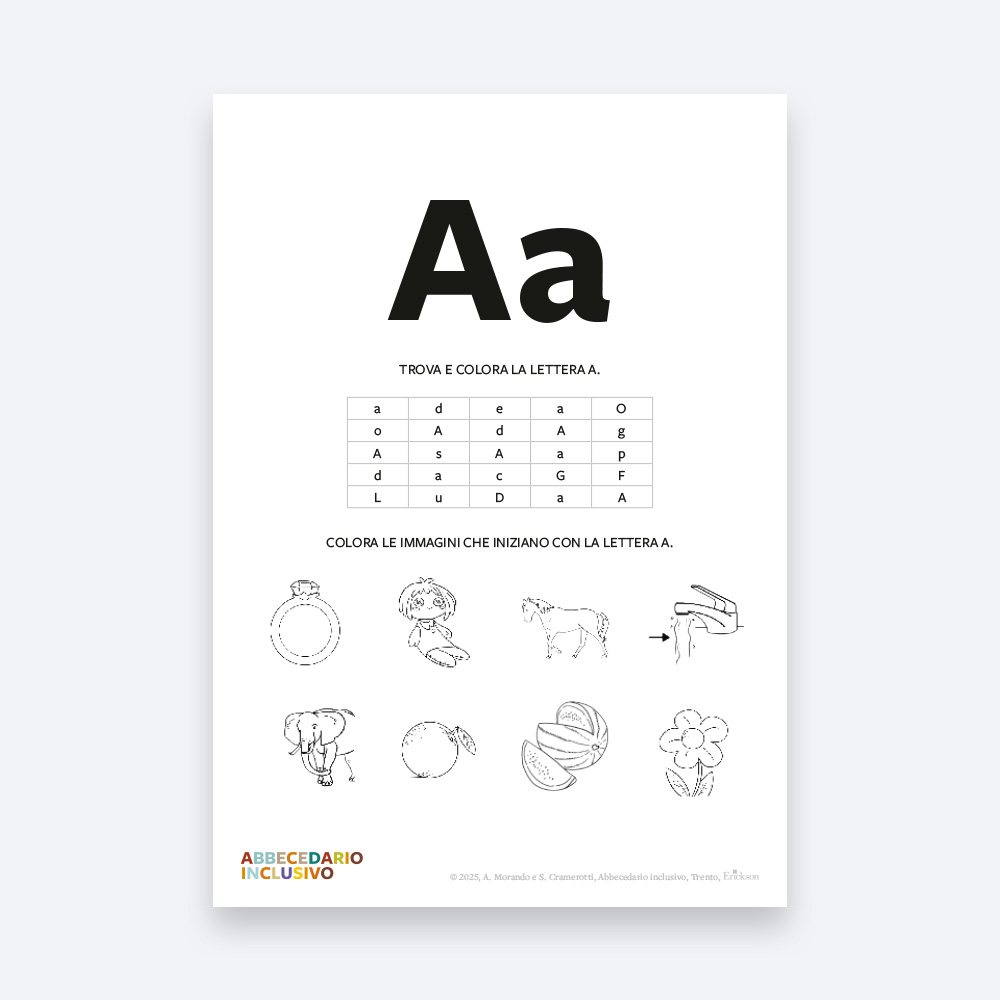
Grapheme and phoneme recognition
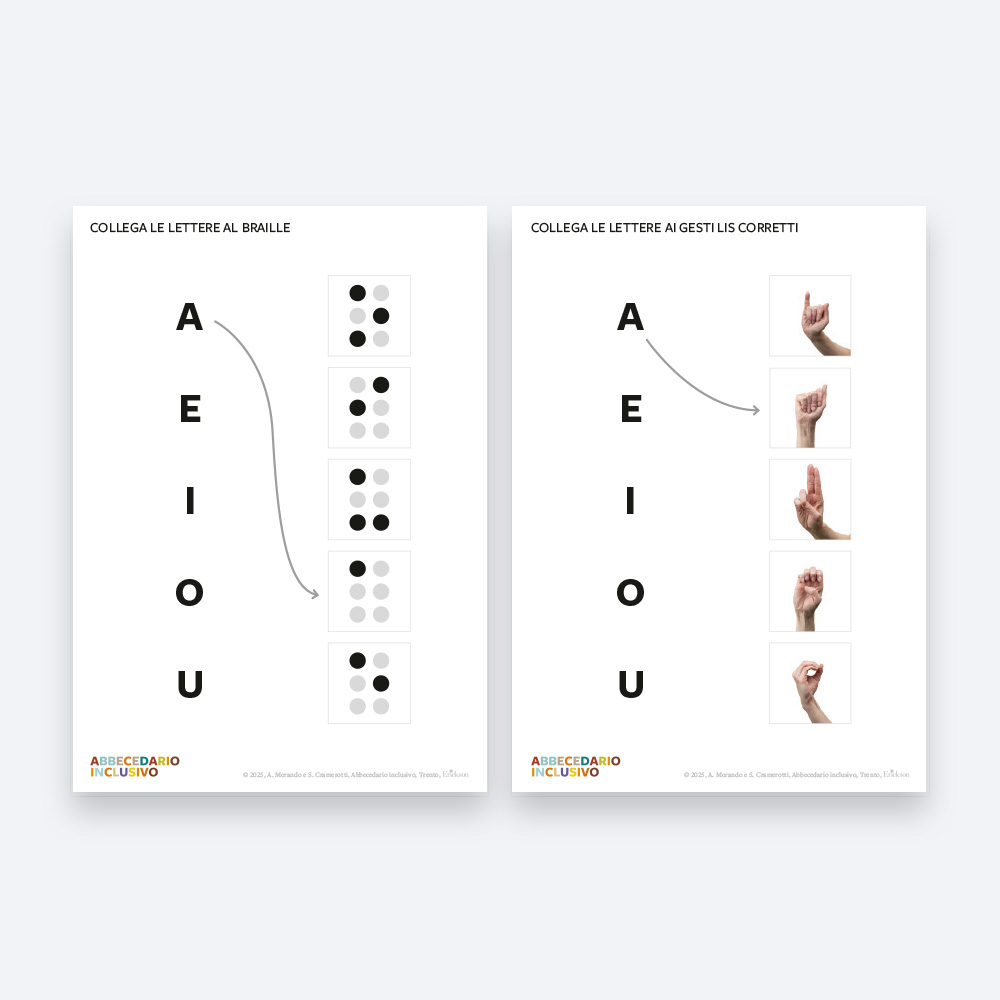
Recognition of letters in Braille and LIS
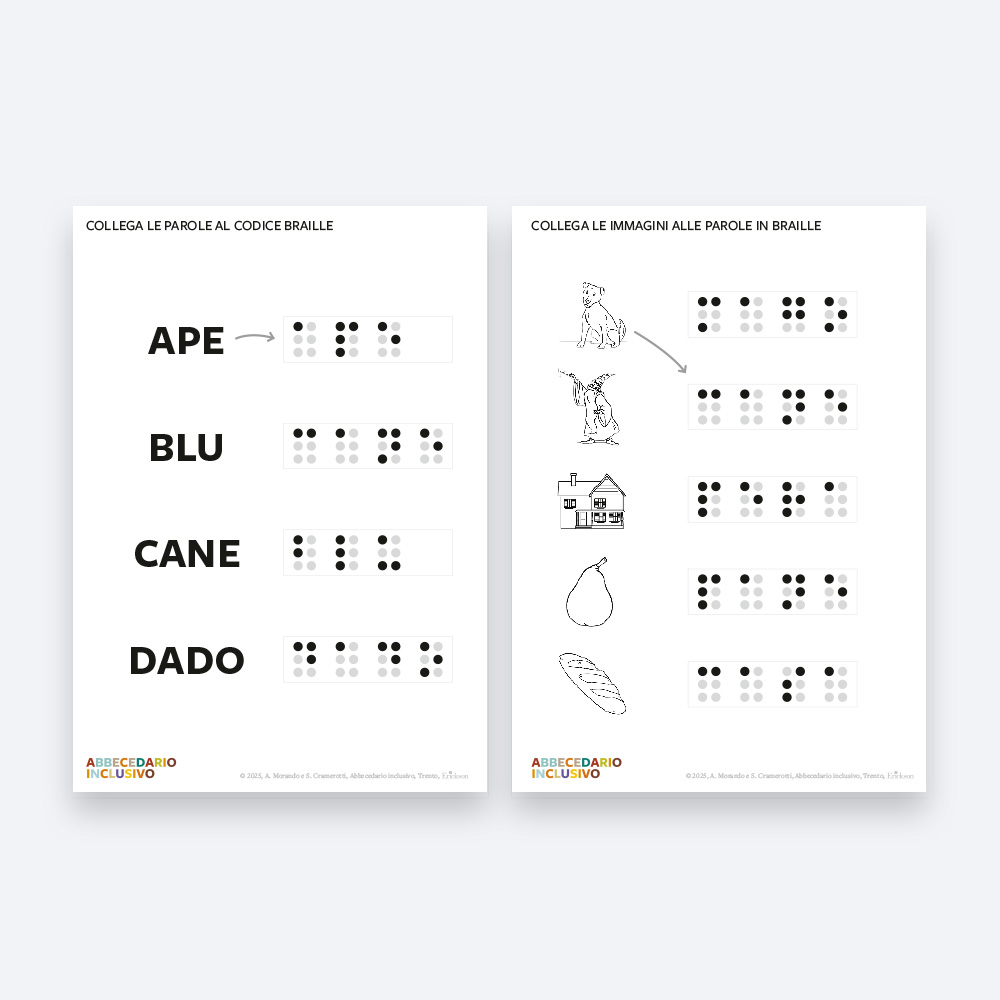
Playing with Braille
These activities first work on word–symbol association and, at a more advanced level, on matching graphic representation with Braille code.
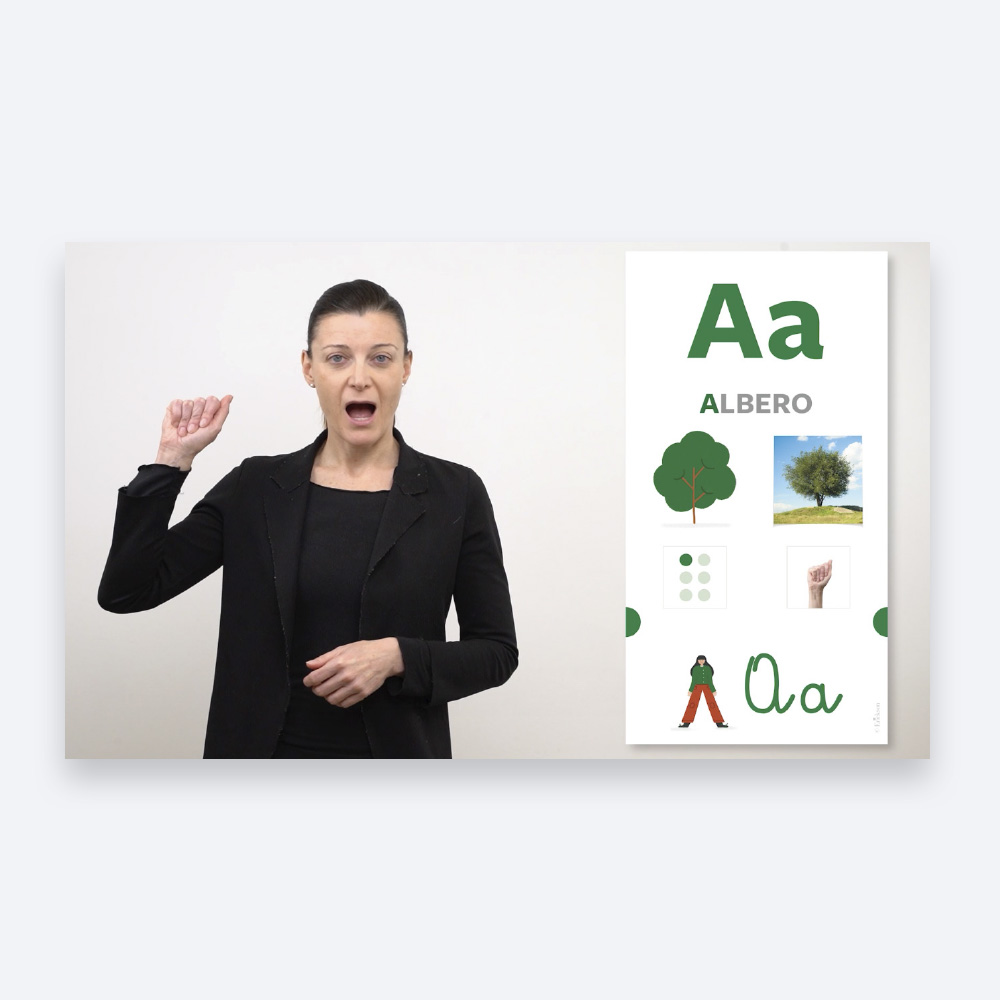
Playing with LIS
These activities focus on associating alphabet letters with LIS signs and then guide learners towards building a small LIS dictionary. Thanks to the QR code, which contains the sign for each letter and its associated word, learners can watch, practise and reproduce the signs while playing with peers or engaging in fun activities.
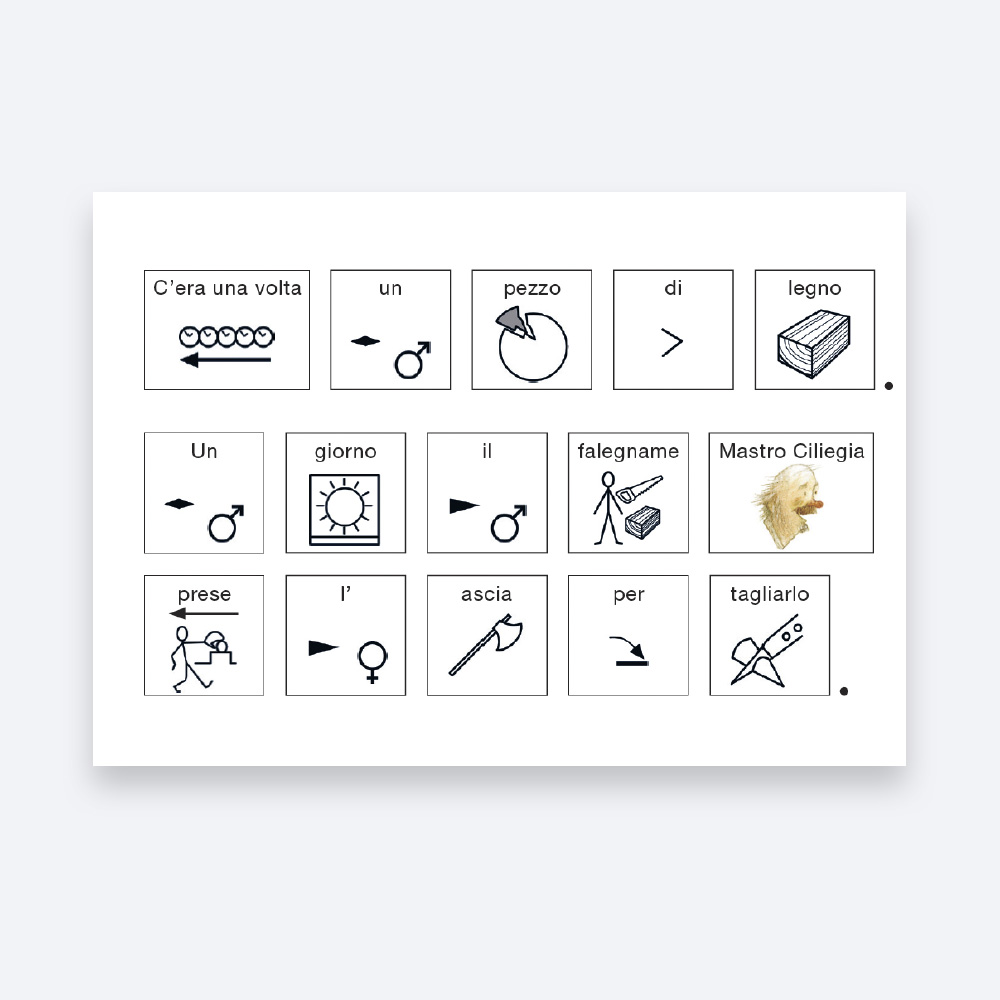
Playing with CAA
These activities are designed to support and augment verbal communication through alternative means, enabling people to express themselves and participate in social, school, work and family life.
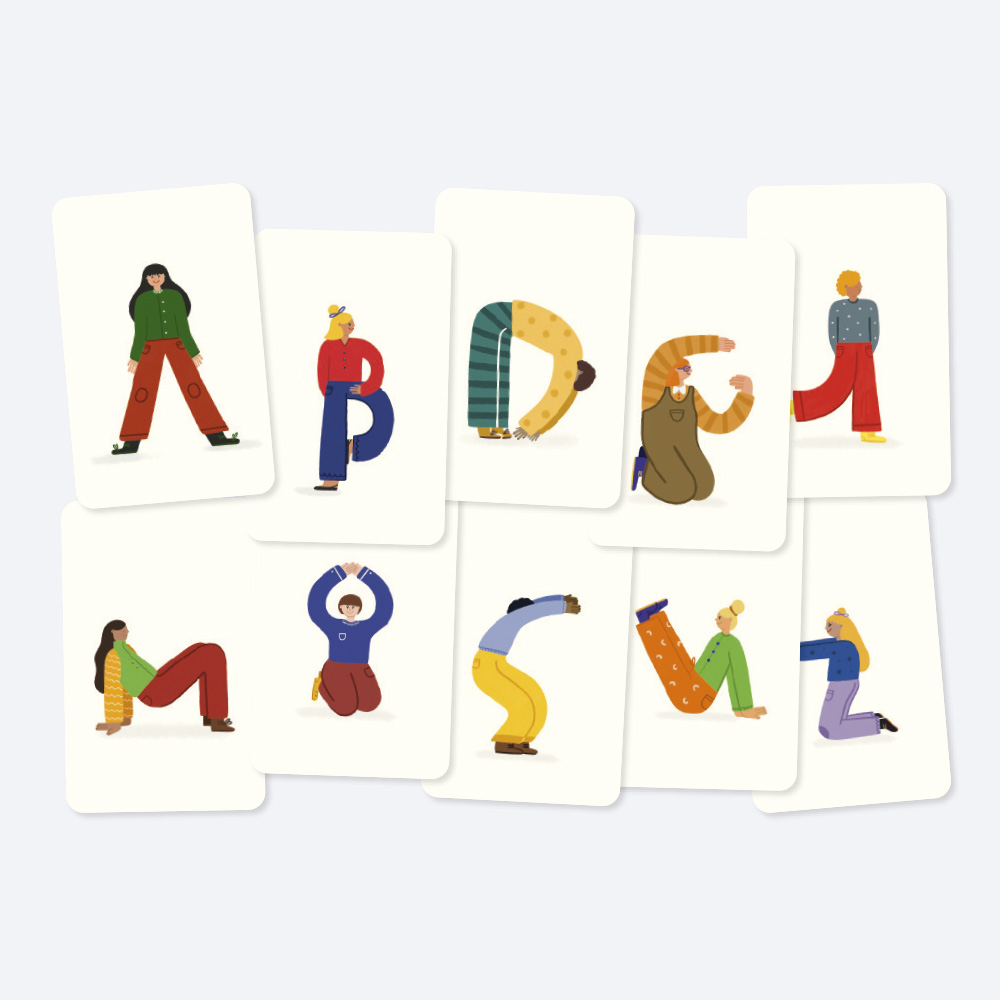
Letters in movement
These activities promote learning the letters of the alphabet through body movement and by imitating the shape of each individual letter.
Games and activities using the card decks
The four decks can be used in a variety of games and activities that foster the development of essential skills at this stage of growth, engaging cognitive, perceptual recognition, sensory and bodily–kinaesthetic aspects.
Leaf through the instruction booklet, that has been translated into English to facilitate your evaluation:
THE AUTHORS
Alessio Morando. Educationalist and socio-pedagogical professional educator.
Sofia Cramerotti. Educational psychologist, educationalist and Head of “Research and Development – Psycho-educational and Teaching Section” at the Erickson Study Centre.