EN
EN PT
PT

 EN
EN
 PT
PT

115 cards to express emotions and needs
Federica Taddia
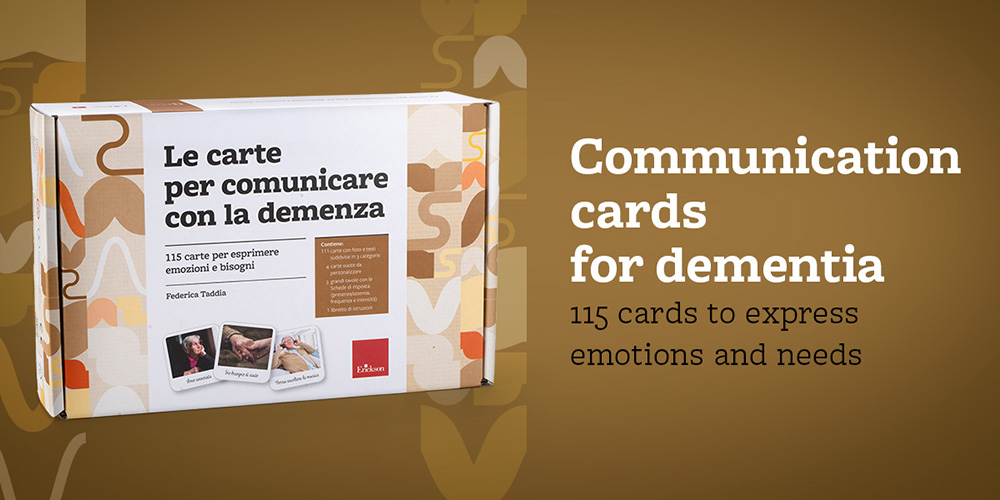
Communication is essential, yet for those with cognitive difficulties, it can become a daily challenge. Communication cards for dementia helps to express thoughts and wishes, but also reduces frustration and discomfort caused by communication difficulties. The aim of these cards is to improve the quality of relationships and help to ease challenging behaviours. The cards act as a bridge between older people and their carers, fostering inclusion, even for those from different cultural backgrounds.
How they are made
Carefully designed, the cards combine clear images with italic text, making them familiar and easy to read, even for older people with cognitive or language difficulties.
The cards are divided into three decks, identifying Moods and Emotions (blue cards), Physical Pain (yellow cards), and Needs (green cards), while 3 response boards help expressing the intensity and the frequency of certain feelings, and yes/no answers. The soft colours and simple graphics create a calming effect and help to maintain attention, while the large format makes them practical and easy to handle in any setting.
When they can be used
Suitable for use in various settings, including at home, in residential care facilities, hospitals, and day centres, these cards are an essential tool for family members, carers, and professionals who wish to build more genuine, respectful, and meaningful relationships with vulnerable individuals.
The box contents
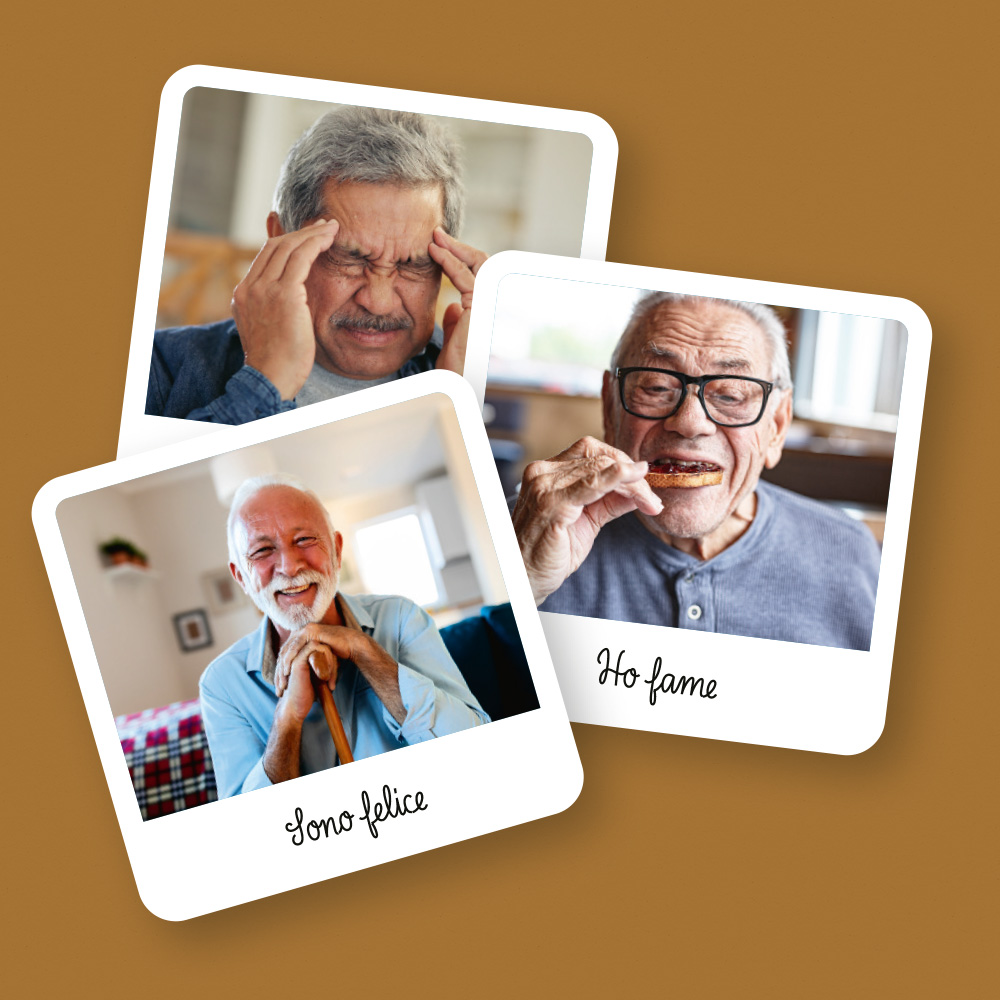
111 cards with photos and text divided into three categories (Emotional states, Needs and Physical pain)+ 4 blank cards for personalisation
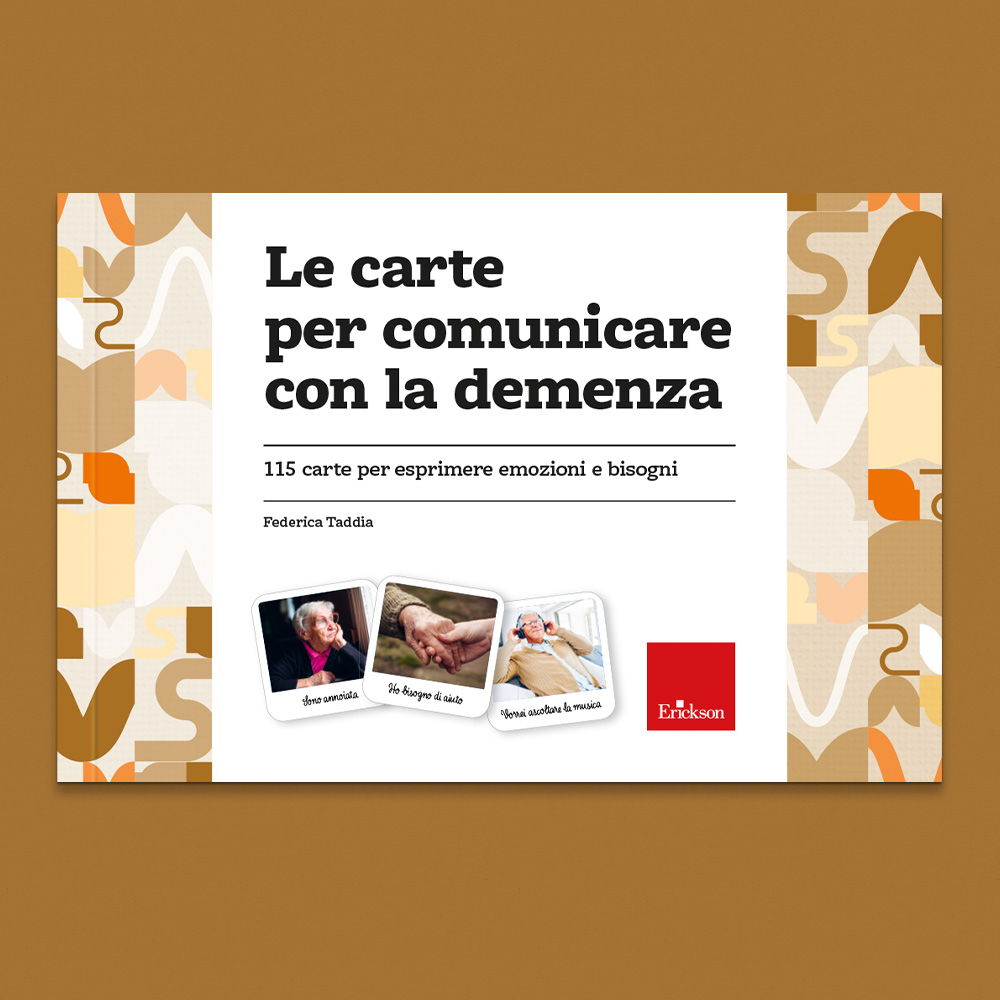
Instruction booklet
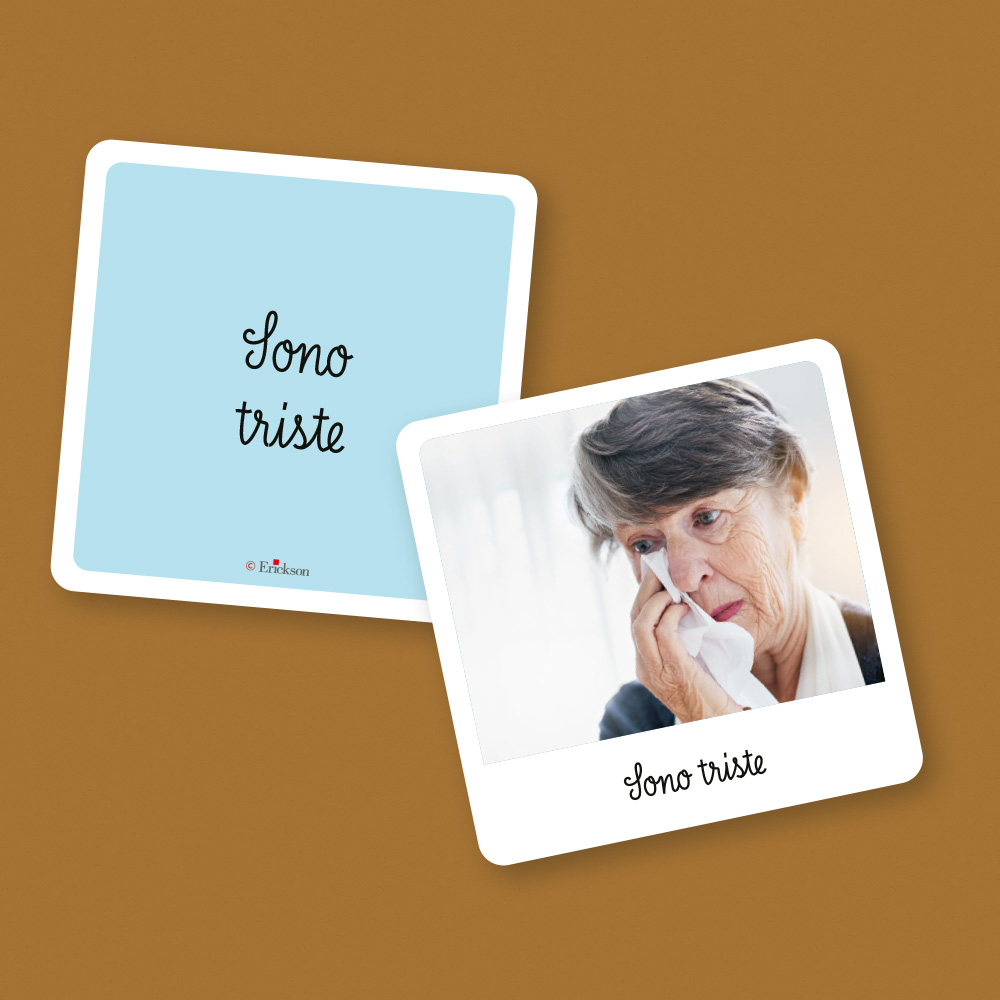
Blue cards: Moods and Emotions
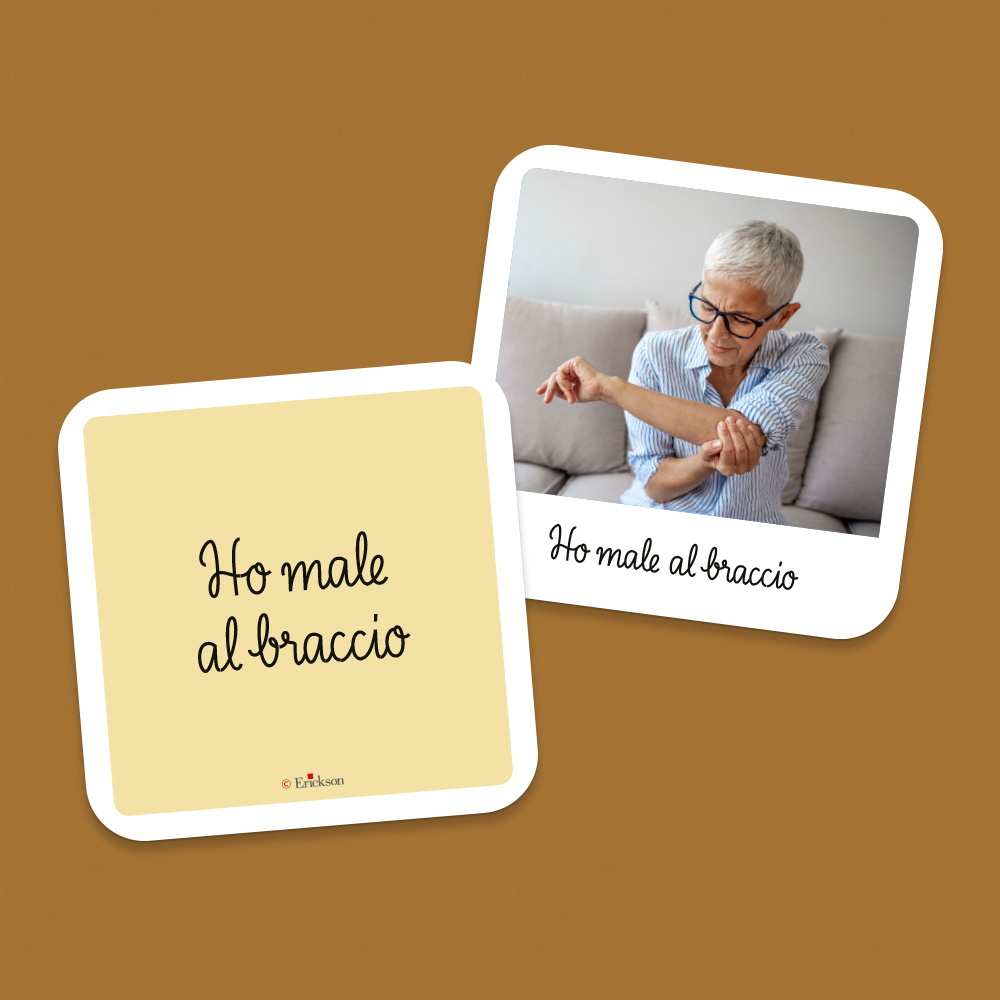
Yellow cards: Physical pain
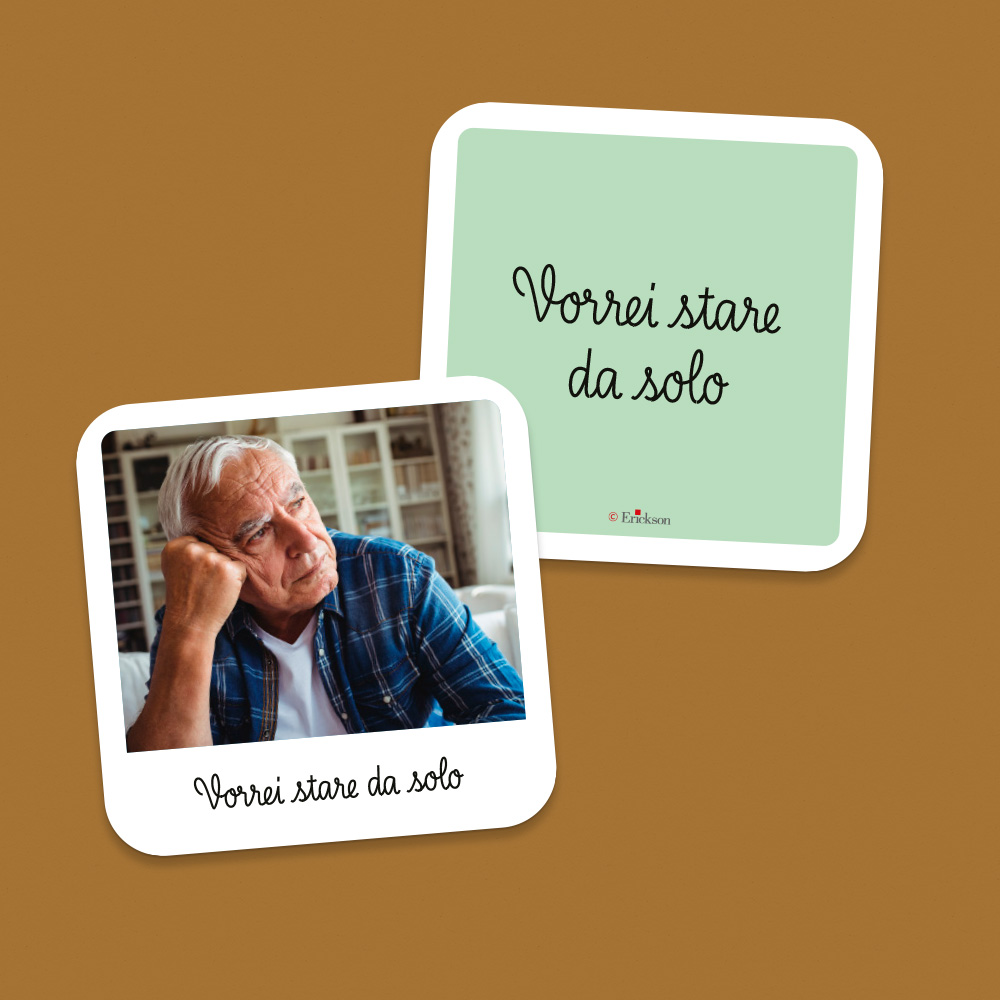
Green cards: Needs
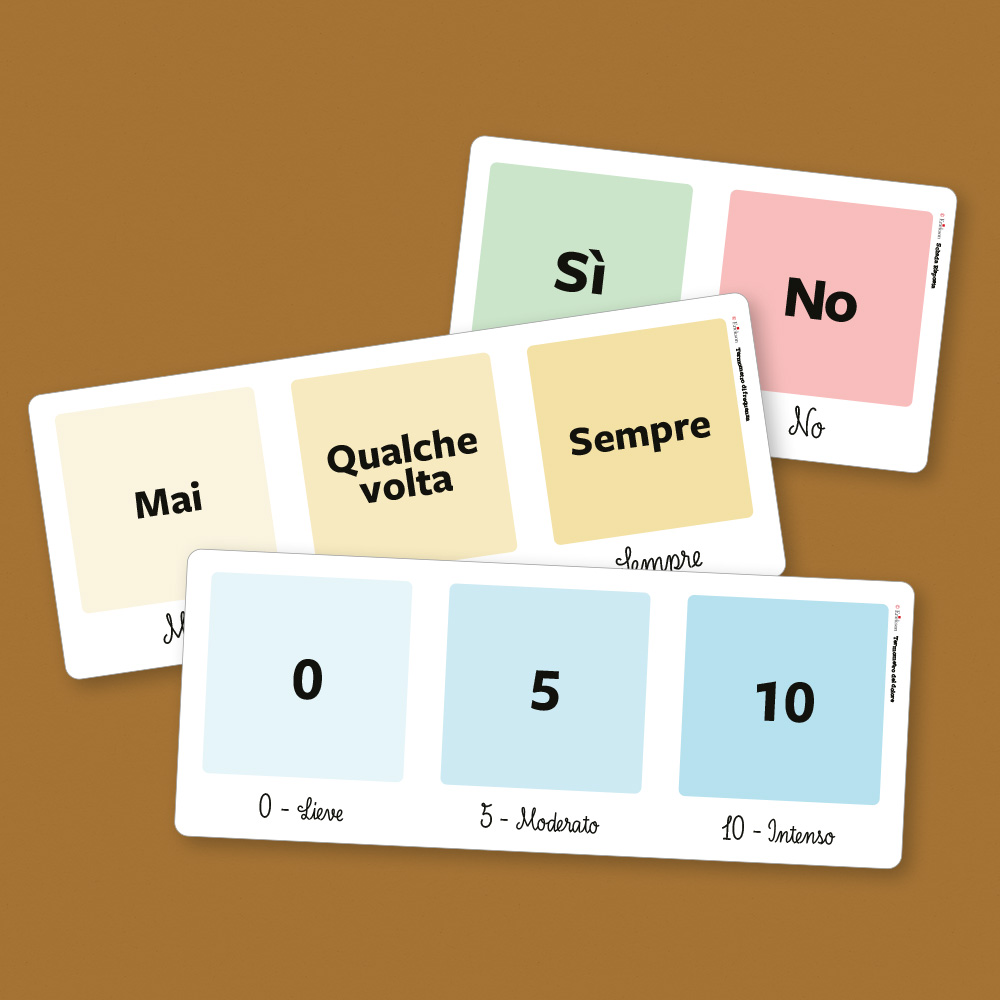
3 response boards help expressing the intensity and the frequency of any feeling, and yes/no answers
Leaf through the booklet translated into English to facilitate your evaluation of the product:
The Author
Federica Taddia is an expert in the pedagogy of the elderly, a trainer in health and social field and an adjunct professor at the University of Bologna, where she conducts laboratories on non-drug therapies.