EN
 PT

 EN
 PT
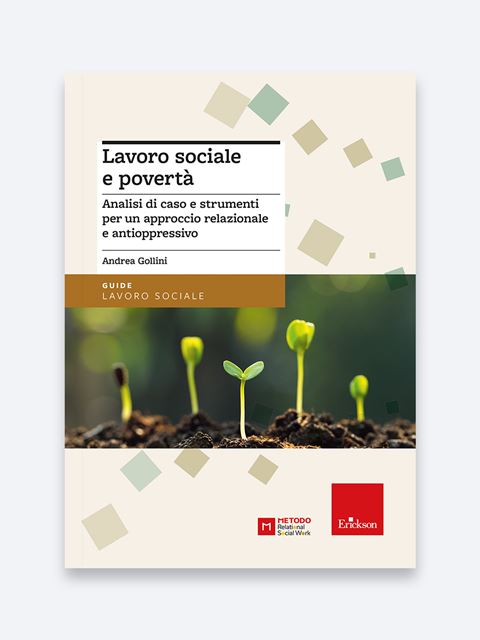
Case Analysis and Tools for a Relational and Anti-Oppressive Approach
Product: Book
Trim size in cm: 17x24cm
Pages: 288
ISBN: 9788859046837
Publication date: 01/11/2026
REQUEST A SAMPLE OR MORE INFORMATION
This book offers a critical and reflective perspective on working with people experiencing poverty, drawing on two main theoretical frameworks: Relational Social Work and the Poverty-Aware Social Work Paradigm. The result is a relational and anti-oppressive approach that places people’s dignity, participation, advocacy and shared responsibility at its core, moving beyond a view of support based solely on the provision of resources and services.
The book explores some of the key challenges encountered in professional practice: the stigma affecting people experiencing poverty as well as professionals themselves, the relationship between service provision and inclusion, barriers to accessing support measures, non-take-up, the digital divide, and bureaucratic obstacles that can exclude the very people experiencing the greatest vulnerability. Through theoretical frameworks, interpretative perspectives, case narratives and practical tools, the book supports the development of professional reflexivity, ethical awareness and the ability to act effectively in complex contexts.
Foreword (F. Folgheraiter and M.L. Raineri)
Introduction
PART ONE
Understanding the Context to Act with Awareness
Introduction
Chapter 1
Perspectives for Reading, Understanding and Acting Reflectively
Chapter 2
The Changing Face of Poverty: Challenges for Helping Professionals
Conclusions
PART TWO
Social Work Practice: Lessons from Experience
Introduction
Chapter 3
Five Perspectives for Navigating Practice
Conclusions
PART THREE
Narratives of Reflective Practice: Case Analyses
Introduction
Chapter 4
Freedom, Limits and Possibilities
Chapter 5
Dreams, Resilience and Agency
Chapter 6
Advocacy and Rights in Practice
Chapter 7
Applying the Paradigm at Systemic and Organisational Level
Conclusions
PART FOUR
The Helping Process and Practical Tools for Relational Support
Introduction
Chapter 8
The Helping Process
Chapter 9
Models and Practical Guidance
Conclusions
Concluding Reflections
References
Appendices