EN
EN PT
PT

 EN
EN
 PT
PT
Quick guide for teachers
Product: Book
Trim size in cm: 14x21cm
Pages: 120
ISBN: 9788859046981
Publication date: 01/09/2026
Suitable for: Lower secondary 1st level (ages 10-11), Lower secondary 2nd level (ages 12-13)
REQUEST A SAMPLE OR MORE INFORMATION
In the style of a Teacher Training notebook, the volume presents “ready-to-use” instructions to lower secondary school teachers to successfully deal with 14 problematic situations and difficulties typical of dyslexia. The reason for the behaviour is explained at the beginning of the chapter with a few short sentences (Why does he/she do this?), followed by simple and clear indications for the teacher on the attitudes and strategies to adopt (What to do) and to avoid (What to Avoid). Subsequently, further information and insights are provided to contextualise the situation or difficulty presented (What to keep in mind) and tools and strategies on how to intervene regarding some crucial aspects (A few ideas on how to intervene). At the end of each chapter there is the Expert advice, with practical suggestions to be implemented immediately.
Presentation
Introduction
1. They read but get the words wrong
2. They understand little when reading
3. They write little and with a lot of mistakes
4. They struggle to convey what they know
5. Tey struggle to take notes
6. They do not know what to study and are disorganized
7. They study a lot, but it does not show
8. They struggle to answer and tend to close in on themselves
9. They easily lose control
10. They have low self-esteem
11. They tend to isolate themselves from the rest of the class
12. They cannot bear mistakes
13. They refuse help even when in need
14. They get distracted and appear disinterested
Connclusions
Bibliography

Quick guide for teachers
Lower secondary school
This is a quick guide for teachers lower secondary school presenting 14 common problem situations and difficulties associated with dyslexia. The guide offers suggestions on which approach teachers should adopt — and which must avoid — when facing with these problematic situations.
BOOK STRUCTURE AND CONTENTS
Dyslexia – What to Do and What to Avoid is divided into 14 chapters:
Each chapter contains:
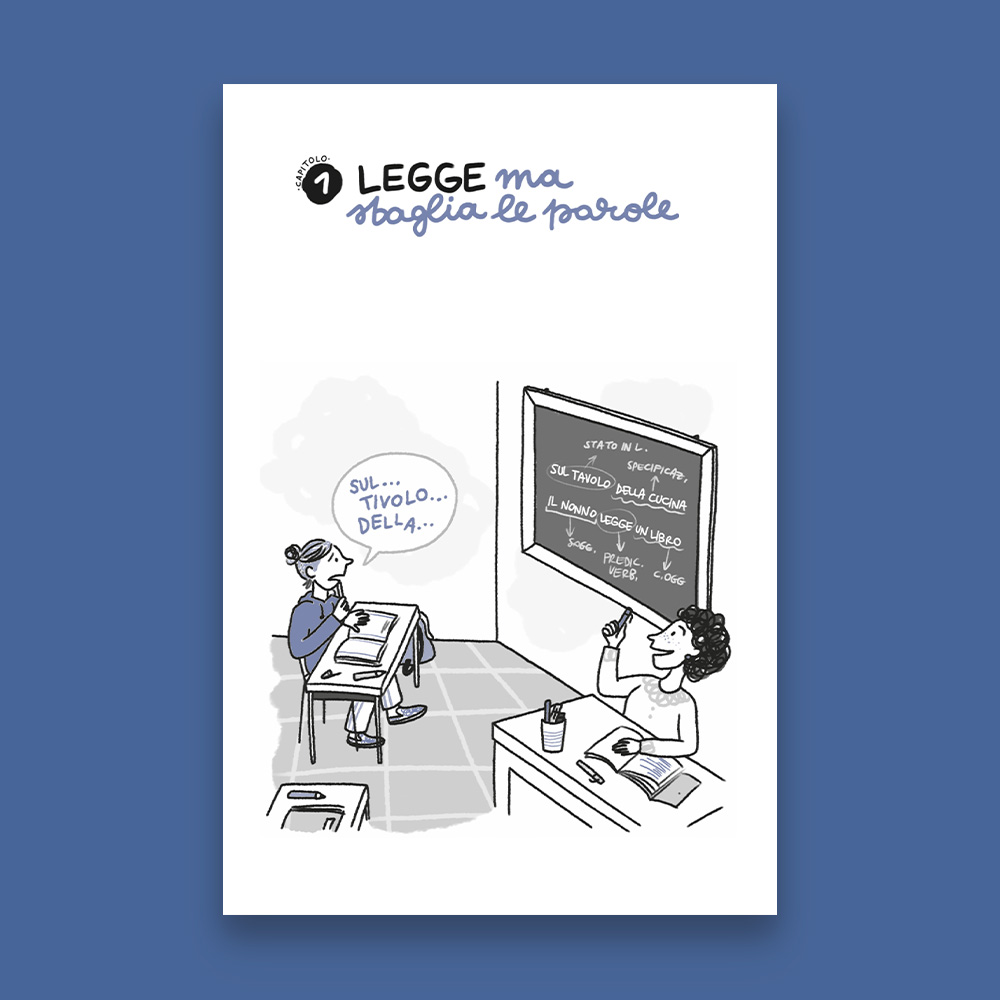
At the beginning of each chapter, an illustration introduces the problematic situation.
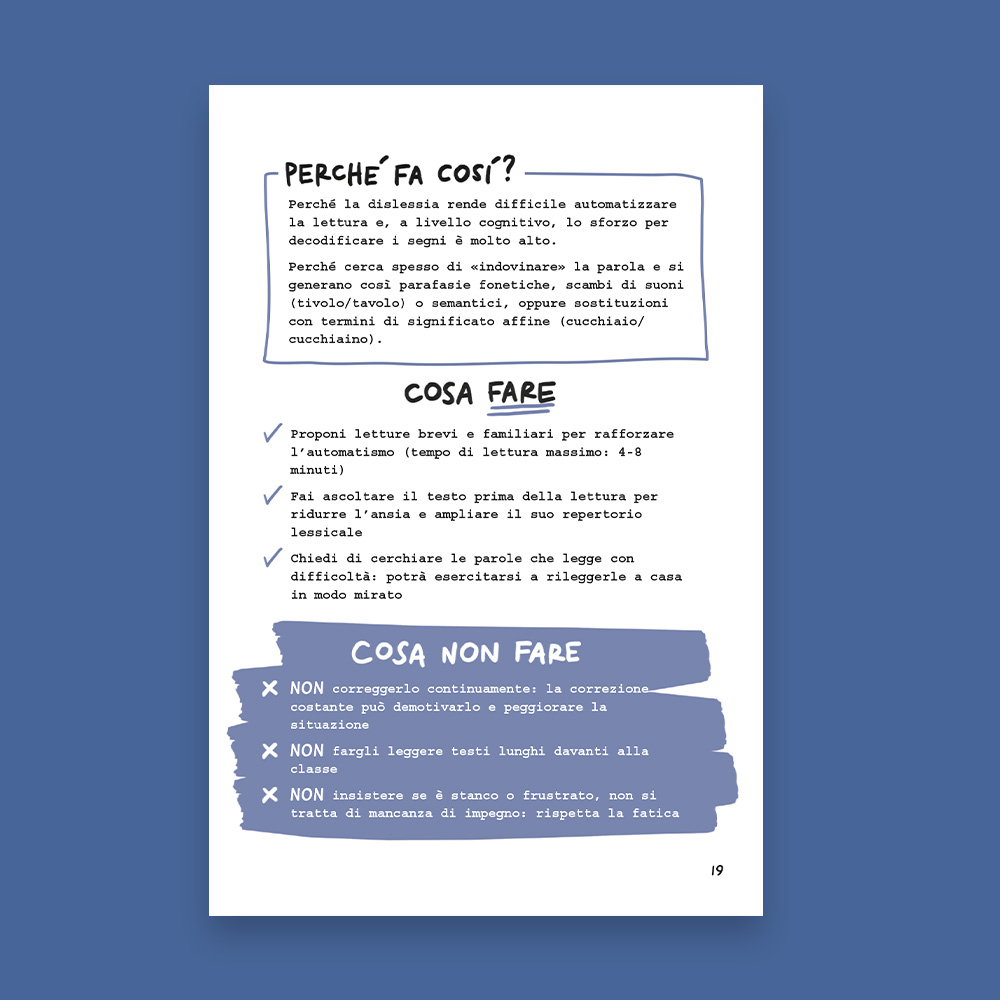
Explanations of the behaviour: Why does he/she do that?
Brief and simple indications for deciding What to do and reflect on What to avoid.
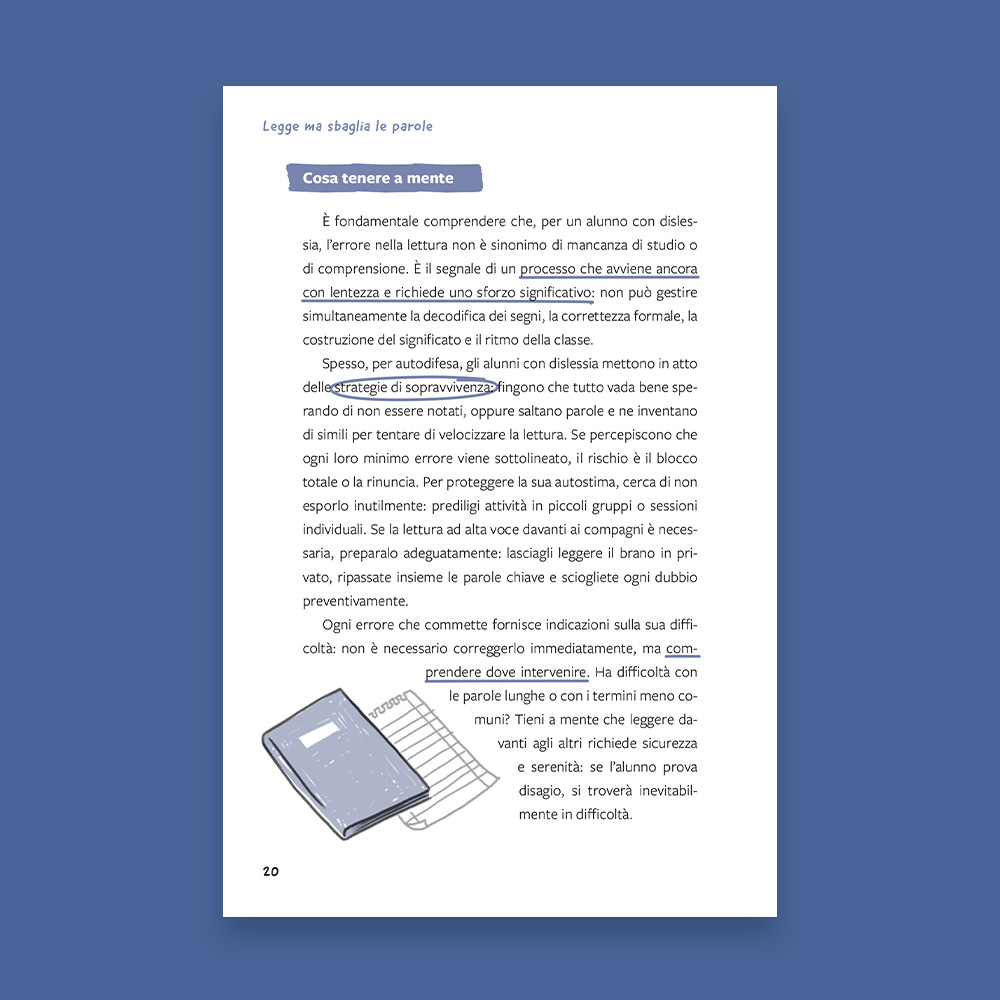
A more in-depth description to reflect on the specific behaviour (What to keep in mind)
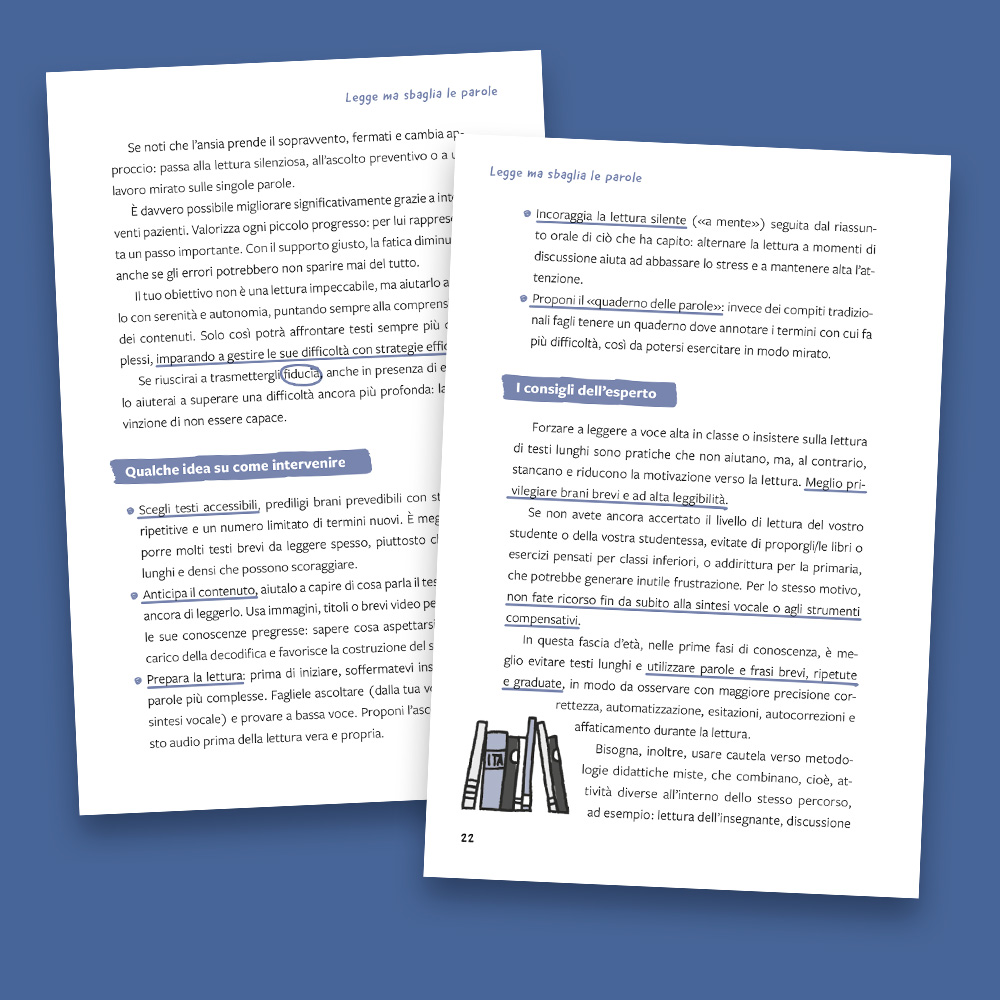
Some ideas on how to intervene in individual classroom situations and expert’s advice.
Leaf through some pages of volume which have been translated into English to facilitate your evaluation of the product.
THE AUTHOR
Gianluca Lo Presti
Qualified psychologist specialising in the psychopathology of learning, holding a second-level Master’s degree in Learning Psychopathology from the University of Padua. He is the author of several books on dyslexia and Specific Learning Disorders (SLD). He works in clinical assessment, diagnosis and intervention, coordinating a network of local services that support children and young people with learning disorders, including dyslexia and other Specific Learning Disorders (SLD).