EN
EN PT
PT

 EN
EN
 PT
PT
Product: Book
Trim size in cm: 21x29,7
Pages: 182
ISBN: 9788859009740
Publication date: 01/03/2016
Suitable for: Primary 2nd level (ages 8-10)
REQUEST A SAMPLE OR MORE INFORMATION
 Rights sold to:
Slovenia
Rights sold to:
Slovenia
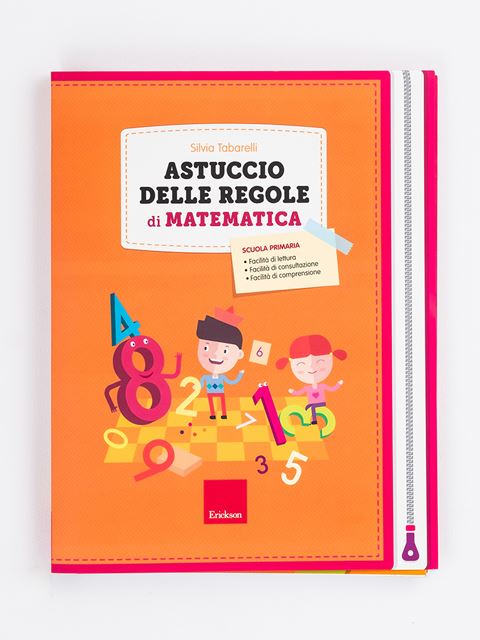
The case of maths rules for primary school has arrived! You’ll find everything you need in it for revising the rules of maths and geometry, calculation procedures and summary tables with formulas!
For example, if you don’t remember how to classify, count, compare and order natural numbers or you want to revise how powers are calculated, go to the numbers section. Or let’s say you want to know how to calculate the perimeter or area of a polygon? Look up the rule in the space and shapes section, there are pictures to help you understand better too!
It’s easy to use: in each section there are plenty of rules to revise, from the easiest to the most complex. Each rule comes with an example and an easy-to-understand definition. If you don’t remember how to do a sum, check the procedures pages: you’ll find the calculation with a step-by-step explanation!
Numbers
Natural numbers
Powers
Relative numbers
Rounding off
Multiples and divisors
Prime numbers
Operations
Addition
Subtraction
Multiplication
Division
Arithmetic expressions
Fractions
Types of fraction
Operating with fractions
Calculating percentage
Decimal numbers
Addition
Subtraction
Multiplication
Division
Measurements
Length
Capacity
Mass
Time
Value
Space and shapes
Lines, segments and angles
Polygons
Perimeter
Surface area
Regular polygons
Circle and circumference
Solids
Problems
Solving problems
Problems with fractions
Problem with percentages
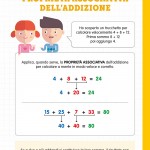
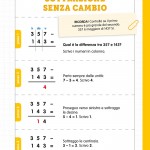
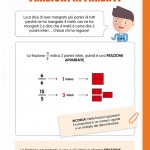
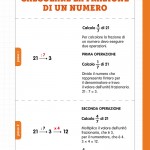

The case of maths rules
The case of maths rules contains everything you need for learning or revising the rules and definitions of maths and geometry, calculation properties and procedures, and summary tables with formulas.
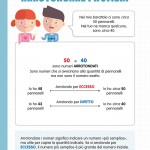
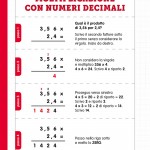
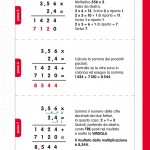
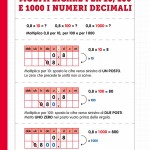
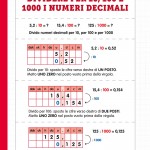
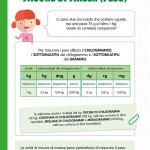
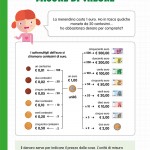
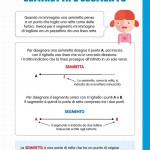
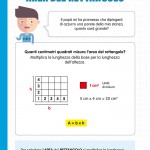
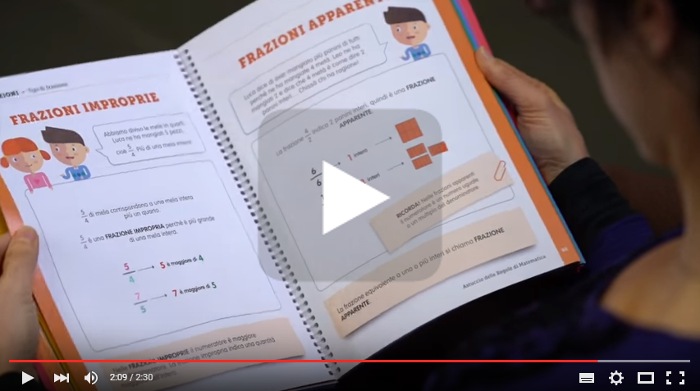
Each page is dedicated to the explanation of a single rule or procedure and is introduced with a cartoon which illustrates the content, providing pupils with «visual hooks» which enable them to understand mathematical code better.
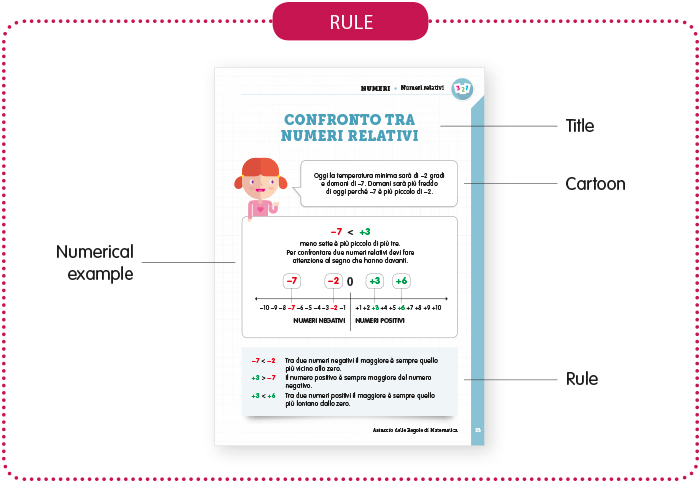
Each rule is presented on the page in the same way: the title of the topic, a cartoon which introduces the application of the rule, a numerical example and the statement of the rule.
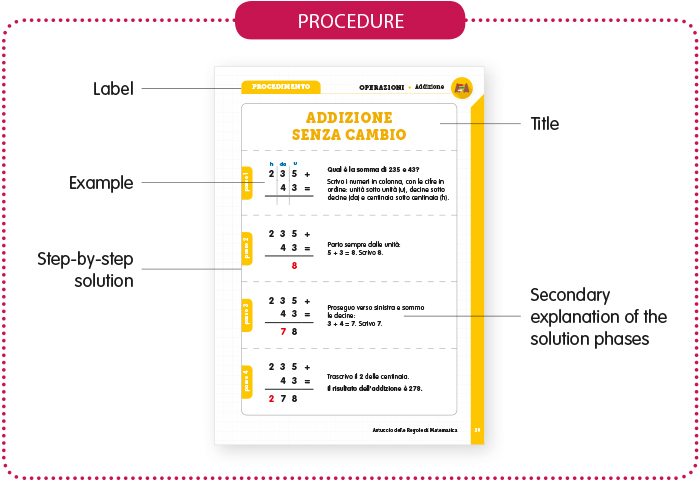
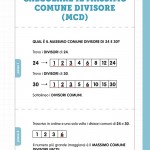
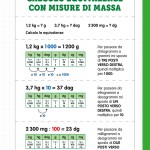
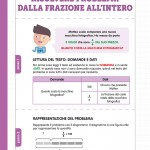
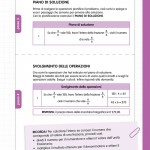
The solution procedures for the calculations and problems are given step-by-step on the pages identified with the procedure label. The title on the top of the page identifies the topic, whilst the numerical example always appears alongside an explanation of what to do in each solution phase.

Each section has a different colour and presents the main rules of the topic it deals with
All topics follow an increasing level of difficulty in the same way as they are dealt with from year one to five at school
The case of maths rules is recommended for pupils with dyscalculia too. It can in fact be considered amongst “non-specific” or “functional” compensatory tools, which support deficient aspects of “transversal” skills such as memory, attention etc.