EN
EN PT
PT

 EN
EN
 PT
PT
Quick guide for teachers
Product: Book
Trim size in cm: 14x21cm
Pages: 120
ISBN: 9788859045373
Publication date: 01/05/2026
Suitable for: Primary 1st level (ages 6-7), Primary 2nd level (ages 8-10)
REQUEST A SAMPLE OR MORE INFORMATION
 Rights sold to:
Brazil
Rights sold to:
Brazil
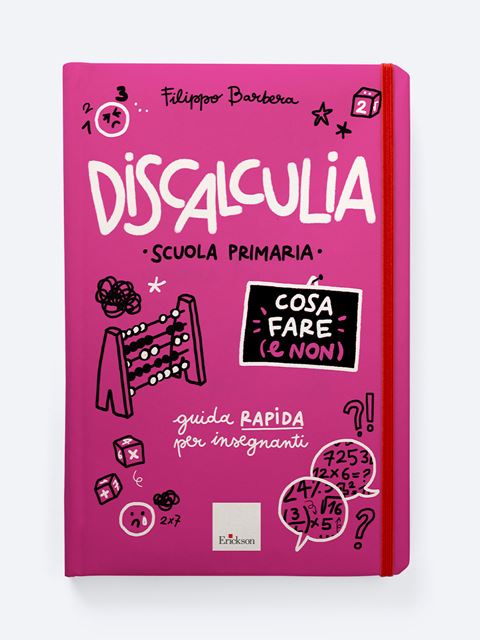
Dyscalculia is a Specific Learning Disorder (SLD) of neurobiological origin that affects mathematical ability, calculation and number understanding, without impairing intelligence. In this volume – written in the style of a Teacher Training workbook – Filippo Barbera provides primary school teachers with ready-to-use guidance for successfully addressing 11 common problem situations and difficulties associated with dyscalculia.
Presentation
Introduction
1. Has difficulty distinguishing between numbers
2. Has difficulty counting
3. Has difficulty performing mental arithmetic
4. Does not memorise times tables
5. Struggles with column calculations
6. Confuses units of measurement
7. Has difficulty with geometry
8. Struggles to orientate themselves in time
9. Does not know how to handle money
10. Struggles to solve mathematical problems
11. Has difficulty following the maths lesson
Bibliography

Quick guide for teachers
PRIMARY SCHOOL
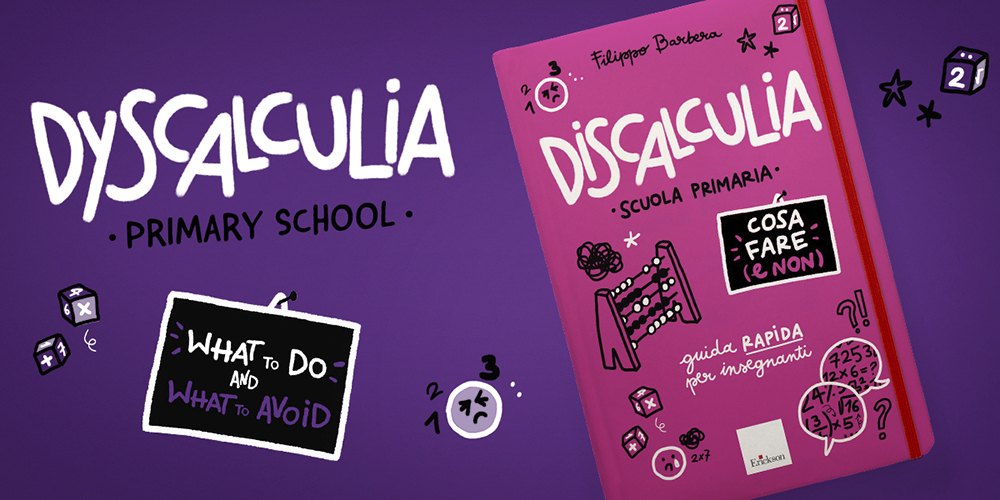
This is a quick guide for teachers of primary school presenting 11 common problem situations and difficulties associated with dyscalculia. The guide offers suggestions on which approach teachers should adopt — and which must avoid — when facing with these problematic situations.
BOOK STRUCTURE AND CONTENTS
Dyscalculia – What to Do and What to Avoid is divided into 11 chapters:
Each chapter contains
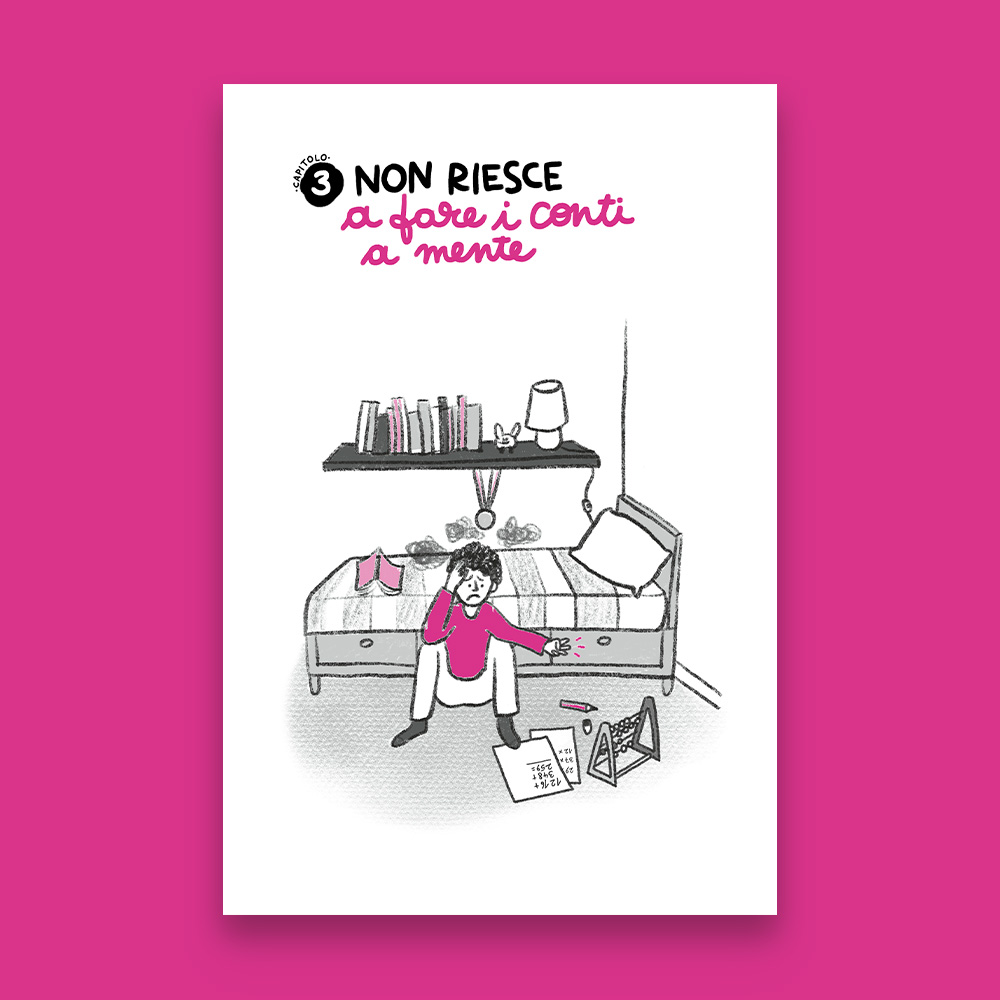
At the beginning of each chapter, an illustration introduces the problematic situation.
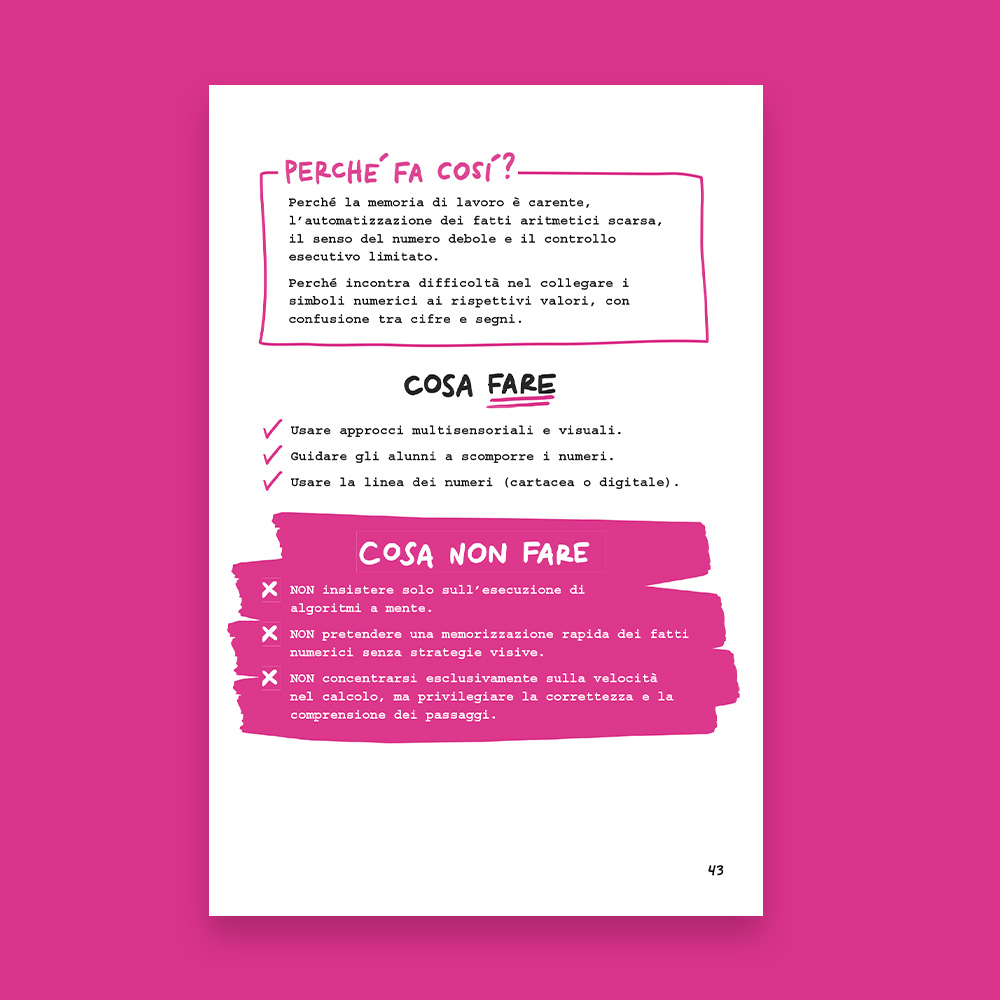
• Explanations of the behaviour: Why does he/she do that?
• Brief and simple indications for deciding What to do and reflect on What to avoid.
A more in-depth description to reflect on the specific behaviour (What to keep in mind)
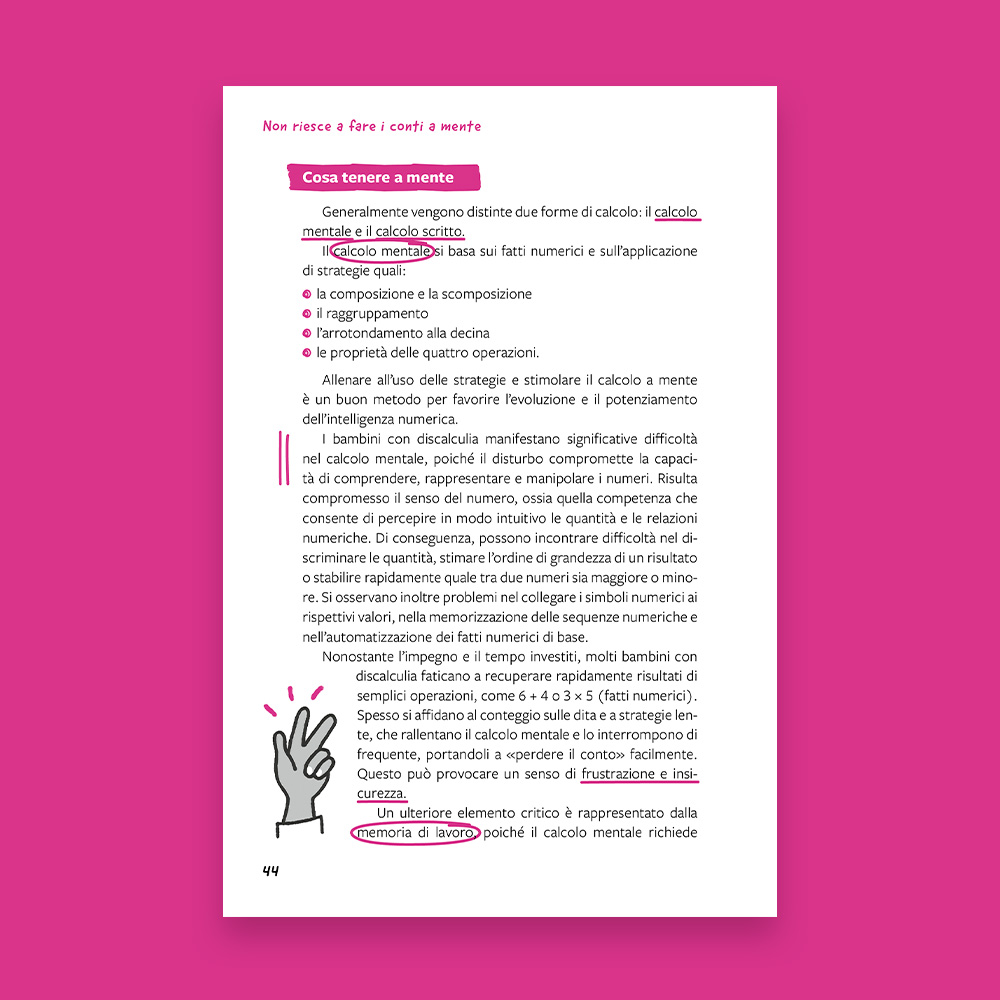
Some ideas on how to intervene in individual classroom situations and expert’s advice.
Leaf through some pages of volume which have been translated into English to facilitate your evaluation of the product.
THE AUTHOR
Filippo Barbera
A graduate in Primary Education and Psychology, and primary school teacher specialized in Psychopathology of learning and the Montessori method; trainer for teachers of all levels, carries out awareness-raising activities on Specific Learning Disorders.