EN
EN PT
PT

 EN
EN
 PT
PT
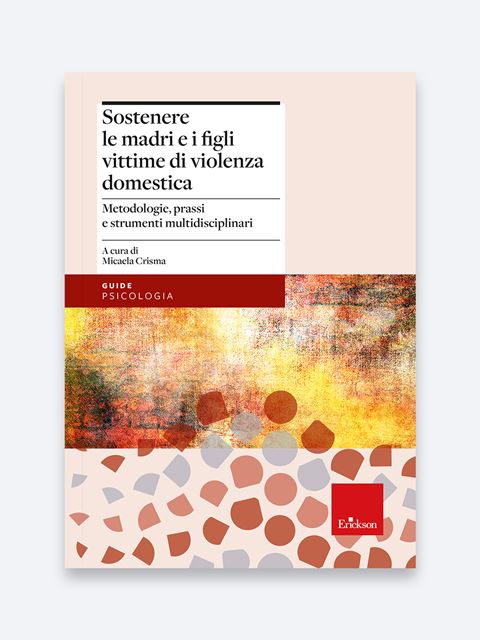
Methodologies, practices and multidisciplinary tools
Product: Book
Trim size in cm: 17x24cm
Pages: 360
ISBN: 9788859045229
Publication date: 01/05/2026
REQUEST A SAMPLE OR MORE INFORMATION
Violence against women is an increasingly visible phenomenon, yet it is still often underestimated in its complexity, especially when children are involved.
This volume aims to provide concrete tools for professionals working in this field, supporting them in guiding women and children along pathways out of violence in a competent and informed way. The text helps professionals recognise the different forms in which gender-based violence manifests and understand its dynamics, including situations in which the relationship with a violent partner continues to represent a space of risk, control and persecution.
A key element of the book is its focus on the role of institutions and professionals: without adequate training, there is a risk of failing to properly identify violence and exposing women to secondary victimisation. For this reason, the volume adopts a multidisciplinary approach, in which psychologists, psychotherapists, social workers, paediatricians, teachers and lawyers engage in dialogue, offering integrated and complementary perspectives.
Foreword (Patrizia Romito)
Introduction (Micaela Crisma)
PART ONE
How Intimate Partner Violence Affects Women and Their Children
Violence Against Women and Involved Children: The Scale of the Phenomenon (Micaela Crisma and Federica Anastasia)
Trauma Resulting from Violence (Maria Grazia Apollonio)
Intimate Partner Violence and the Attack on Motherhood (Micaela Crisma, Maria Grazia Apollonio and Federica Anastasia)
Separating from a Violent Partner (Micaela Crisma and Maria Grazia Apollonio)
Court-Appointed Technical Assessments in Separation Cases: Critical Issues in Identifying Violence and Risks of Denial (Maria Grazia Apollonio and Micaela Crisma)
When Children Are Very Young (Micaela Crisma and Laura Pomicino)
Supporting Mothers of School-Age Children (Maria Grazia Apollonio and Federica Anastasia)
Mothers and Adolescent Children (Laura Pomicino)
Mothers at Double Risk of Re-victimisation (Elisa Gallinaro and Micaela Crisma)
PART TWO
Beyond Psychological Support: A Multidisciplinary Approach
The Role of the Social Worker in Assessing Situations of Violence: Focus on Mothers and the Invisibility of Fathers (Marco Grassini)
The Role of Teachers in Addressing Domestic and Witnessed Violence (Daniela Paci)
The Paediatrician’s Perspective: Protecting Young Patients Through Supporting Mothers (Anna Libera Latino)
The Anti-Violence Centre Lawyer: Obstacles and Challenges in Protecting Women Experiencing Violence (Anna Ventriglia)
Protecting Mothers Who Are Victims of Violence and Their Children in Criminal Proceedings (Elena Biaggioni)
Violence Against Mothers: Legal Protection Tools in Civil Law (Federica Obizzi)
Legal Tools for Protecting Minors in Civil Proceedings (Angela Filippi)
PART THREE
Repairing the Damage
Therapy After Leaving Violence (Micaela Crisma and Federica Anastasia)
When the Mother Is Also Violent (Micaela Crisma and Federica Anastasia)
Appendices
Bibliography
Webography