EN
EN PT
PT

 EN
EN
 PT
PT
Updates, practice and clinical applications for treating emotional needs
Product: Book
Trim size in cm: 17x24cm
Pages: 480
ISBN: 9788859045236
Publication date: 01/05/2026
REQUEST A SAMPLE OR MORE INFORMATION
A manual that combines scientific rigour with careful attention to the human dimension of clinical work, applying Schema Therapy to children and young people in an integrated and practical way. The volume emerges from collaboration among clinicians, researchers and trainers with extensive therapeutic experience, and takes the form of a collected work offering an up-to-date overview of the theoretical foundations and clinical applications of Schema Therapy in developmental age. A central part of the book is devoted to the dialogue between Schema Therapy and other contemporary approaches, such as Dialectical Behaviour Therapy, Acceptance and Commitment Therapy, Mindfulness and the Coping Power Program.
Introduction (Stefano Terenzi and Christof Loose)
Schema Therapy: Theory, Practice and Updates (Stefano Terenzi, Nicola Marsigli and Rosario Capo)
Schema Therapy in Developmental Age (Stefano Terenzi and Christof Loose)
Early Maladaptive Schemas and Psychopathological Risk in Developmental Age (Matteo Fabris)
The Concept of Modes in Schema Therapy: Theoretical Developments, Clinical Applications and Empirical Evidence (Stefano Terenzi)
The Scopistic-Functionalist Approach in Schema Therapy for Children and Adolescents: Functional Analytic Schema Therapy (FAST) (Rosario Capo and Stefano Terenzi)
Schema Therapy for Children and Adolescents: Integration Models with DBT and ACT (Claudio Paloscia, Silvia Petroni and Marcello Ruggiero)
Schema Therapy for Children and Adolescents: Integration Models with COSP™ and CPP (Claudio Paloscia and Elena Arganini)
When Polyvagal Theory Meets Schema Therapy: New Perspectives for the Wellbeing of Children and Adolescents (Roberta Rubbino)
Schema Therapy and Mindfulness Cognitive Therapy B-A (Anna Bartoccini)
Schema Therapy for Children and Adolescents: When Parent Coaching Meets Compassion (Barbara Gentile)
Schema Therapy with Children and Adolescents for Internalising Disorders (Stefano Terenzi)
Schema Therapy with Children and Adolescents for Externalising Disorders (Stefano Terenzi)
Schema Therapy in the Treatment of Eating Disorders (Laura Beccia)
Schema Therapy for Developmental Age: A Case of OCD (Caterina Sirimarco)
Using Psychomotor Practices Through Play to Meet Core Emotional Needs (Felice Vecchione)
Movement and Bodily Experience in Meeting Core Emotional Needs (Patrizia Scollato)
Working on Resources: Building the Therapeutic Relationship and Strengthening the Healthy Adult Mode (Mariagrazia Brun and Caterina Sirimarco)
Bibliography
Online Resources
Appendices – Online Resources
1. DISC: Düsseldorf Illustrated Schema Questionnaire for Children
2. B-YSQ-A: Young Schema Questionnaire for Adolescents – Brief Version
Schema Therapy is an integrative psychotherapeutic approach developed by Jeffrey E. Young, combining elements of cognitive behavioural therapy, attachment theory and Gestalt therapy.
Originally developed to treat personality disorders, it has since become an evidence-based model widely used to address a broad range of psychological difficulties, including relational and existential problems, as well as complex psychopathological conditions that are resistant to traditional CBT interventions.
In recent years, Schema Therapy has increasingly engaged with other contemporary therapeutic approaches, giving rise to new models — such as Contextual Schema Therapy — that place greater emphasis on the therapeutic relationship, present-moment experience and processes of change. Within these evolving perspectives, core emotional needs are sometimes reorganised into broader dimensions, such as the need for attachment and the need for recognition.
THE VOLUMES

Break the pattern!
This book guides readers in discovering the mental and emotional patterns that develop from past experiences and unmet emotional needs. Through a clear and accessible pathway, the author helps readers recognise these “scripts”, understand their origins and transform them. The book goes beyond explanation, offering practical tools to develop greater self-awareness, break dysfunctional cycles and build healthier ways of relating to oneself and others.
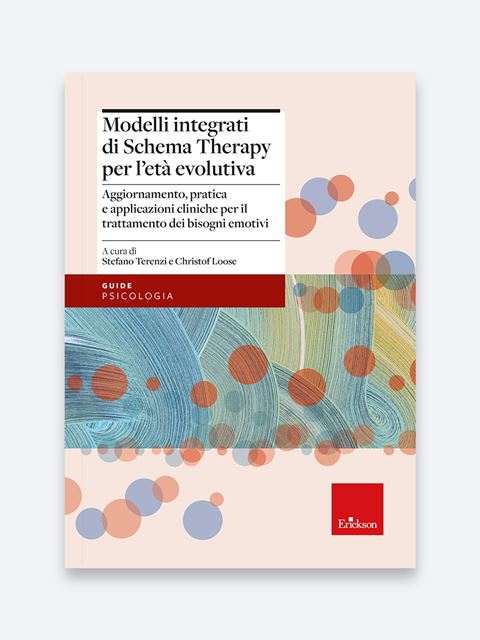
Integrated schema therapy models for children and young people
A manual that combines scientific rigour with careful attention to the human dimension of clinical work, applying Schema Therapy to children and young people in an integrated and practical way. The volume emerges from collaboration among clinicians, researchers and trainers with extensive therapeutic experience, and takes the form of a collected work offering an up-to-date overview of the theoretical foundations and clinical applications of Schema Therapy in developmental age.
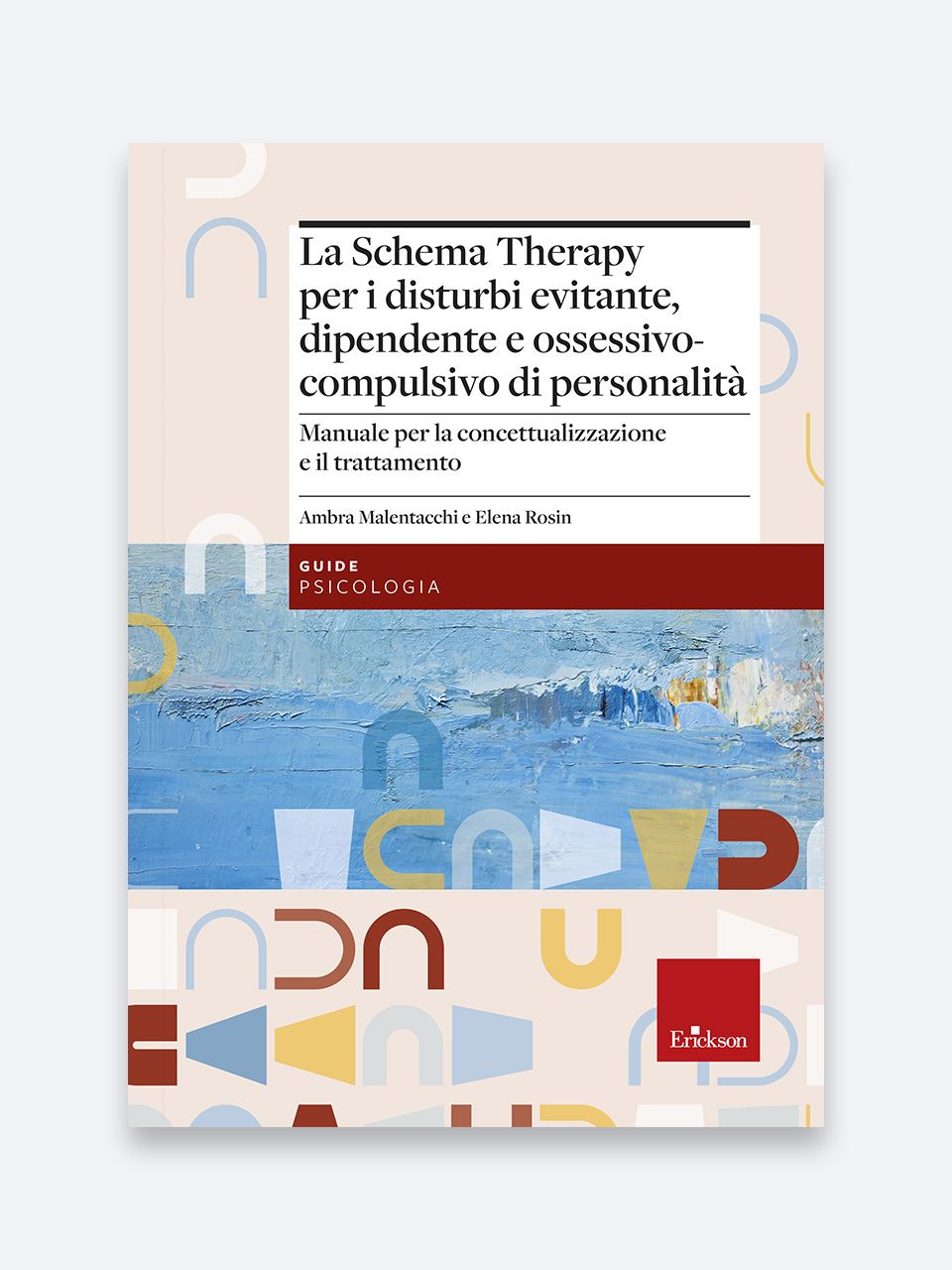
Schema Therapy for Avoidant, Dependent, and Obsessive-Compulsive Personality Disorders
This manual presents Schema Therapy as an effective, structured approach for working with Cluster C personality disorders (avoidant, dependent and obsessive-compulsive). It helps professionals support patients in recognising, experiencing and expressing emotions safely, reducing shame and anxiety while improving relational skills.
Practical and clinically oriented, the volume combines theoretical foundations with case studies and integrated therapeutic strategies. It also outlines Schema Therapy’s interdisciplinary model, showing how it promotes more adaptive coping patterns and reduces maladaptive emotional and behavioural responses rooted in early experiences.
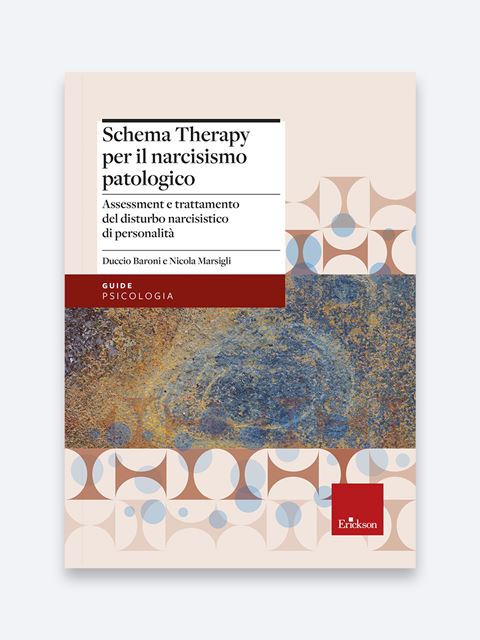
Schema Therapy for Pathological Narcissism
The volume outlines a therapeutic program that allows a different treatment with respect to the different modes of grandiose and vulnerable expression of pathological narcissism through Schema Therapy, and presents suggestions, examples of interviews, and cards with outlines for the clinical interview, diagnostic imaging and the description of intervention techniques.
The book provides the reader with an overview of the changes that, over time, have affected the constructs of narcissism and narcissistic personality disorder and describes the main state and trait patterns that characterize the current scientific landscape with a look to the future and to those integrative models that seek to build a bridge between the two perspectives.