EN
EN PT
PT

 EN
EN
 PT
PT
Pair-based activities for primary school
Product: Book
Trim size in cm: 21x29,7cm
Pages: 96
ISBN: 9788859044277
Publication date: 01/01/2026
Suitable for: Primary 2nd level (ages 8-10)
REQUEST A SAMPLE OR MORE INFORMATION
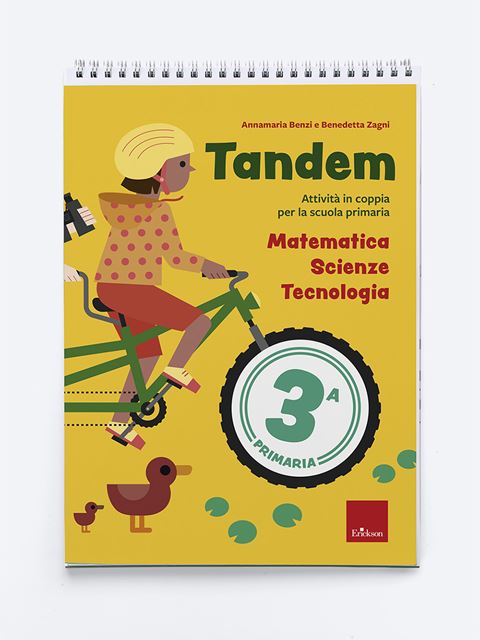
A teaching workbook designed to be used in pairs, containing 39 activities in maths, science and technology developed according to the principles of cooperative learning. The worksheets are completed by two pupils sitting opposite each other. Each pair works on the same activity with two different tasks: Worksheet A, more advanced, and Worksheet B, simplified. The two versions complement each other, encouraging individual responsibility and positive interdependence.
Each worksheet is enriched with a visual key and a table that gradually guides the learning path, combining subject-specific and socio-emotional objectives.
Introduction
What is cooperative learning?
TANDEM: what it looks like
TANDEM: how to use it
Self-assessment
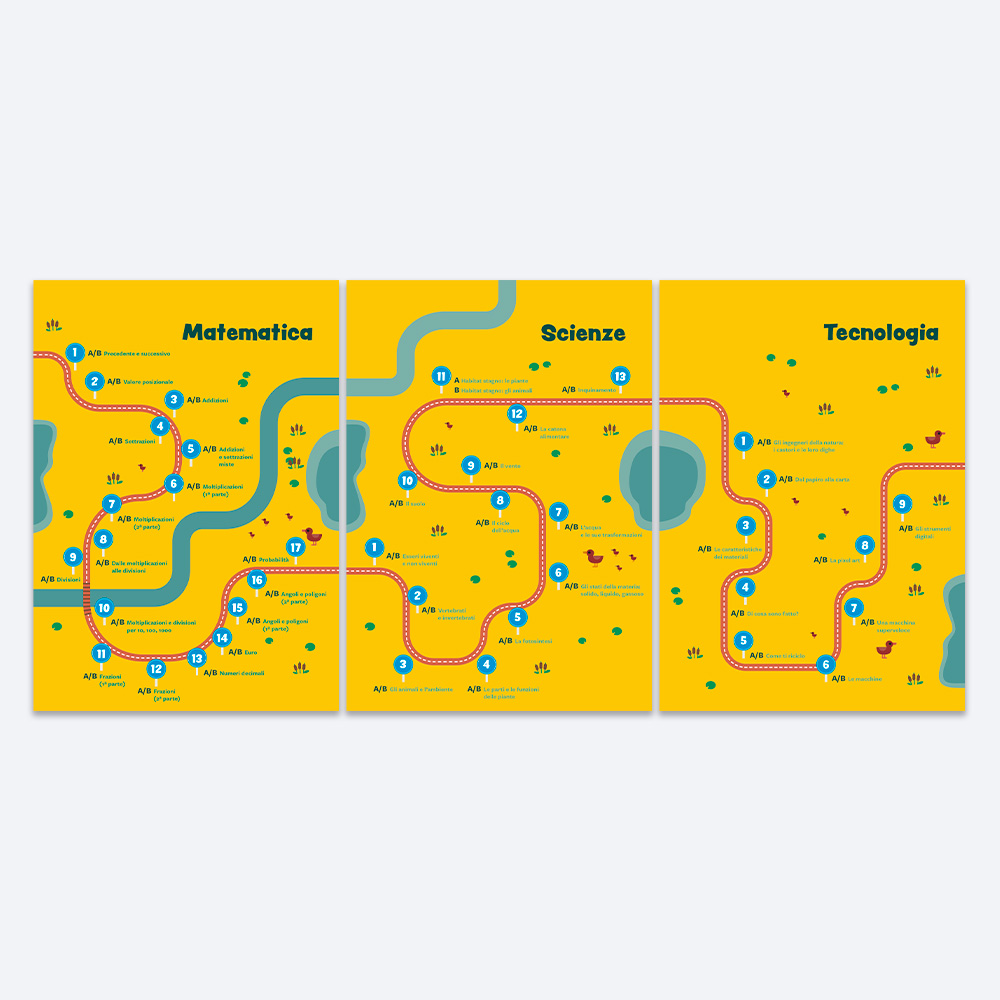
Maths
Worksheet 1A/B – Previous and next number
Worksheet 2A/B – Place value
Worksheet 3A/B – Addition
Worksheet 4A/B – Subtraction
Worksheet 5A/B – Mixed addition and subtraction
Worksheet 6A/B – Multiplication (Part 1)
Worksheet 7A/B – Multiplication (Part 2)
Worksheet 8A/B – From multiplication to division
Worksheet 9A/B – Division
Worksheet 10A/B – Multiplying and dividing by 10, 100, 1,000
Worksheet 11A/B – Fractions (Part 1)
Worksheet 12A/B – Fractions (Part 2)
Worksheet 13A/B – Decimal numbers
Worksheet 14A/B – Euros
Worksheet 15A/B – Angles and polygons (Part 1)
Worksheet 16A/B – Angles and polygons (Part 2)
Worksheet 17A/B – Probability
Science
Worksheet 1A/B – Living and non-living things
Worksheet 2A/B – Vertebrates and invertebrates
Worksheet 3A/B – Animals and their environment
Worksheet 4A/B – Parts and functions of plants
Worksheet 5A/B – Photosynthesis
Worksheet 6A/B – States of matter: solid, liquid, gas
Worksheet 7A/B – Water and its transformations
Worksheet 8A/B – The water cycle
Worksheet 9A/B – Wind
Worksheet 10A/B – Soil
Worksheet 11A – Pond habitat: plants
Worksheet 11B – Pond habitat: animals
Worksheet 12A/B – The food chain
Worksheet 13A/B – Pollution
Technology
Worksheet 1A/B – Nature’s engineers: beavers and their dams
Worksheet 2A/B – From papyrus to paper
Worksheet 3A/B – Properties of materials
Worksheet 4A/B – What am I made of?
Worksheet 5A/B – How you can recycle me
Worksheet 6A/B – Machines
Worksheet 7A/B – A super-fast machine
Worksheet 8A/B – Pixel art
Worksheet 9A/B – Digital tools
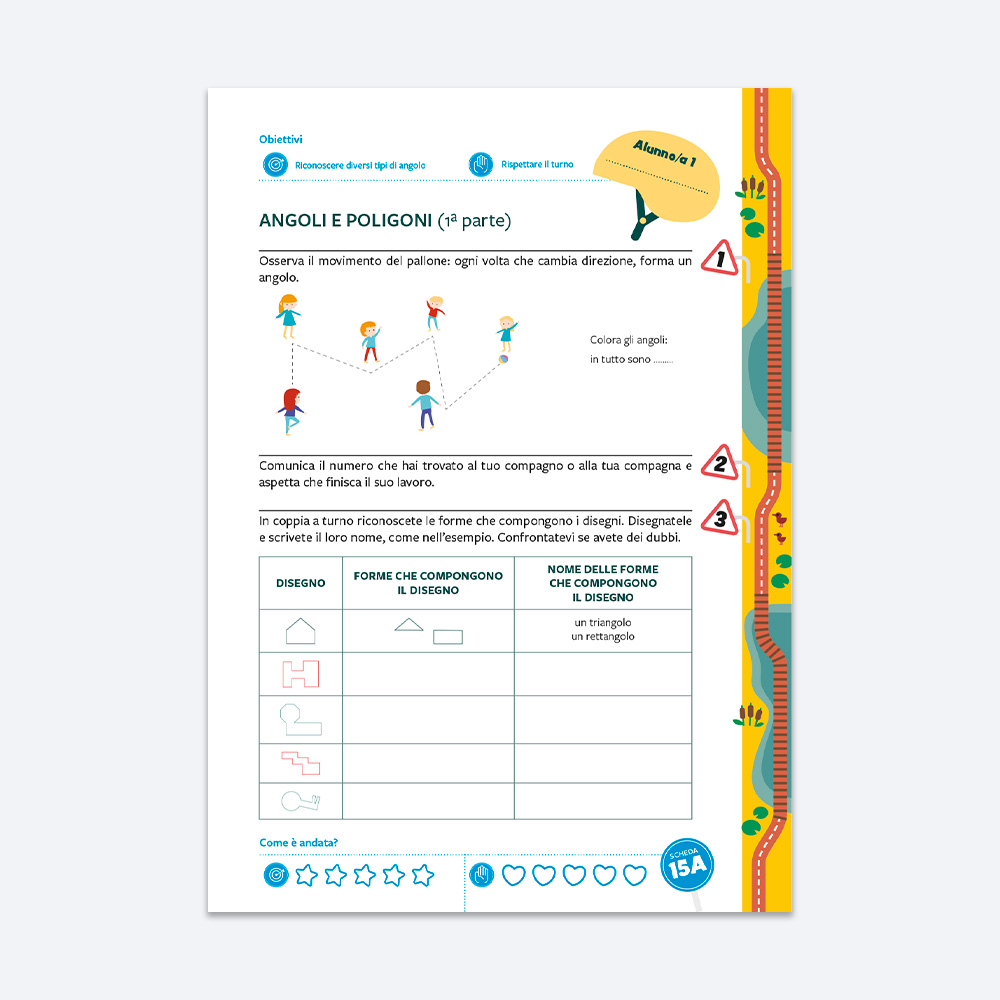 Worksheet A - More advanced
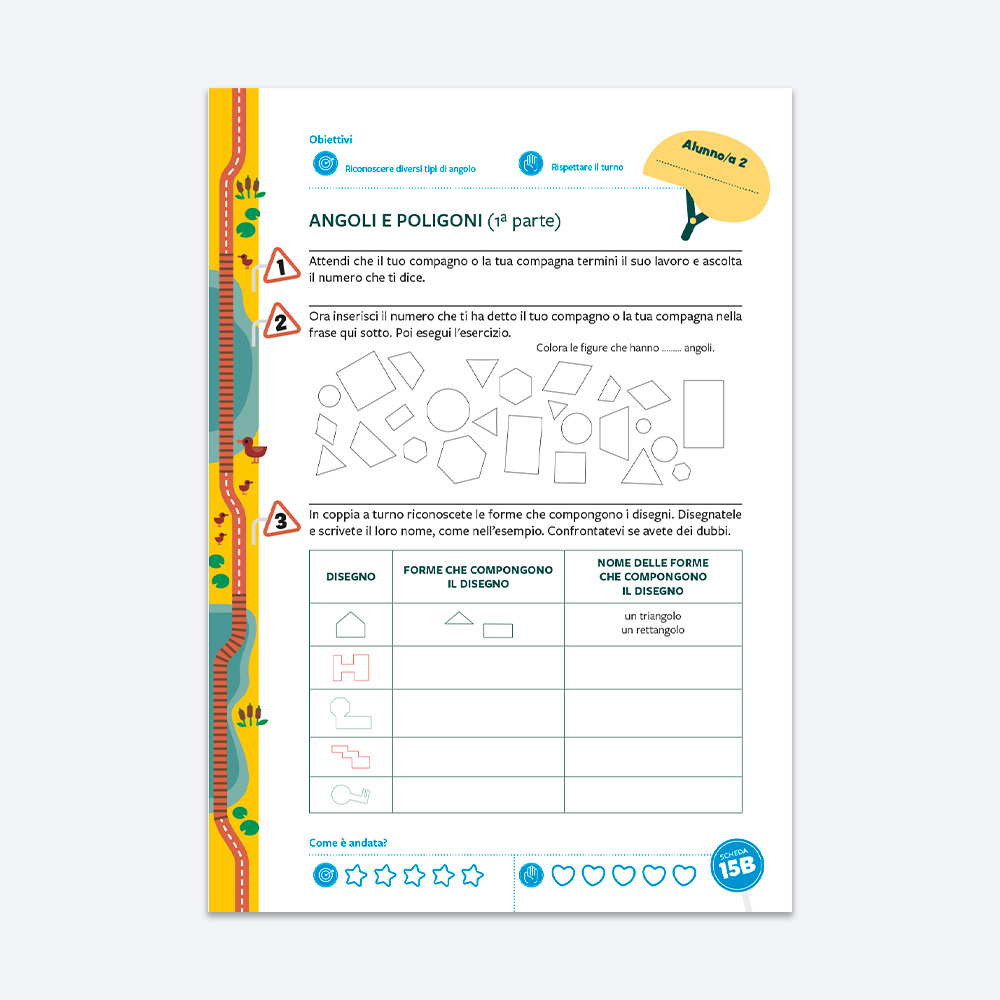 Worksheet B - Simplified
HOW WORKSHEETS ARE STRUCTURED:
Each activity has two objectives: one curricular and one socio-emotional. The objectives are shown at the beginning of each page through a set of icons: Active listening
 Taking turns
 Respecting other’s opinions
 Expressing one’s own opinion
 Asking for help
 Offering help
 Recognising other’s strenghts
 Reaching an agreement
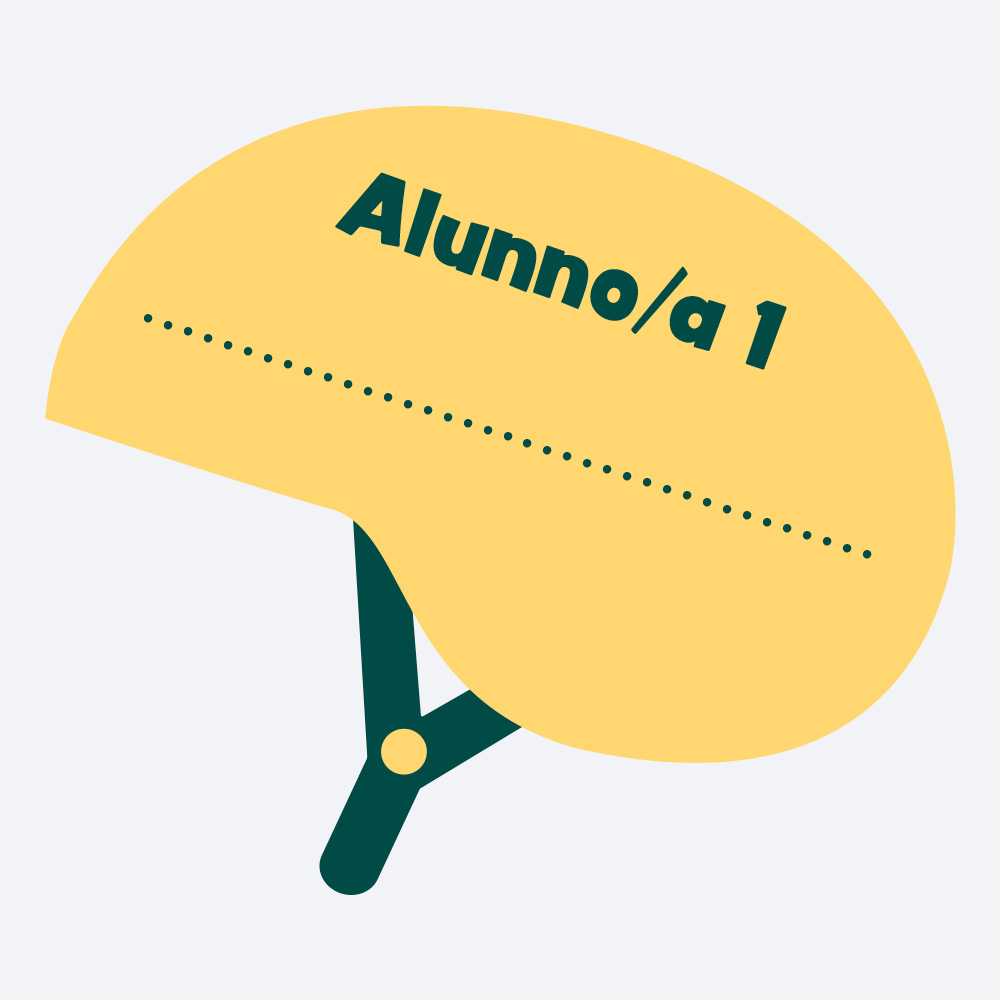 A helmet-shaped label to write the pupil’s name on
 Each worksheet contains between 2 and 4 activities, indicated by asymbol
 At the end of each page, there is a small space dedicated to each child’s self-assessment.
THE WORKBOOKS
THE AUTHORS
Benedetta Zagni. Developmental and Educational Psychologist. Trainer and doctoral student in Psychological Sciences (DPSS – University of Padua) in collaboration with the Erickson Study Center. She deals with emotional well-being at school, cooperative learning, recognition and valorization of differences in the class. Annamaria Benzi. Expert in formative assessment, she has always used active and innovative teaching methodologies. She is an e-teacher educator and a trainer for Scuola di Robotica and AssoEpict, specialising in digital education and educational robotics. Eugenia Cognigni. Primary school teacher, with a degree in Primary Education Sciences and a specialisation in learning support from the University of Macerata.