EN
 PT

 EN
 PT
Product: Book
Trim size in cm: 24x31cm
Pages: 144
ISBN: 9788859046493
Publication date: 01/09/2026
REQUEST A SAMPLE OR MORE INFORMATION
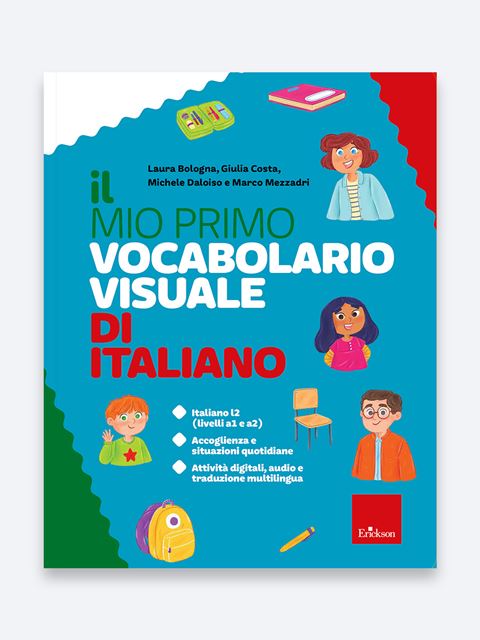
Designed for children learning Italian as a second language, My first visual vocabulary of Italian as a second language introduces words and expressions through illustrated scenes, pictures and short dialogues set at school, at home, around town and during leisure activities.
Rather than presenting words in isolation, the book places them in real-life situations, helping children immediately understand their meaning and see how they can be used to communicate. The learning journey explores settings and experiences that are familiar to children: the classroom and school spaces, studying, school trips, the town and means of transport, play, the school canteen, home, family, the body, clothing, emotions and feelings. A consistent visual structure makes the book easy to navigate and allows children to return to the pages independently to look up a word, listen to it again or practise saying it.
My First Visual Vocabulary of Italian as a Second Language
Colours
In the Classroom
Around the School
Classroom Activities
The School Day
Organising Your Study
School Outings
On a School Trip
Places Around Town
Means of Transport
Days and Weather
Daily Activities
In the Gym
Games
At the Playground
In the School Canteen: Food
In the School Canteen: Objects
Numbers
At the Grocery Shop
Buildings and Shops
What Do We Need to Buy?
In the Kitchen
Where Things Are
Rooms in the Home
At a Friend’s House
The Family
At the Doctor’s
Physical Appearance
Clothing
Describing Personality
Emotions and Feelings
Words
Whether a language is part of a child’s family heritage, a school subject, or a personal passion, learning it as a second language can be challenging when opportunities to practise it every day are limited.
My First Visual Dictionary of Italian as a Second Language and My First Italian Workbook help bridge this gap, creating a complete learning journey that goes beyond the classroom. Rather than presenting single words, the books introduce vocabulary and expressions through 30 communicative situations drawn from everyday life. Step by step, children build their knowledge of Italian rooted in authentic experiences, making it easier to understand and remember.
Vocabulary
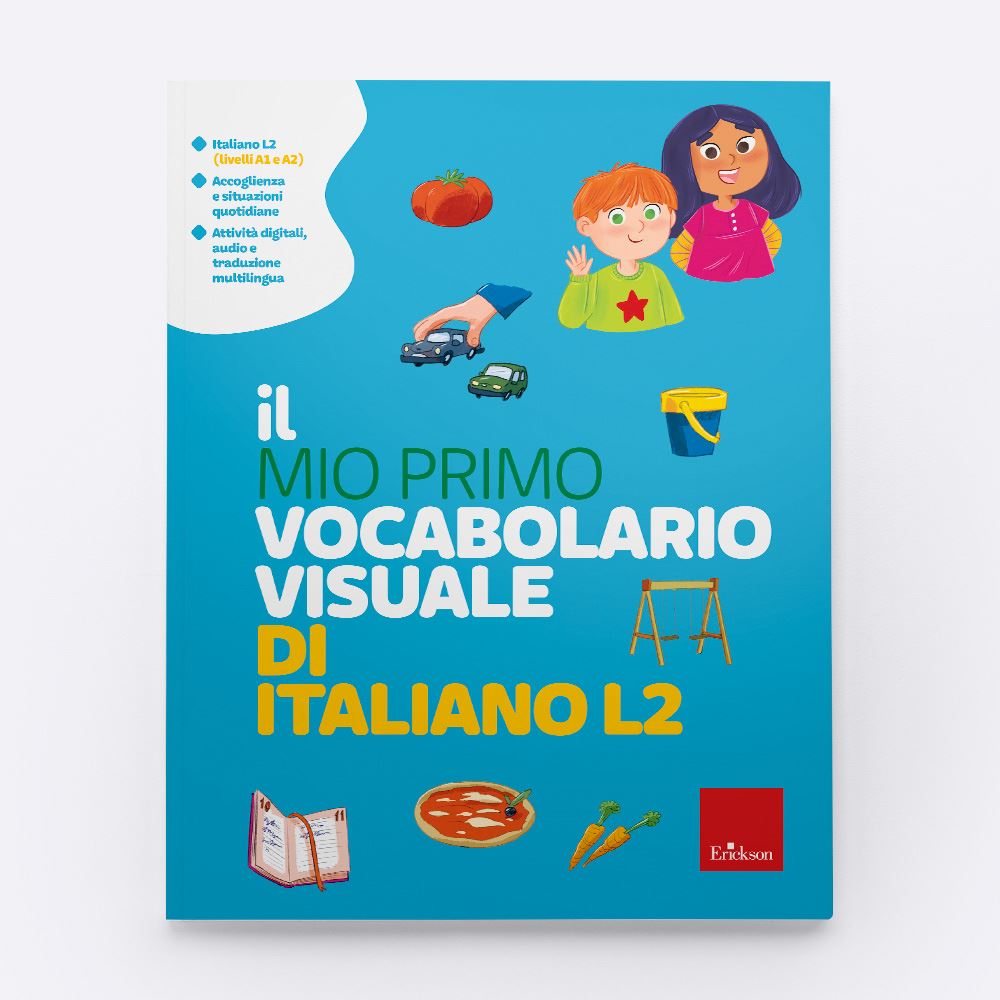
My first visual dictionary of Italian as a second language
Colourful, easy to navigate and featuring a highly readable typeface, this visual vocabulary covers 30 communication situations drawn from children’s everyday experiences. Each one is presented through illustrated scenes, key words, useful phrases, short dialogues and practical activities. Designed for A1/A2 levels, the approach provides multiple ways of accessing the language – through images, text and audio – to support comprehension, memorisation and the active use of vocabulary in context.
THE STRUCTURE OF THE VOCABULARY
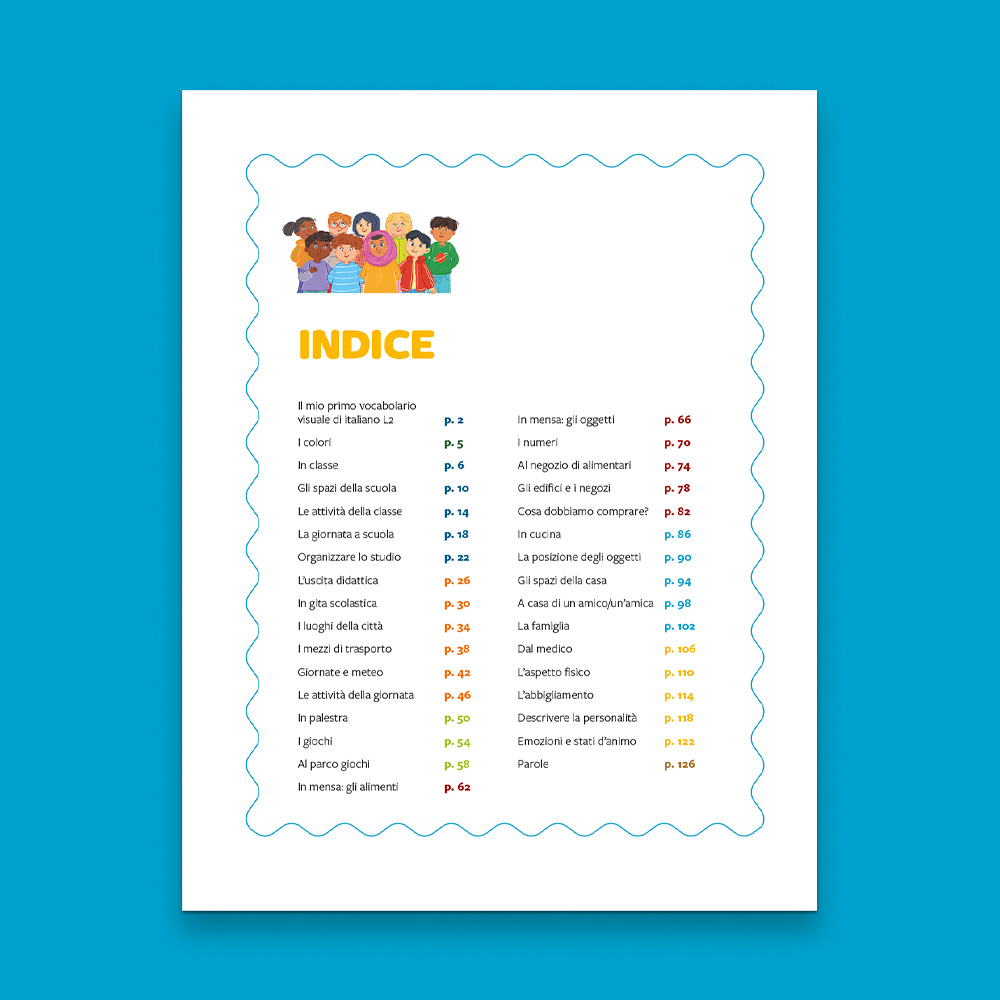
The index shows the 30 communicative situations
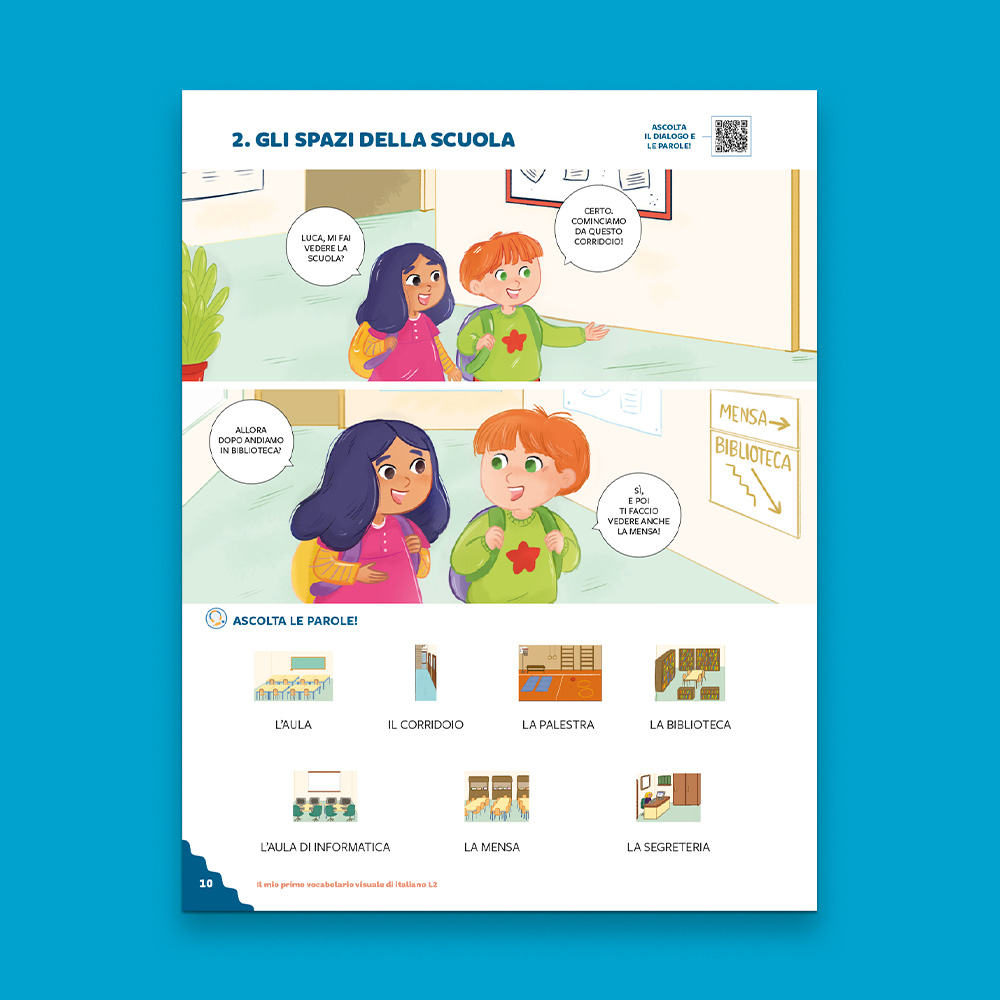
Each communicative situation is introduced through an illustrated scene and then expanded with key vocabulary
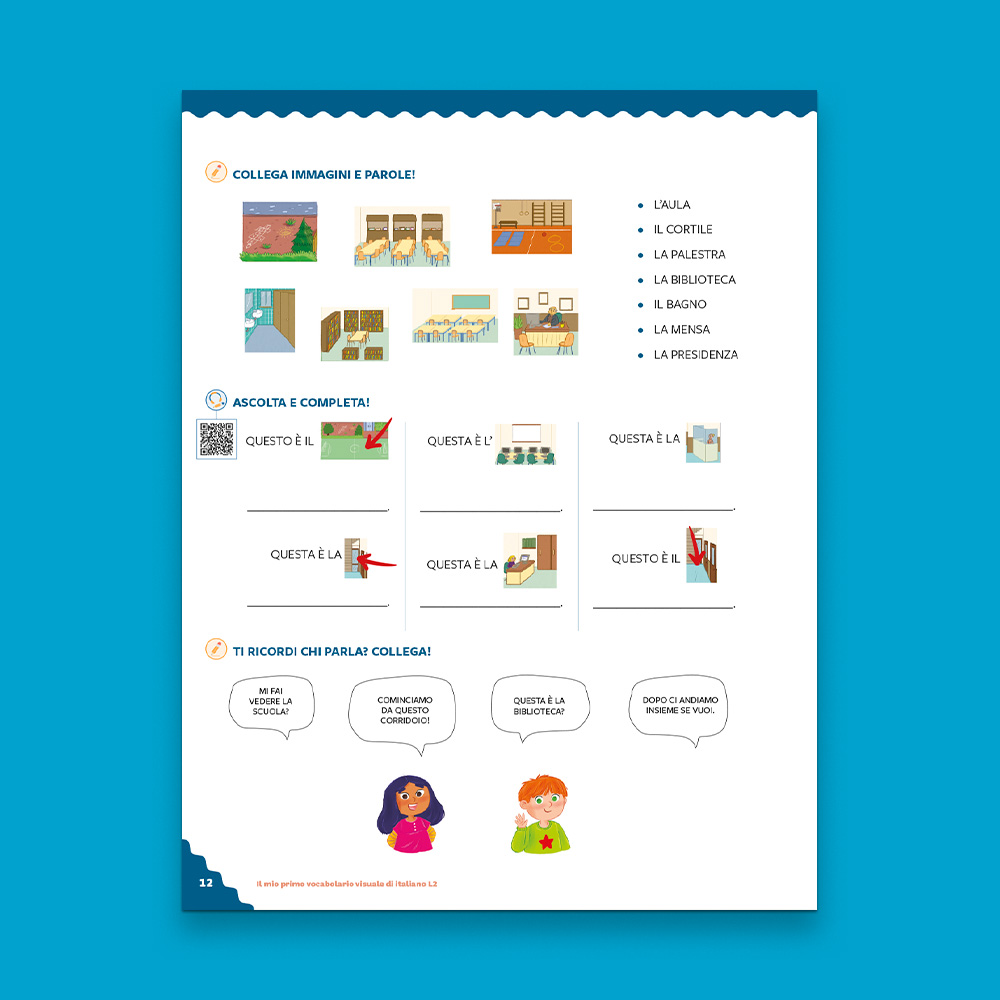
The words studied are at the base of games, listening, reading and writing exercises, word-and-picture matching, fill-in-the-blank exercises, riddles and crosswords
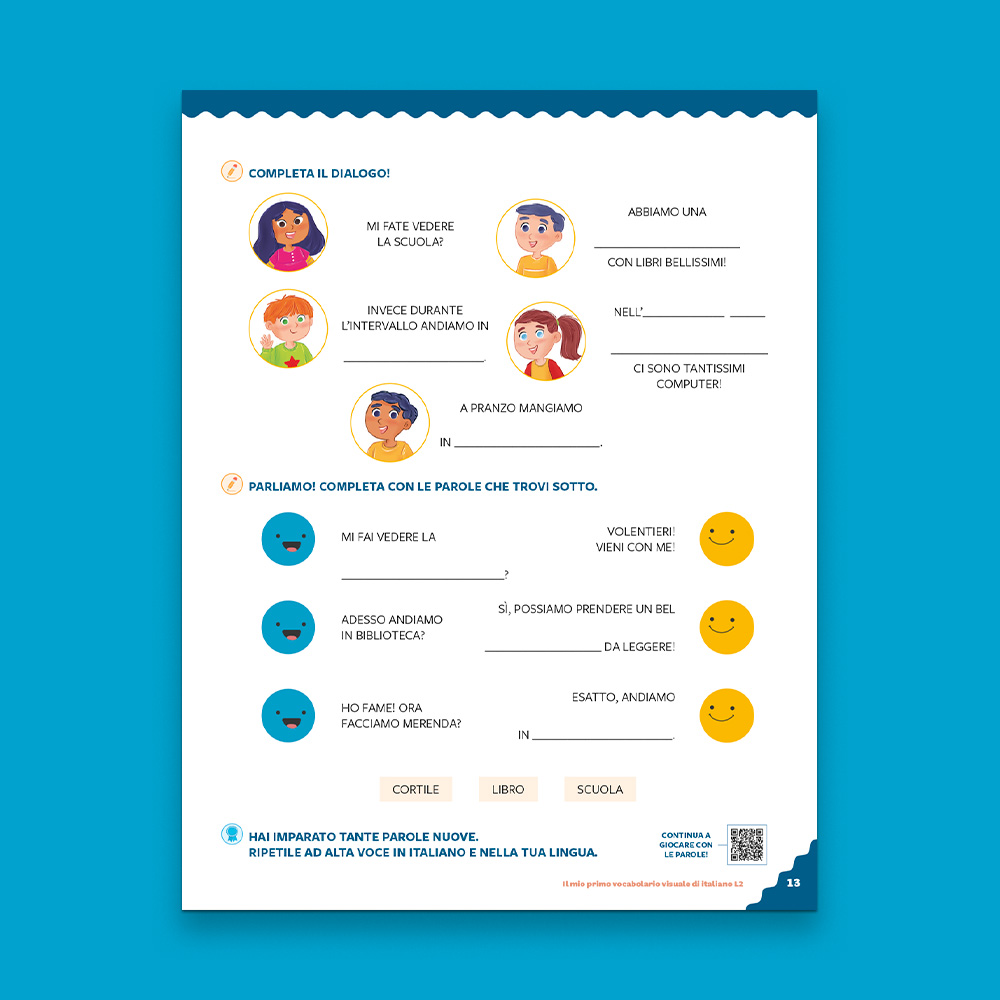
Work on vocabulary is also closely linked to early spelling and grammar skills, providing opportunities to observe how words are formed and how they can be used in sentences and conversations
Leaf through some pages to facilitate our evaluation of the product:
Workbook
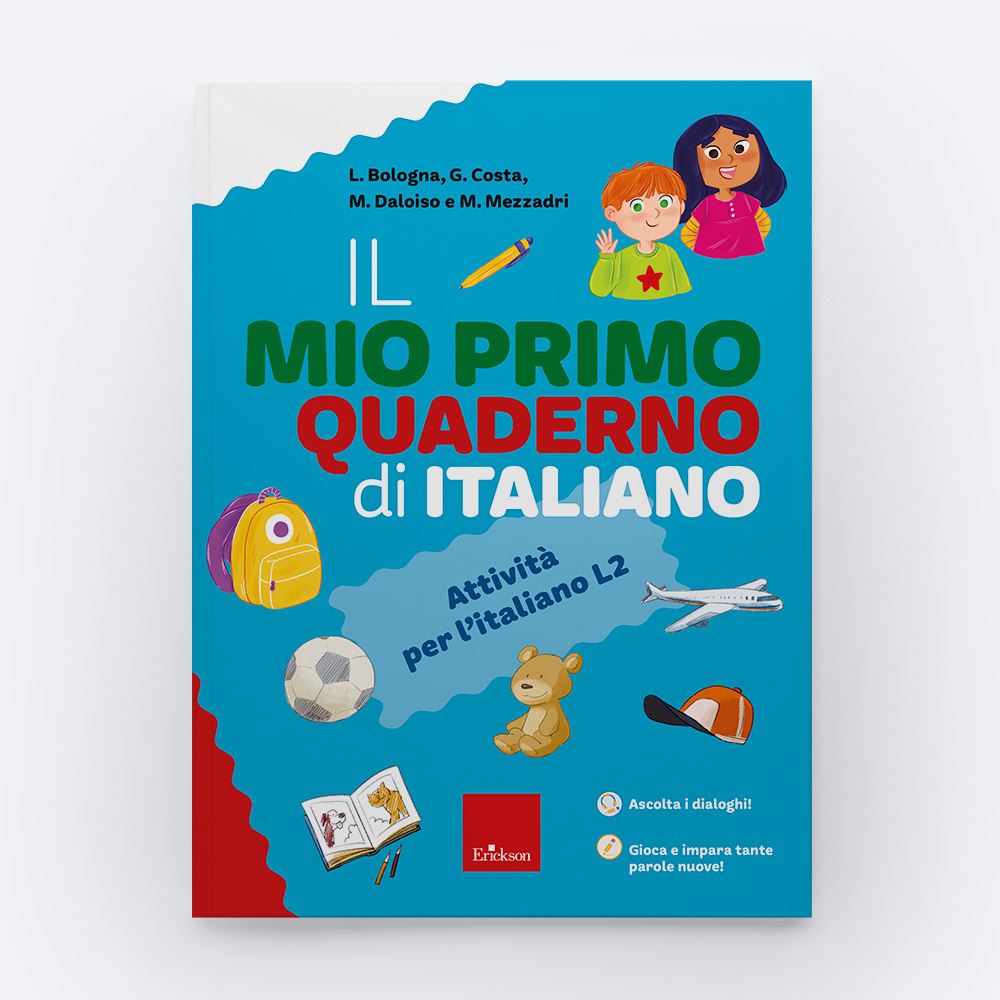
My first Italian workbook
Games, exercises and short role-play activities based on everyday situations help children experience the language, rather than simply study it.
Through dialogues, listening activities and language games, the workbook helps children practise and reinforce the vocabulary introduced in the Visual Dictionary while developing their listening, comprehension and speaking skills.
THE STRUCTURE OF THE WORKBOOK
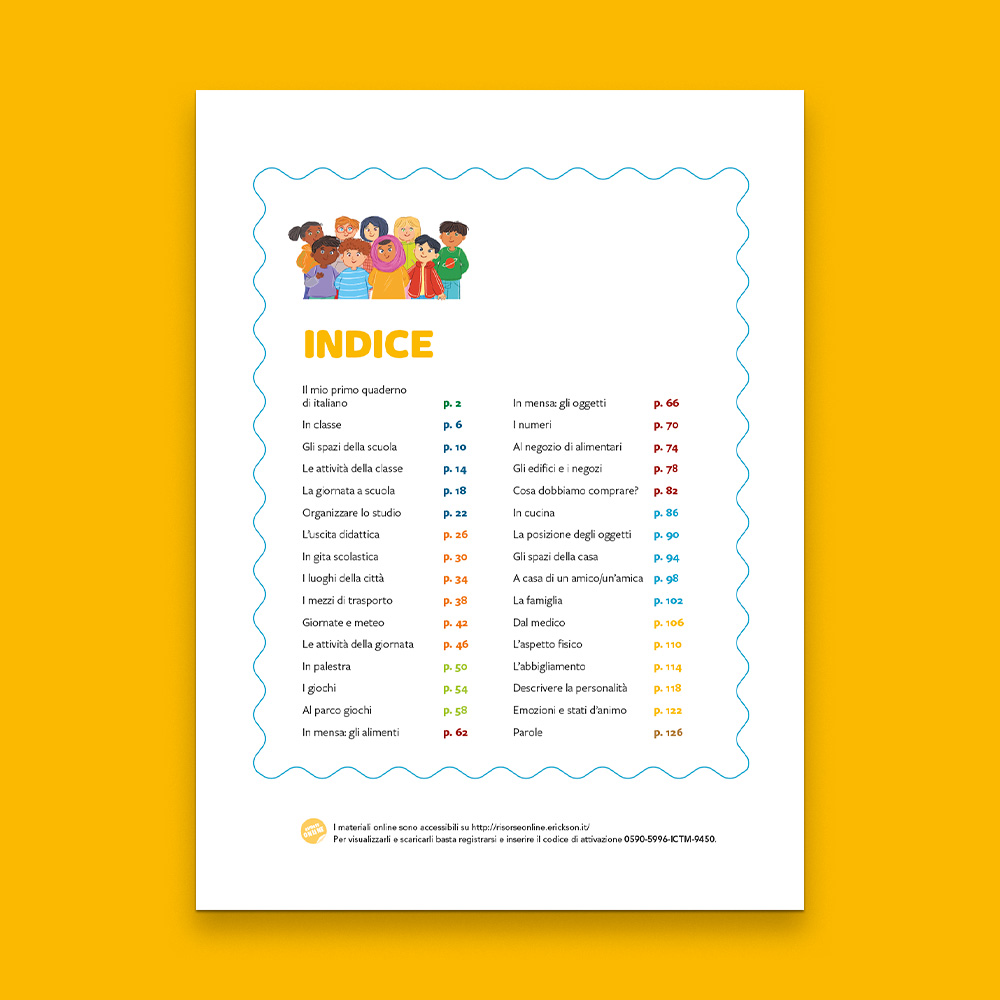
The index shows the 30 communicative situations
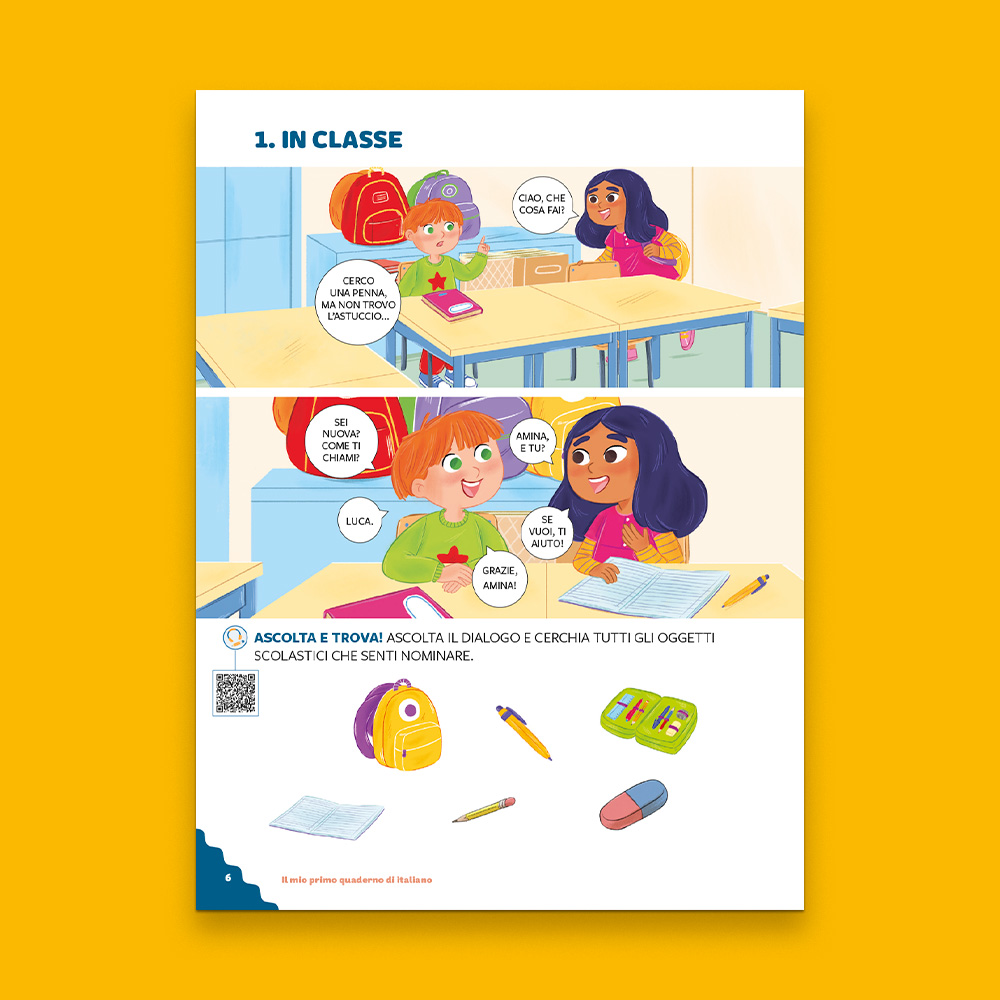
Each communicative situation is introduced through an illustrated dialogue and audio activities
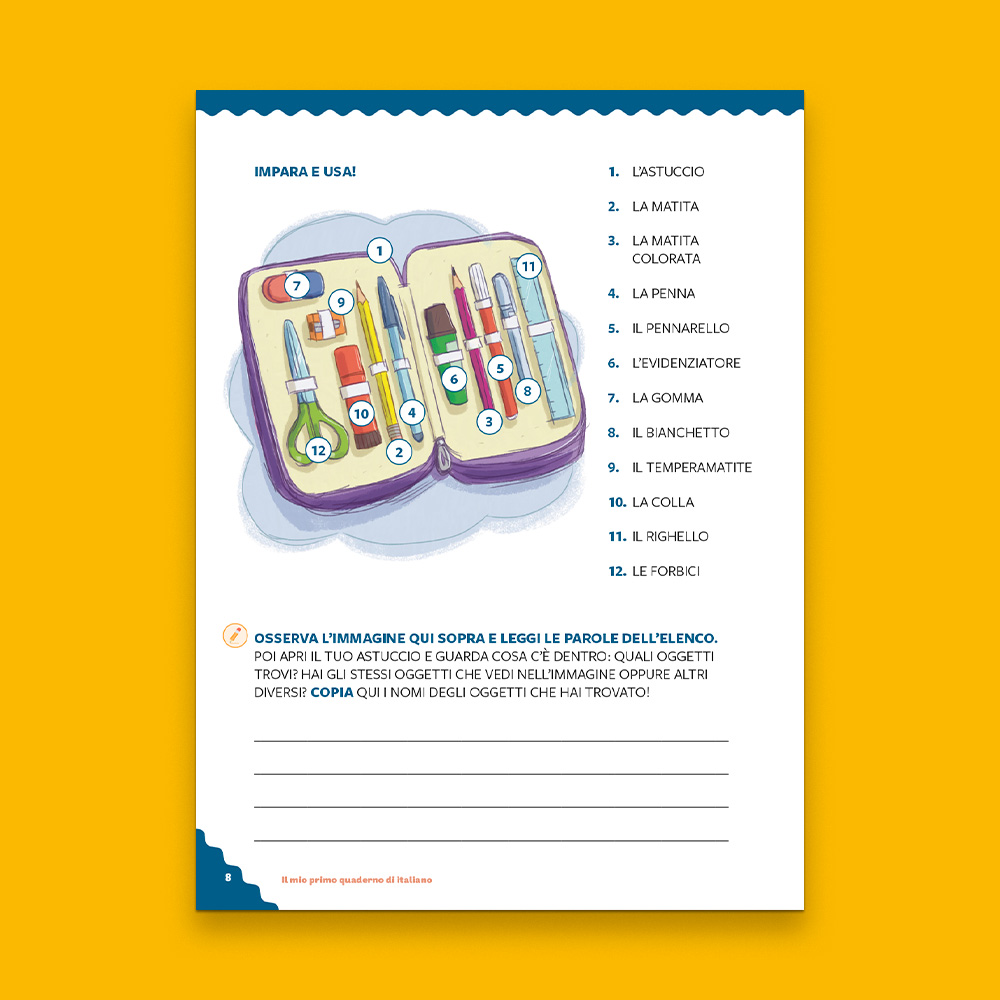
The words studied are at the base of exercises of observation, word-picture association, recognition, classification and memorisation to build up your vocabulary
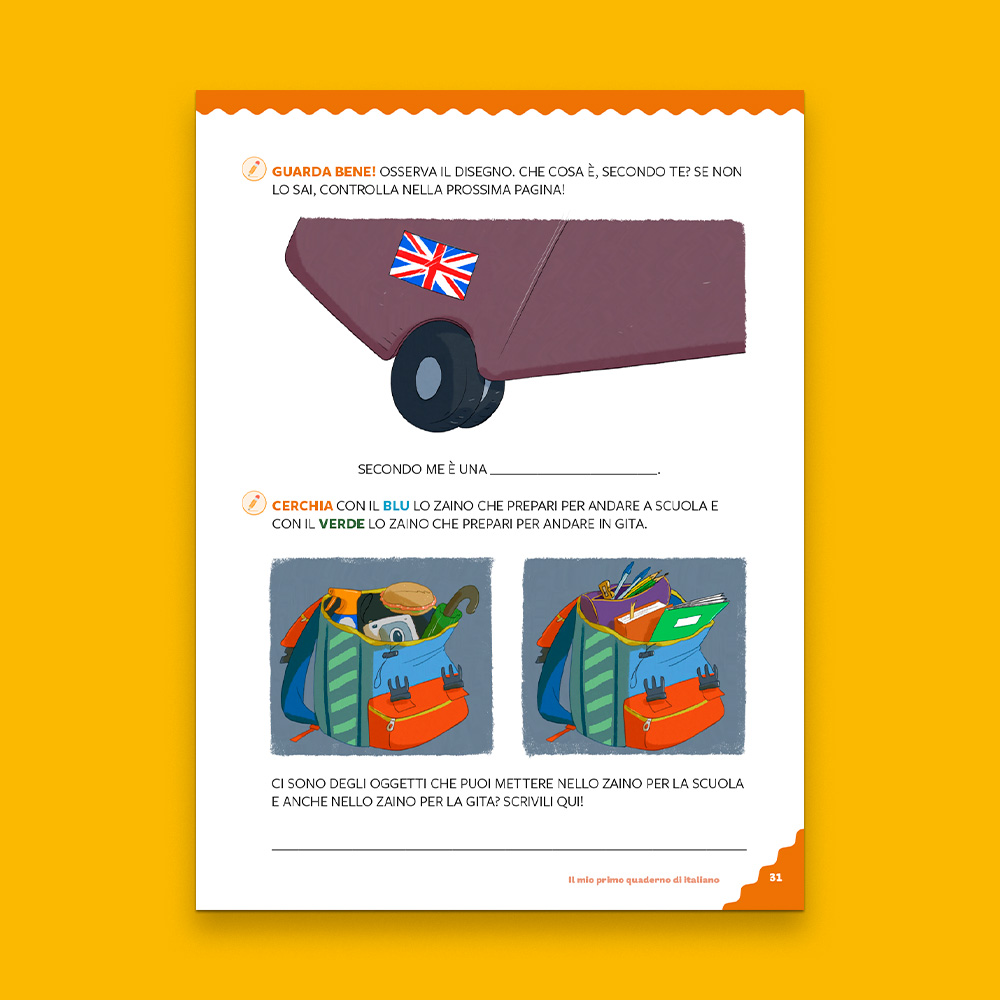
Exercises for using words in real-life contexts and developing basic language skills
Leaf through some pages to facilitate our evaluation of the product:
Authors
Laura Bologna is an expert in language learning and teaches Italian as a second language on the Foundation Year programme at the University of Parma. She is a member of the EDULInc research group at the University of Parma and the Post Master ITALS research group at Ca’ Foscari University of Venice.
Giulia Costa is a language teaching specialist (CEL) at the University of Parma, where she coordinates Italian as a second language courses within the Foundation Year programme. She is a member of the ELICom research group (Inclusive Language Education and Communication).
Michele Daloiso is Associate Professor of Modern Language Education at the University of Parma and Director of the ELICom research group (Inclusive Language Education and Communication).
Marco Mezzadri is Full Professor of Modern Language Education at the University of Parma, where he also coordinates the Language Education Laboratory. He is the author of numerous monographs and academic articles on modern language teaching.
The ELICom Research Group was established in 2019 within the Language Education Laboratory at the University of Parma. The group carries out research, training and professional certification activities in the fields of inclusive communication and inclusive language education, with a particular focus on accessible language teaching for learners with difficulties at school and communication, language or learning disorders.