EN
EN PT
PT

 EN
EN
 PT
PT
A tool for planning, teaching, and assessment
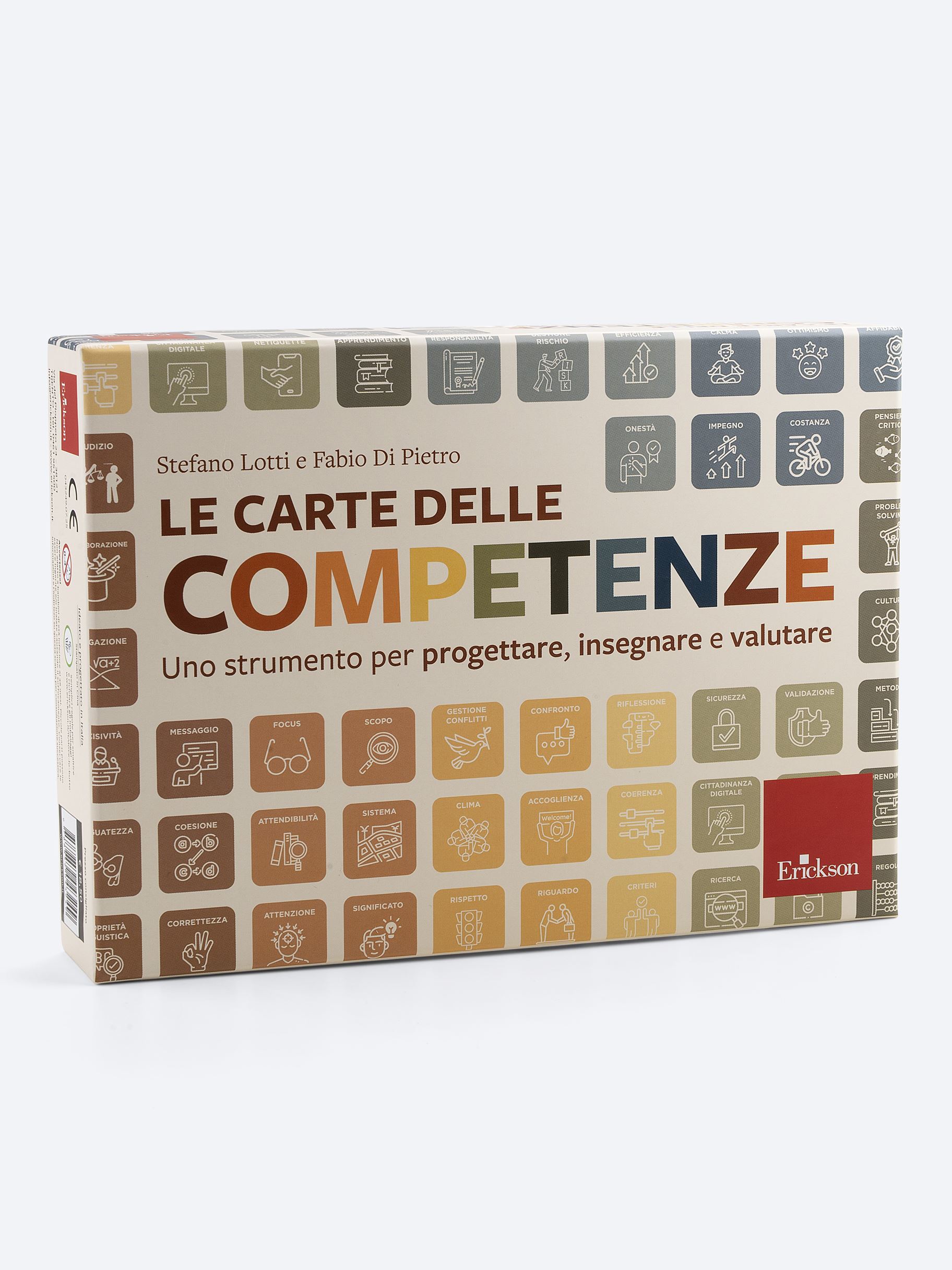
Product: Teaching tools
ISBN: 9788859043249
Publication date: 01/10/2025
Suitable for: Primary 1st level (ages 6-7), Primary 2nd level (ages 8-10), Lower secondary 1st level (ages 10-11), Lower secondary 2nd level (ages 12-13), Upper secondary 1st level (ages 14-16), Upper secondary 2nd level (ages 17-19)
REQUEST A SAMPLE OR MORE INFORMATION
A versatile and engaging tool that supports teachers and students in concretely exploring competences through everyday teaching practice, turning each activity into an opportunity for observation, development, and assessment.
The box contains 164 cards, divided as follows:
The cards can be used to design learning pathways, share a common language, highlight already developed competences, or create new activities based on specific learning goals. They also promote transparent, formative, and shared assessment with students, clarifying which competences are being developed and which still need improvement.
Learning objectives:
• 82 “Competence” cards, divided into 8 macro-areas (Communicating, Understanding, Collaborating, Evaluating, Being Digital, Learning, Taking Initiative, Self-awareness), each described through a first-person action statement
• 82 “Obstacle” (AntiMatter) cards, helping to identify related difficulties
• 1 poster with the Competence Table and Obstacle Table
• 1 assessment sheet with 4 levels (A–D)
• 1 guide with practical and teaching suggestions

 Skill cards is a versatile and engaging tool that supports teachers and students in concretely exploring competences through everyday teaching practice, turning each activity into an opportunity for observation, development, and assessment.
The cards can be used to design learning pathways, share a common language, highlight already developed competences, or create new activities based on specific learning goals. They also promote transparent, formative, and shared assessment with students, clarifying which competences are being developed and which still need improvement.
Find out more!
Skill cards is a versatile and engaging tool that supports teachers and students in concretely exploring competences through everyday teaching practice, turning each activity into an opportunity for observation, development, and assessment.
The cards can be used to design learning pathways, share a common language, highlight already developed competences, or create new activities based on specific learning goals. They also promote transparent, formative, and shared assessment with students, clarifying which competences are being developed and which still need improvement.
Find out more!
The box contents
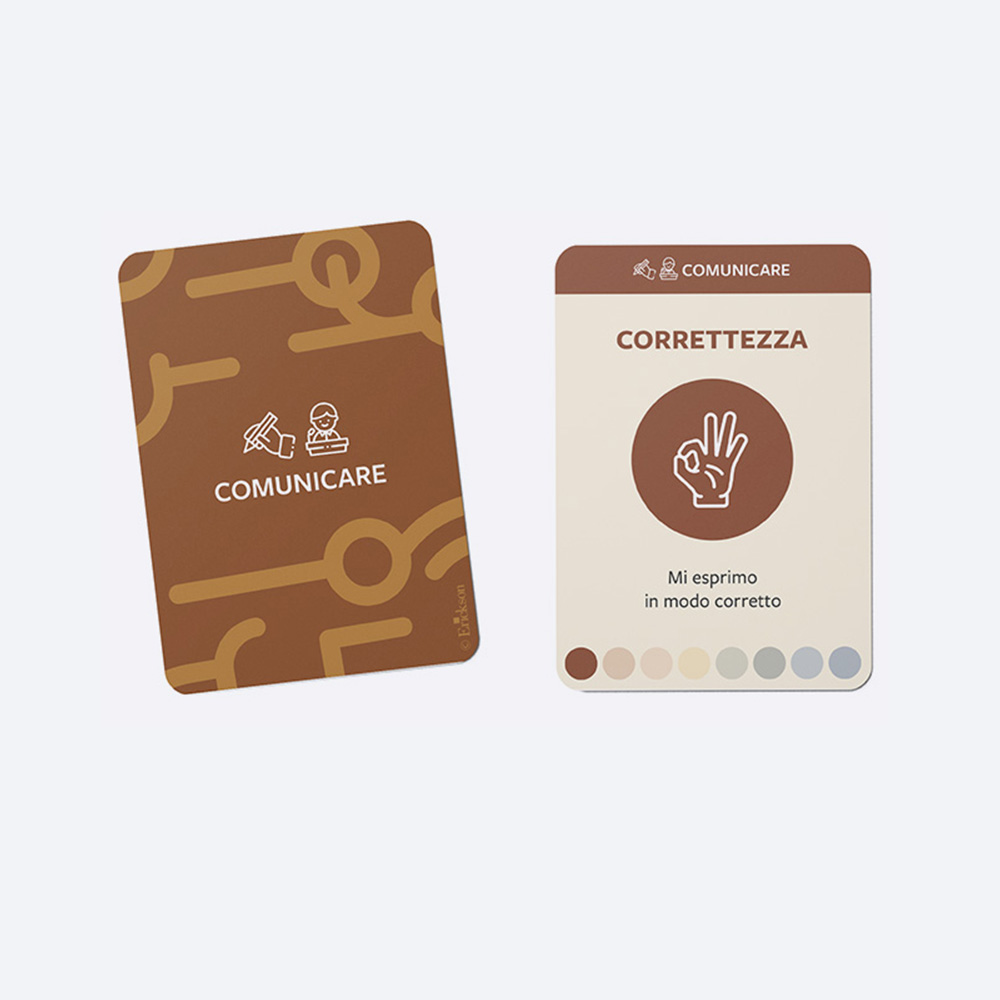 82 “Competence” cards, grouped into 8 macro-areas (Communicating, Understanding, Collaborating, Evaluating, Being Digital, Learning, Taking Initiative, Self-awareness), each described through a first-person action statement
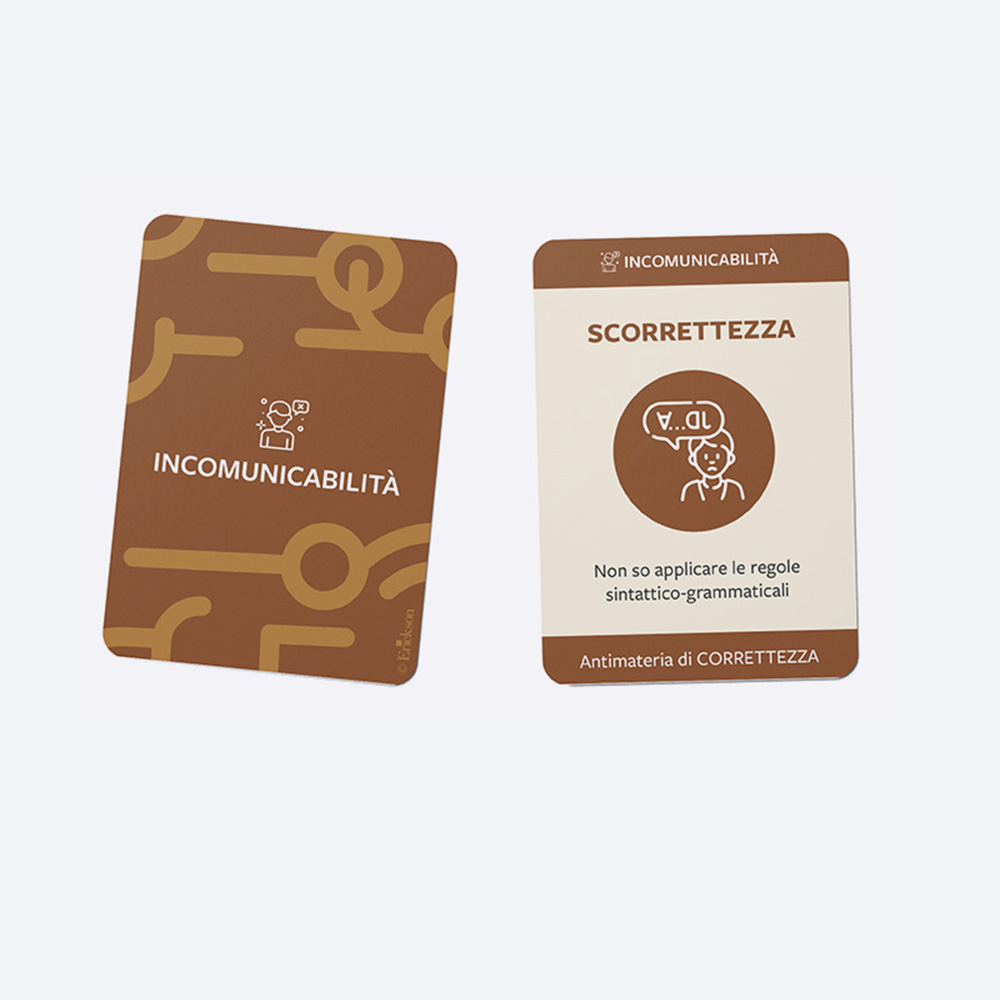 82 “Obstacle” cards (AntiMatter), which help identify the associated difficulties
 The poster with the Competence Table and Obstacle Table
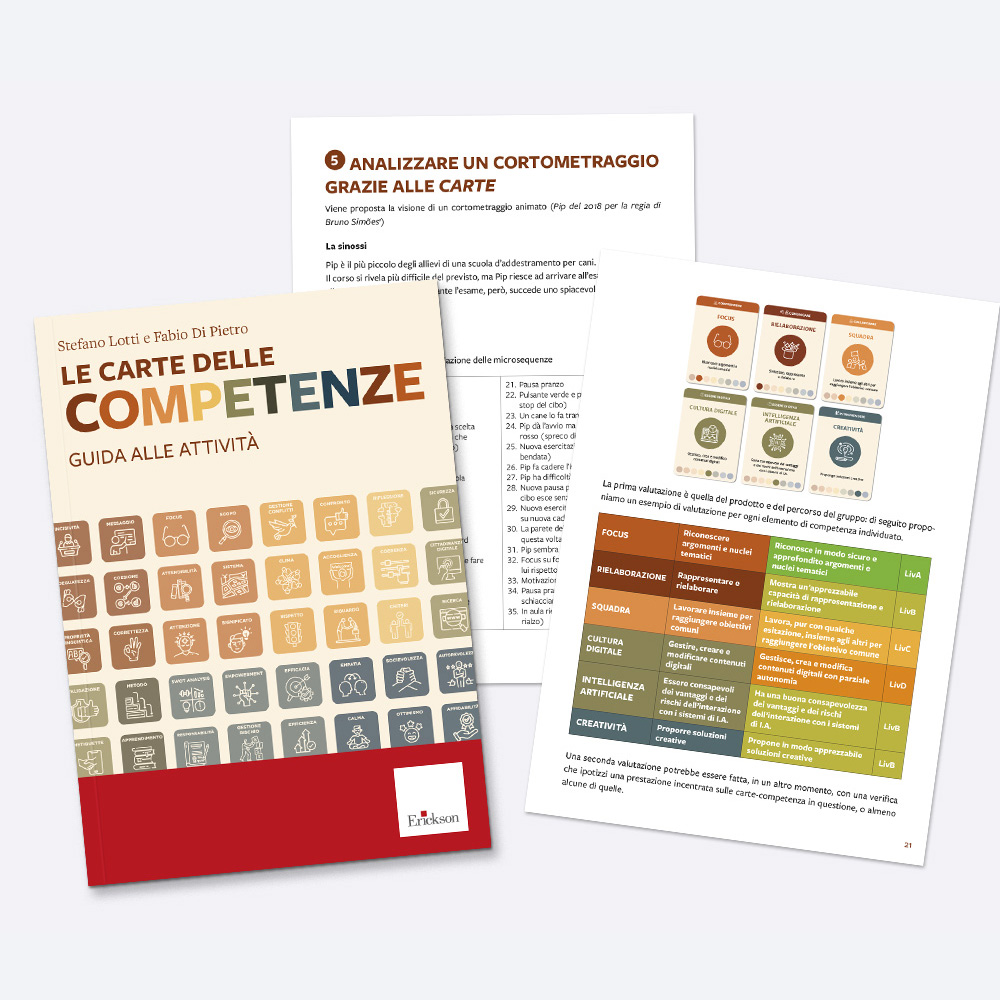 A guide with practical and teaching suggestions
HOW TO USE THE CONTENTS
The cards can be used in teaching planning for various activities:HOW TO CREATE NEW CARDS
The cards can be a starting point for introducing other skill cards. For example, starting from COMMUNICATING, you can create a Skill card that focuses on managing social media. The customisable cards can be downloaded and printed from the online resources.The Author
Stefano Lotti Fabio Di Pietro