EN
EN PT
PT

 EN
EN
 PT
PT
Diagnostic aspects and intervention proposals
Product: Book
Trim size in cm: 17x24cm
Pages: 568
ISBN: 9788859042099
Publication date: 01/09/2025
REQUEST A SAMPLE OR MORE INFORMATION
 Rights sold to:
English language worldwide
Rights sold to:
English language worldwide
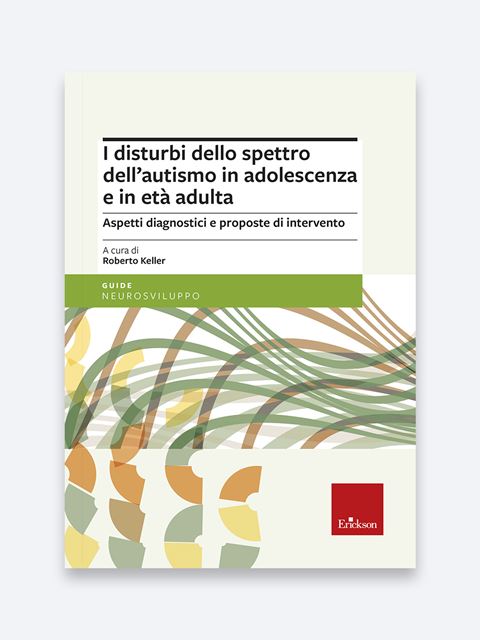
A complete, up-to-date and practical guide for building individual life projects for autistic people during adolescence and adulthood – projects that are personalised and developed with their active participation.
Since the publication of the first edition ten years ago, the context has profoundly changed: autism diagnoses have increased, assessment tools have become more refined, and the effectiveness of early interventions is now widely recognised. Yet significant gaps and challenges remain in supporting autistic people beyond childhood. This new edition was created precisely to address this need: a scientifically grounded and up-to-date reference, while at the same time deeply humane.
With contributions from more than 70 professionals – including doctors, psychiatrists, psychologists, educators and therapists – the book is aimed at those working or training in the fields of mental health, disability and education. It offers both practical tools and theoretical reflections to help imagine and implement life paths that are dignified, sustainable and self-determined.
Preface (Roberto Keller)
PART ONE
Clinical, Diagnostic and Functional Aspects
• Chapter 1
Diagnostic pathways in autism spectrum disorders in adolescence and adulthood: from neurodivergence to disorder (Roberto Keller)
• Chapter 2
Test-based, diagnostic and functional assessment in autism spectrum disorders (Stefania Bari, Angela Aresi, Stefania Brighenti, Giorgia Marino, Chiara Pezzana and Roberto Keller)
• Chapter 3
Neuropsychological aspects of autism spectrum disorders (Stefania Brighenti and Roberto Keller)
• Chapter 4
Assessment and diagnosis of psychopathological co-occurrences in intellectual disability and autism spectrum disorder (Marco O. Bertelli and Annamaria Bianco)
• Chapter 5
Learning and specific learning disorders in autism
o Part One: Learning and learning disorders in autism during adolescence and adulthood (Sergio Messina)
o Part Two: Diagnostic assessment of specific learning disorders in adulthood (Angela Aresi and Roberto Keller)
• Chapter 6
Gender differences in autism
o Part One: Transgender and gender variance (Anna Gualerzi and Matteo Olmeo)
o Part Two: Variance, autism and gender (Silvia Chieregato)
PART TWO
Organic and Neurobiological Aspects
• Chapter 7
Genomic architecture of autism spectrum disorders (Alfredo Brusco and Giovanni Battista Ferrero)
• Chapter 8
Gastrointestinal disorders and autism
o Part One: Gastrointestinal conditions in autistic people and other neurodevelopmental disorders (Gabriele Bazzocchi and Tiziana Grilli)
o Part Two: Gastroenterology and autism (Federico Balzola)
• Chapter 9
Neuroimaging in autism spectrum disorder in adulthood (Donato Liloia, Francesca Bianco, Alessandra Ferraioli and Franco Cauda)
• Chapter 10
Metabolic diseases and autism (Francesco Porta)
PART THREE
Comorbidities and Co-Occurrences
• Chapter 11
ADHD in adolescence and adulthood: clinical aspects, diagnosis and treatment (Camilla Rinaldi, Angela Aresi and Roberto Keller)
• Chapter 12
Personality disorders and autism (Camilla Rinaldi and Roberto Keller)
• Chapter 13
Obsessive-compulsive disorder, phobias and autism (Emanuela Nobile and Roberto Keller)
• Chapter 14
Epilepsy and autism spectrum disorders (Maurizio Elia)
• Chapter 15
Use of psychotropic drugs in autism spectrum disorders during adolescence and adulthood (Roberto Keller)
• Chapter 16
Tourette’s syndrome and its relationship with autism spectrum disorders (Leonardo Zoccante)
PART FOUR
Social and Relational Aspects
• Chapter 17
Autism and bullying (Serena Ferrigno, Paola Becotto and Roberto Keller)
• Chapter 18
The family: support through guided self-help groups for parents (Stefania Bari and Roberto Keller)
• Chapter 19
Affectivity and sexuality in autism (Emanuela Nobile, Elisa De Bartolo, Cristina Biglia, Enrico Ammirati and Roberto Keller)
PART FIVE
Interventions
• Chapter 20
Community-based habilitative interventions and organisation of services (Roberto Keller)
• Chapter 21
Psychoeducational habilitative interventions (Federica Odello)
• Chapter 22
ABA interventions in adolescence and adulthood (Elisa De Bartolo, Angela Aresi and Roberto Keller)
• Chapter 23
Awareness, social skills, emotional regulation and metacognition: an integrated model for autistic people (Romina Castaldo)
• Chapter 24
Functional behaviour analysis: foundations, methods and applications (Roberto Cavagnola and Serafino Corti)
• Chapter 25
Outpatient treatment of challenging behaviours (Rita Di Sarro, Niccolò Varrucciu, Valentina Agnello, Maria Teresa Tolu, Sara Del Grosso, Giulia Papa, Guido D’Angelo and Fabio Lucchi)
• Chapter 26
Cognitive enhancement projects in autism (Caterina Finardi and Roberto Keller)
• Chapter 27
Support for siblings (Angela Aresi)
• Chapter 28
Technology and robotics in autism (Ilenia Le Donne, Margherita Attanasio, Marco Valenti and Monica Mazza)
PART SIX
Services and Projects
• Chapter 29
The individual life project: personalised and participatory (Paolo Bandiera)
• Chapter 30
Habilitative projects in natural settings (Federica Odello, Stefania Marengo, Amedeo Zoggia, Davide Iavarone and Roberto Keller)
• Chapter 31
Medico-legal aspects of autism in social and care settings (Francesco Cattaneo and Monica D’Amato)
• Chapter 32
Hospital medical care for people with intellectual and neuromotor disabilities: the DAMA model (Filippo Ghelma)
• Chapter 33
School as an essential hub in the transition network (Giuseppe Maurizio Arduino)
• Chapter 34
Autism and employment
o Part One: From school to the workplace (Corrado Cappa)
o Part Two: Challenges and success stories (Simona Mangolini, Maria Grazia Marinò, Alessandra Zangirolami and Mariarosaria Zunno)
• Chapter 35
Work placements
o Part One: Vocational training (Valeria Romano)
o Part Two: Targeted placement. The example of the Piemonte Employment Agency (Eliana Re)
• Chapter 36
The role of family associations (Ettore Focardi and Giovanni Marino)
• Chapter 37
Autism in adulthood: national guidelines and institutional projects (Maria Luisa Scattoni, Francesca Fulceri and Laura Maria Fatta)
• Chapter 38
Managing severe autism in residential settings: an account of experience (Alessandra Pucci)
• Chapter 39
The Cascina Cristina project: from reality to opportunity (Tommaso Elli, Annalisa Martinelli and Carmen Gigliotti)
Bibliography