EN
EN PT
PT

 EN
EN
 PT
PT
Computing challenges for Inspector Block
Simona Fiorentino, Elena Pedrazzoli
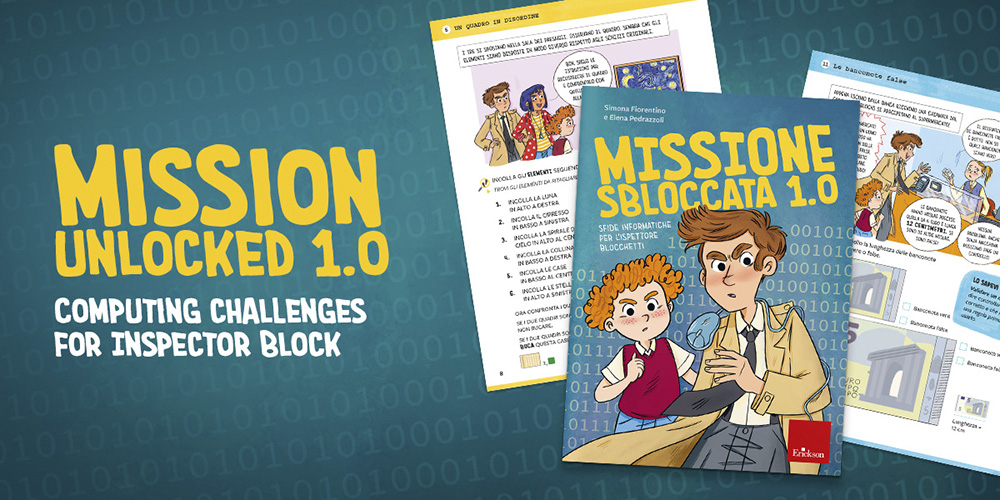
This practical workbook turns the learning of computational thinking into an engaging, story-driven experience. Through puzzles, mazes, clues and block-based coding activities, each page becomes a mini case to solve: observing, trying, making mistakes and correcting them are all part of the process, helping to develop strategies, independence and problem-solving skills.
What makes the journey even more motivating is the game-based structure of the workbook: each completed mission provides clues and coordinates to fill in a special punched card, turning learning into a real investigation to be solved.
BOOK STRUCTURE
The workbook is divided into three missions with activities of increasing difficulty.
The stories are inspired by real events and people, past or present: individuals skilled in deception who were able to turn their talent into a resource for the common good. Set in the present day, in contexts close to children’s everyday experience, the stories show how computational thinking can be applied in daily life to solve problems.
The strong connection with reality encourages reflection on digital citizenship, from the conscious use of data to identity management and the ability to distinguish truth from falsehood, thereby enhancing the ethical dimension of civic education.
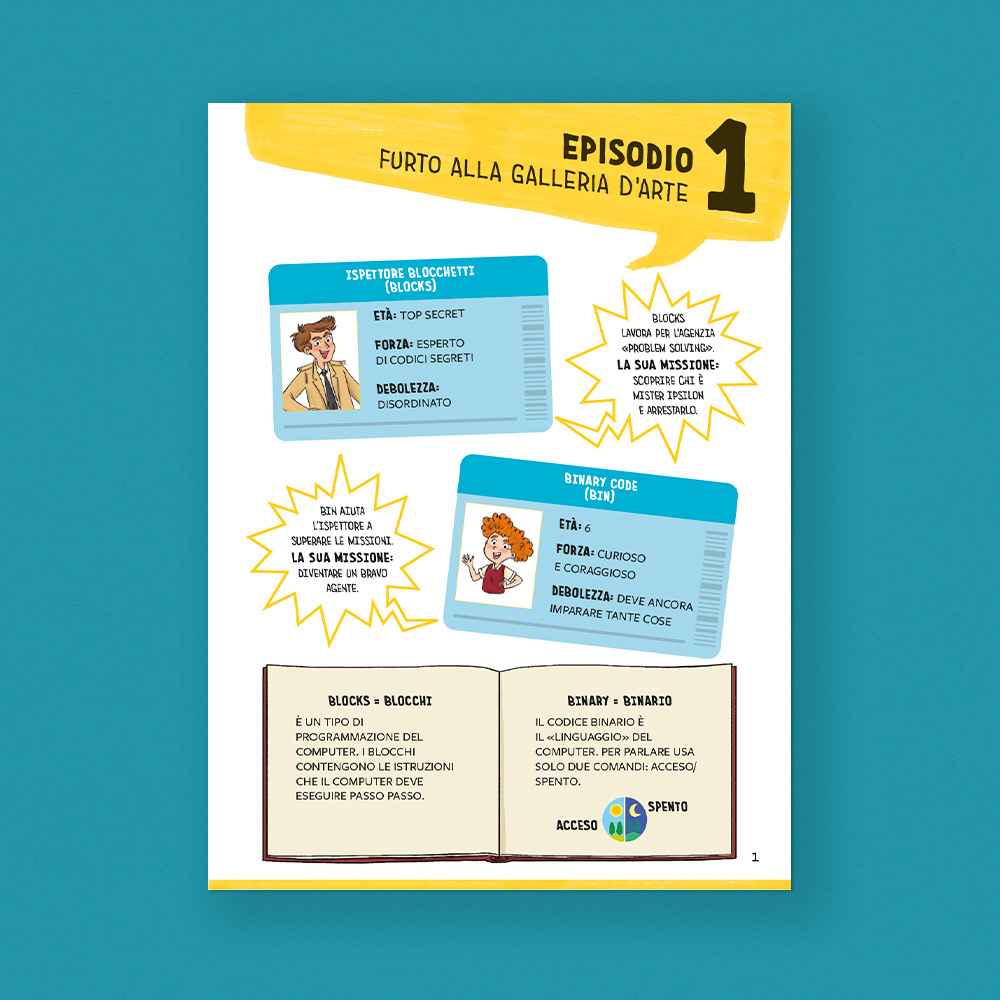
Episode n.1
The Art Gallery theft
OBJECTIVES
Basic instructions and algorithmic thinking: understanding what instructions and algorithms are, learning how to follow and write instructions, organise them correctly, recognise repeated patterns, and develop the ability to identify and correct errors.
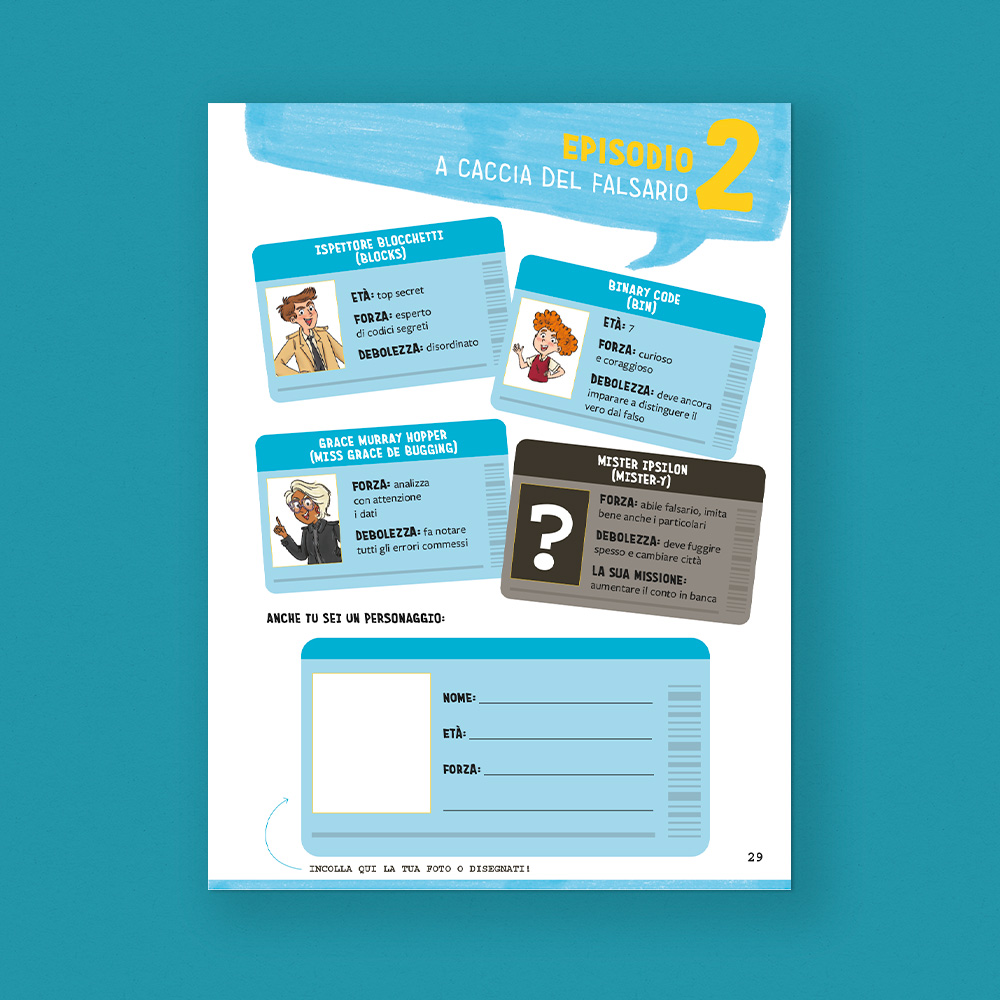
Episode n.2
Hunting the forger
OBJECTIVES
Data and data management: understanding what data are and how to read them, working with tables and sorting information. The episode also develops the ability to represent and compare data, as well as to read and write coded information.
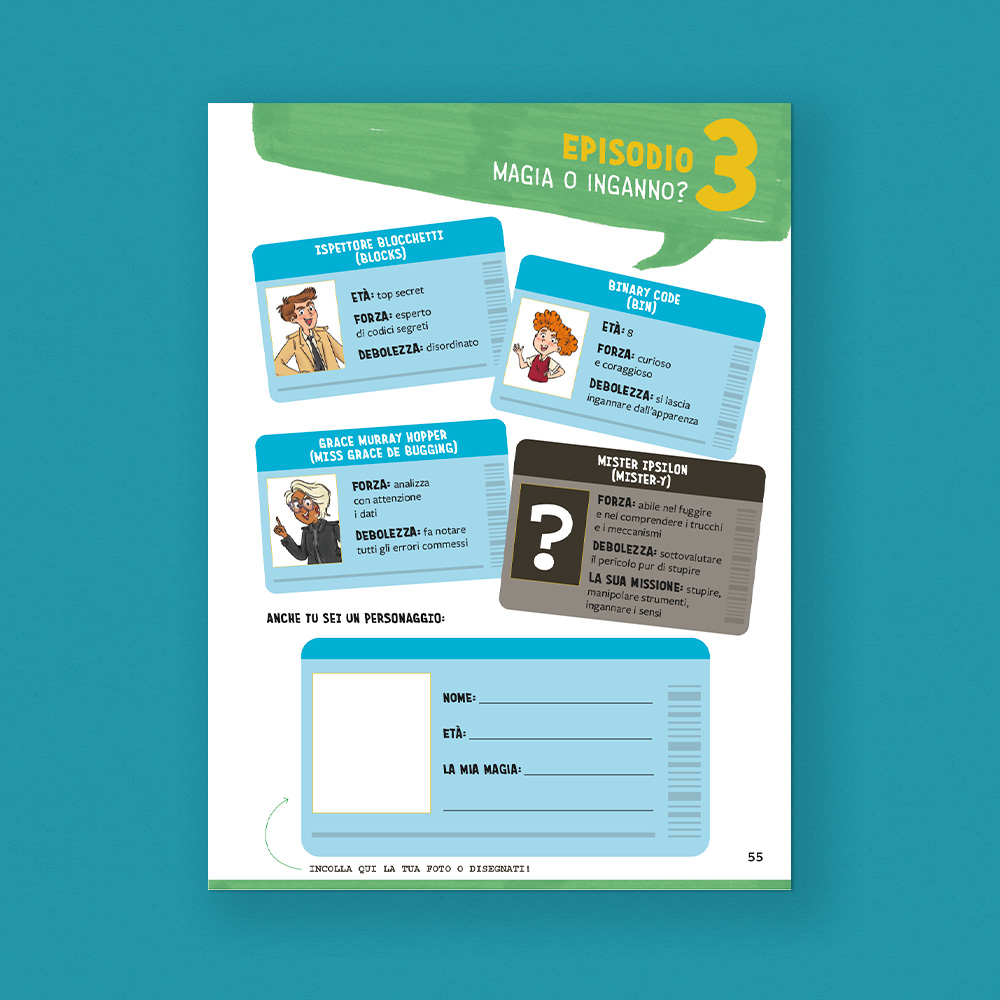
Episode n.3
Magic or fraud?
OBJECTIVES
Understanding and using algorithms and problems: learning how to iterate, plan and programme, understanding the relationships between choices and consequences, applying algorithms to real-life situations, recognising similar problems and breaking them down into sub-problems to make them easier to solve.
The final pages of the workbook contain cut-out materials designed to support the activities and help solve the various cases.
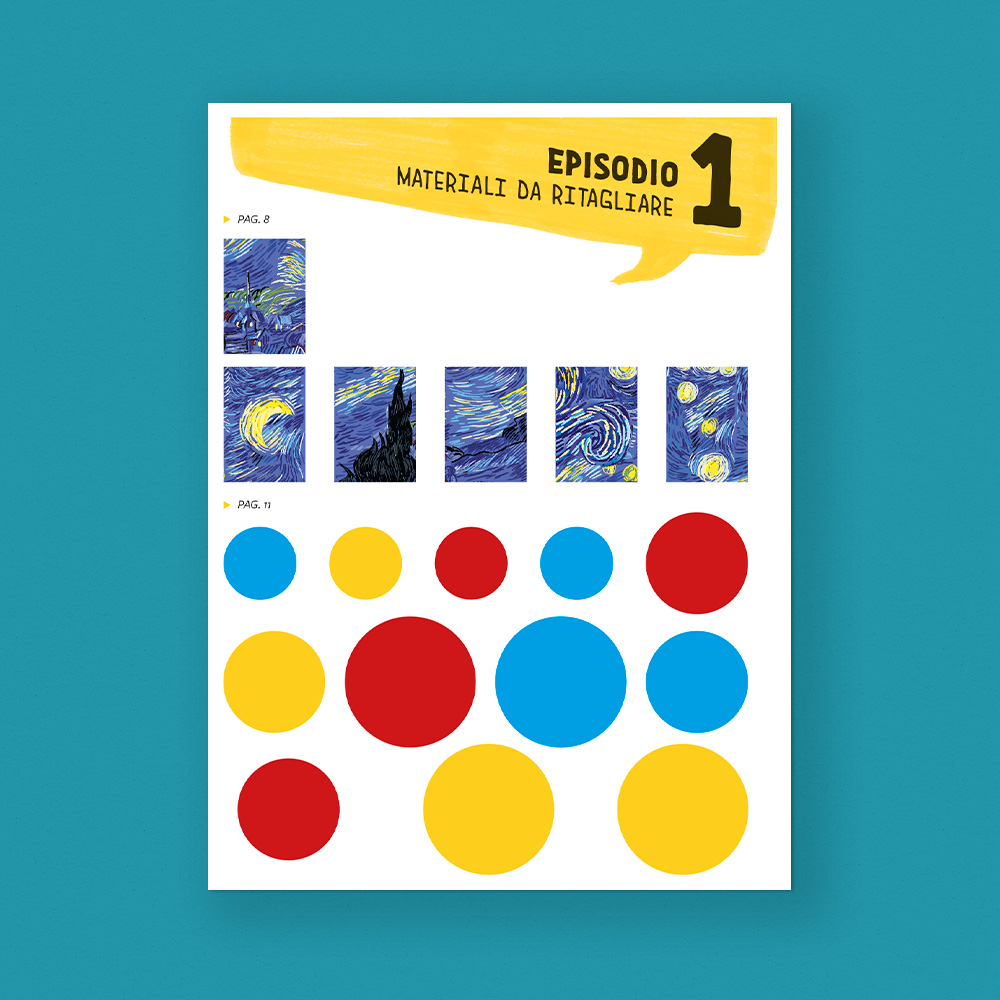
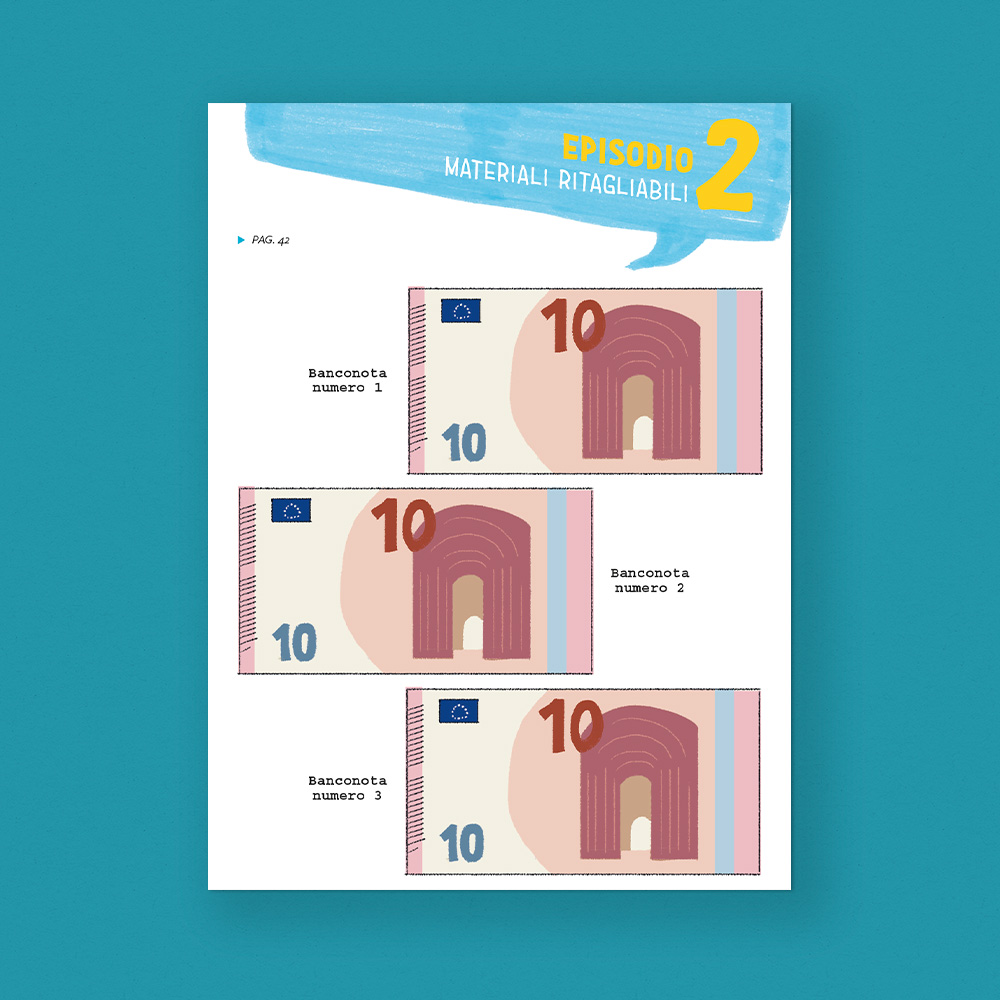
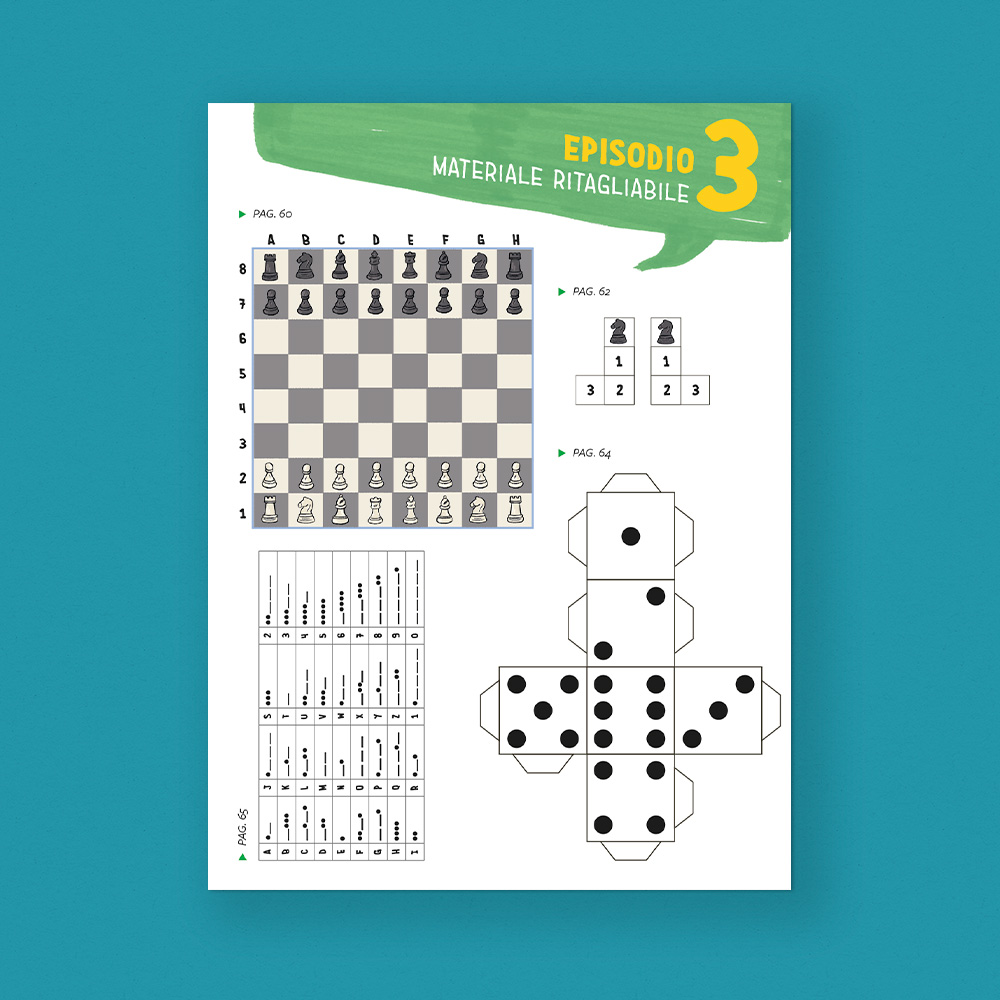
Leaf through some pages of the book translated into English to facilitate your evaluation:
THE AUTHORS
Simona Fiorentino is a primary school teacher specialising in inclusive education. She is the author of practical workbooks focused on the use of games and hands-on materials in mathematics teaching. She delivers teacher training courses and manages the social media page Ludomatica.
Elena Pedrazzoli is a primary school teacher. She provides teacher training in integrated digital teaching, innovative methodologies and STEM workshops. She is the author of educational workbooks for schools and has been designing gamification-based learning pathways for many years.